
The Best Air-Purifying Plants for Your Bedroom: Breathe Cleaner, Sleep Better
Tags: air-purifying plants for bedroom, best bedroom plants, NASA clean air plants, oxygen-producing plants, plants for better sleep, plants that purify air indoors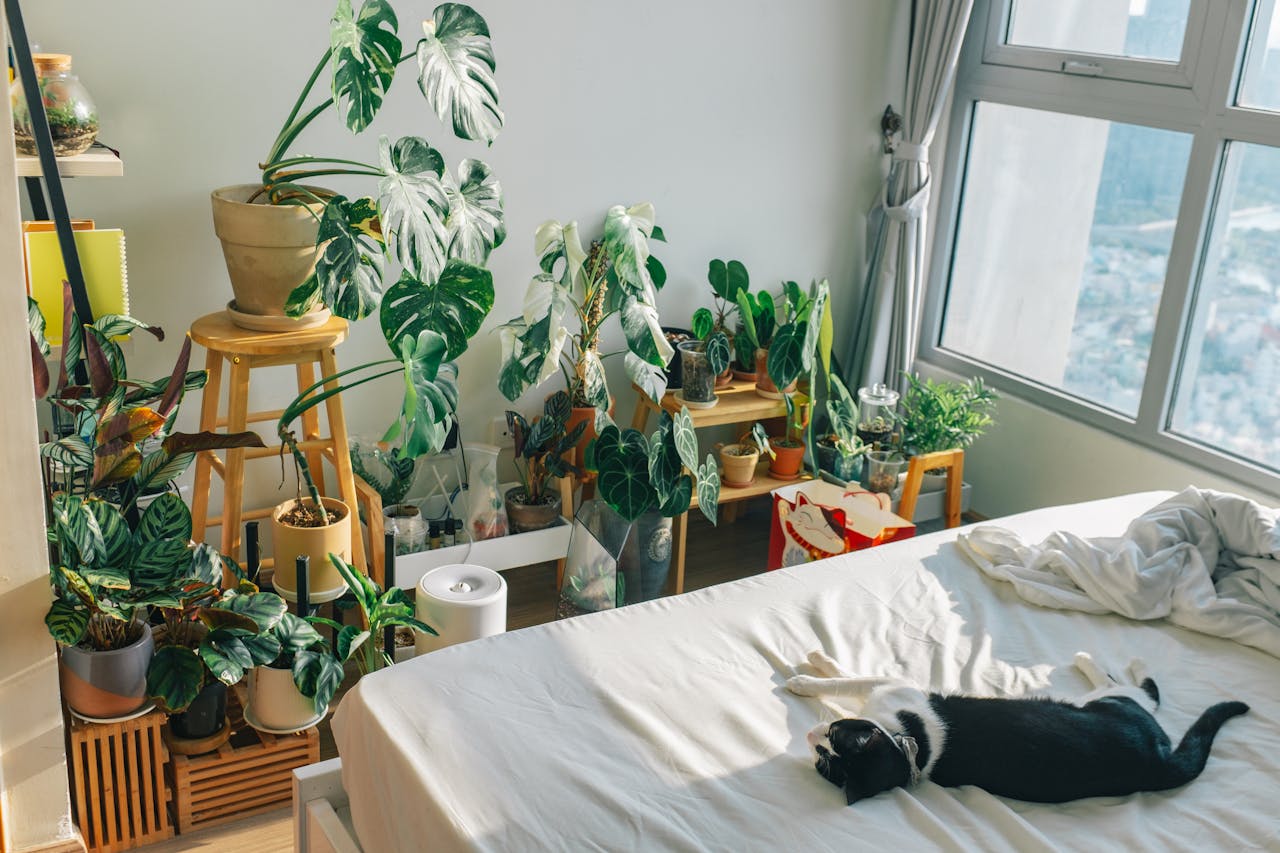
You spend roughly one-third of your entire life in your bedroom. That’s 8 hours a night, every night, breathing the same air — air that, according to the U.S. Environmental Protection Agency, can be two to five times more polluted than outdoor air in many American homes.
The sources of indoor air pollution might surprise you: off-gassing from furniture, carpets, and paint; cleaning product residues; formaldehyde from building materials; benzene from candles and synthetic fragrances. You can’t see any of it. But your lungs and your nervous system experience it every night.
The solution doesn’t require an expensive air purifier, though those have their place too. A carefully chosen collection of air-purifying bedroom plants can meaningfully contribute to cleaner indoor air, higher oxygen levels, and a calmer, more restorative sleep environment — all while making your bedroom more beautiful.
This guide gives you the complete picture: the science, the best plant picks, room placement strategies, and care tips so your bedroom becomes the wellness sanctuary it’s supposed to be.
Table of Contents
- The Science: What Air-Purifying Plants Actually Do
- What’s Actually in Your Bedroom Air
- The 12 Best Air-Purifying Plants for Bedrooms
- How Many Plants Do You Need?
- Bedroom Plant Placement: Where to Put Them
- Styling Your Bedroom Plants for Maximum Calm
- Care Guide: Keeping Bedroom Plants Healthy
- Plants to Avoid in the Bedroom
- Pairing Plants with Other Bedroom Wellness Practices
- Frequently Asked Questions
1. The Science: What Air-Purifying Plants Actually Do
The conversation around air-purifying plants always starts in the same place: NASA. In 1989, NASA researchers published their now-famous Clean Air Study, investigating whether common houseplants could remove toxic chemicals from enclosed spaces. The study was originally motivated by the need to maintain clean air in space stations — sealed environments where no outside air circulation was possible.
The findings were striking. Certain plants were found to remove significant percentages of volatile organic compounds (VOCs) — including formaldehyde, benzene, xylene, ammonia, and trichloroethylene — from sealed test chambers within 24 hours.
What the Science Actually Says (Honestly)
Here’s where we’ll be transparent with you: subsequent research has raised important caveats about the original NASA findings. A 2019 meta-analysis published in the Journal of Exposure Science & Environmental Epidemiology concluded that you would need hundreds of plants per square foot to achieve the air-cleaning rates seen in NASA’s sealed laboratory chambers in a typical home environment with normal air exchange.
So does that mean bedroom plants are useless for air quality? Not at all. What the research actually tells us:
- Plants do filter air pollutants — the mechanism is real and well-documented.
- In a real home, the effect is modest — not dramatic enough to replace ventilation or an air purifier in heavily polluted environments.
- Soil microbes contribute significantly — a substantial portion of VOC absorption happens through the plant’s root zone and the microorganisms in the soil, not just the leaves.
- The oxygen and humidity benefits are real — plants release oxygen through photosynthesis and increase local humidity through transpiration, both of which genuinely improve sleep environment quality.
- The psychological benefits are independently powerful — research from the International Journal of Environmental Research and Public Health consistently shows that the presence of plants in sleeping environments reduces stress markers, lowers heart rate, and improves sleep quality measures independent of any air chemistry changes.
Bottom line: Bedroom plants won’t replace your HVAC filter, but they’re a genuine, multi-benefit wellness investment for your sleeping space — and the ones on this list are the highest performers in every dimension.
2. What’s Actually in Your Bedroom Air
Before choosing your plants, it’s useful to know what you’re working with. Common indoor air pollutants found in American bedrooms include:
Formaldehyde: Off-gasses from furniture (especially pressed wood and MDF), carpet backing, and some curtains and bedding. One of the most common indoor VOCs.
Benzene: Found in candles (especially paraffin-based), synthetic fragrances, and tobacco smoke residue. A known carcinogen.
Trichloroethylene: Off-gasses from dry-cleaned clothing, paint, and some adhesives.
Xylene: Found in paints, varnishes, and adhesives. Common in newly painted or renovated rooms.
Ammonia: Found in some cleaning products and off-gases gradually from certain furniture items.
Carbon dioxide (CO₂): Not a toxin per se, but elevated CO₂ levels in a sealed sleeping room (from human respiration overnight) reduce sleep quality. Plants absorb CO₂ during photosynthesis, though the volumes involved in a bedroom are modest.
Particulate matter: Dust, pet dander, fabric fibers, and pollen can all be present in bedroom air. Plants don’t directly filter particulate matter, but their leaf surfaces can capture some airborne particles.
The EPA’s Indoor Air Quality resource center is an excellent reference if you want to understand the full scope of indoor air quality concerns in American homes.
3. The 12 Best Air-Purifying Plants for Bedrooms
Each plant on this list was selected based on three criteria: documented air-purifying capability, suitability for the low-light conditions typical of bedrooms, and safety profile for typical households.
1. 🌿 Snake Plant (Dracaena trifasciata / Sansevieria)
Air pollutants targeted: Formaldehyde, benzene, xylene, trichloroethylene, nitrogen oxide Light: Low to bright indirect | Watering: Every 2–6 weeks
The undisputed king of bedroom plants — and for good reason. The Snake Plant is one of a small group of plants that performs Crassulacean Acid Metabolism (CAM) photosynthesis, meaning it absorbs CO₂ and releases oxygen at night rather than during the day. For a sleeping space, this is uniquely valuable. Most plants do the reverse, releasing CO₂ at night.
It’s also one of the most forgiving plants on earth, making it genuinely beginner-proof. A Snake Plant in a beautiful ceramic pot on your bedroom dresser is both a stunning design element and a working wellness tool.
Best varieties for bedrooms: Laurentii (yellow-edged), Black Gold (dark green), Moonshine (silver-grey — exceptionally beautiful).
2. 🌿 Peace Lily (Spathiphyllum wallisii)
Air pollutants targeted: Formaldehyde, benzene, trichloroethylene, ammonia, acetone Light: Low to medium indirect | Watering: Weekly
One of NASA’s top-performing air-purifying plants and the only common houseplant on the NASA list that regularly blooms indoors. Its elegant white spathes against deep green foliage make it one of the most visually serene choices for a bedroom. It also increases room humidity through transpiration — valuable in dry American winters when central heating drops indoor humidity to uncomfortable levels.
Important note: Peace Lilies are toxic to cats and dogs. If you have pets, this plant should go on a high shelf out of reach, or be replaced with a pet-safe alternative (see Snake Plant or Spider Plant).
3. 🌿 Spider Plant (Chlorophytum comosum)
Air pollutants targeted: Formaldehyde, xylene, carbon monoxide Light: Bright indirect to medium | Watering: Every 1–2 weeks
One of the most effective air-purifying plants in NASA’s study, and completely pet-safe — making it the best choice for households with cats or dogs. Spider Plants are cheerful and visually dynamic; their arching green-and-white striped leaves and dangling “spiderette” offshoots look beautiful in a hanging planter near a bedroom window.
They’re also among the easiest plants to propagate — snip a spiderette, place it in water, and you’ll have a new plant in weeks.
4. 🌿 Golden Pothos (Epipremnum aureum)
Air pollutants targeted: Formaldehyde, benzene, carbon monoxide, xylene Light: Low to bright indirect | Watering: Every 1–2 weeks
Pothos is the most popular houseplant in America for good reason. It removes a wide range of VOCs, tolerates virtually any light condition a bedroom might offer (including quite low light), and looks stunning trailing from a high shelf or cascading down from a plant stand beside the bed.
One of the fastest-growing houseplants available, it provides a visually satisfying sense of growth and progress that beginners find especially motivating. See our complete guide to plant care for beginners for everything you need to get started.
5. 🌿 Aloe Vera
Air pollutants targeted: Formaldehyde, benzene Light: Bright direct or indirect | Watering: Every 2–3 weeks
Aloe Vera made NASA’s clean air list and earns its place in the bedroom for multiple reasons beyond air purification. Like the Snake Plant, Aloe performs CAM photosynthesis — releasing oxygen at night. It also increases bedroom humidity slightly, and the gel inside its leaves is a natural remedy for minor skin irritation, burns, and sunburn — genuinely useful in a bedroom context.
It needs a brighter spot than most bedroom plants (near a window), but if your bedroom has a sunny windowsill, Aloe is a near-perfect bedroom plant.
6. 🌿 Lavender (Lavandula angustifolia)
Air benefits: Antimicrobial properties; aromatic compounds promote relaxation Light: Bright direct | Watering: Allow to dry significantly between waterings
Lavender belongs on this list for reasons that go beyond air chemistry. Multiple clinical studies — including research published in the Journal of Alternative and Complementary Medicine — have found that lavender aromatherapy reduces anxiety, lowers heart rate, and significantly improves sleep quality measures in both healthy adults and insomnia sufferers.
A small lavender plant in a terracotta pot on a bright bedroom windowsill is a living diffuser that also happens to be beautiful. When the scent feels too subtle from the pot alone, pinch a few leaves and rub between your fingers before bed.
Lavender needs the brightest spot your bedroom can offer. South or west-facing windows are ideal.
7. 🌿 English Ivy (Hedera helix)
Air pollutants targeted: Benzene, formaldehyde, xylene, toluene; shown to reduce airborne mold particles Light: Bright indirect | Watering: Every 1–2 weeks
English Ivy is one of the most interesting plants on this list for a specific reason: research from the American College of Allergy, Asthma & Immunology found that English Ivy reduced airborne mold particles by up to 60% and airborne fecal particles (common in homes with pets) by up to 58% within 12 hours. For allergy and asthma sufferers, this makes it genuinely significant.
It drapes beautifully and grows quickly. In a hanging planter near a bedroom window, it creates a lush, cottage-garden atmosphere.
Note: Keep out of reach of pets and children — English Ivy is toxic if ingested.
8. 🌿 Rubber Plant (Ficus elastica)
Air pollutants targeted: Formaldehyde (particularly effective), bacterial and mold spores Light: Bright indirect | Watering: Every 1–2 weeks
The Rubber Plant is one of the most effective formaldehyde removers among all common houseplants. It also has antimicrobial properties — studies have found that the large, waxy leaves of Ficus species reduce airborne bacteria and mold spore counts in enclosed spaces.
As a bedroom plant, its deep burgundy or glossy dark green leaves create a dramatic, sophisticated visual anchor. A single large Rubber Plant beside a bedroom window or in a corner opposite the bed makes an immediate statement.
9. 🌿 Boston Fern (Nephrolepis exaltata)
Air pollutants targeted: Formaldehyde, xylene; significant humidity restoration Light: Bright indirect | Watering: Keep consistently moist
Among all commonly available houseplants, the Boston Fern is one of the most effective natural humidifiers — releasing significant moisture into the air through transpiration. In American homes where winter heating drops humidity to 20–30% (well below the 40–60% recommended for both human respiratory health and sleep quality by the American Academy of Sleep Medicine), a Boston Fern provides meaningful environmental benefit.
It needs consistent moisture and humidity itself — a bathroom with good light is actually its ideal home, though a bedroom with a humidifier nearby works well too. In a hanging planter near an east-facing bedroom window, it creates a breathtaking tropical atmosphere.
10. 🌿 Chinese Evergreen (Aglaonema)
Air pollutants targeted: Formaldehyde, benzene Light: Low to medium indirect | Watering: Every 1–2 weeks
Chinese Evergreens come in a stunning range of color varieties — silver, deep green, red, pink, bi-color — making them some of the most visually versatile bedroom plants available. They’re highly tolerant of low light (making them good for bedrooms with small or north-facing windows), remove a meaningful range of VOCs, and need only moderate watering.
The silver and green varieties in particular have a tranquil, elegant quality that suits bedroom aesthetics beautifully.
11. 🌿 Bamboo Palm (Chamaedorea seifrizii)
Air pollutants targeted: Formaldehyde, benzene, trichloroethylene, xylene; humidifying Light: Bright indirect | Watering: Keep moderately moist
One of NASA’s highest-rated air purifiers by total volume of toxin removal. Bamboo Palms are one of the most effective plants for removing formaldehyde — particularly valuable in bedrooms with newer furniture or recently painted walls. They also significantly increase room humidity.
Their tall, graceful form makes them natural corner plants — a Bamboo Palm in the corner of a bedroom opposite the bed creates a resort-hotel visual effect that is genuinely striking.
12. 🌿 Areca Palm (Dypsis lutescens)
Air pollutants targeted: Formaldehyde, xylene, toluene; exceptional humidifier Light: Bright indirect | Watering: Keep moderately moist
The Areca Palm transpires more water into the air than almost any other common houseplant — a single large Areca Palm can release up to a quart of water per day into the surrounding air. For dry bedroom environments, this natural humidification is enormously valuable. It also scores well on formaldehyde removal and is completely pet-safe, making it one of the very best choices for pet-friendly households wanting a floor plant with air benefits.
4. How Many Plants Do You Need?
This is the question everyone asks, and the honest answer is: more than most people have, fewer than you might fear.
For a meaningful air quality contribution in a typical American bedroom (roughly 150–200 sq ft), plant scientists and interior wellness designers generally recommend 6–8 medium-to-large plants or their equivalent in smaller plants. This is consistent with guidance from Dr. Bill Wolverton, the lead researcher on the original NASA clean air study, in his book How to Grow Fresh Air.
That sounds like a lot, but consider: a single large Snake Plant (floor pot), two hanging Pothos, a Peace Lily on the nightstand, and a pair of Spider Plants on a shelf gets you to meaningful numbers quickly without creating a crowded space.
For smaller bedrooms or apartments, prioritize the highest-performing plants per square foot: Snake Plant, Pothos, and Peace Lily deliver the most benefit in the least space.
5. Bedroom Plant Placement: Where to Put Them
Bedside table: Best for calming, low-profile plants — a small Peace Lily, a single succulent, Aloe Vera, or a small Snake Plant. Keep it simple: one plant, one beautiful pot.
Windowsill: Lavender, Aloe, and Spider Plant for bright windows; Chinese Evergreen or Pothos for lower-light windows.
Hanging from the ceiling or a wall hook: Boston Fern, Pothos, Spider Plant, English Ivy. Height adds drama and doesn’t consume limited floor or surface space.
Floor corner: Snake Plant, Bamboo Palm, Areca Palm, Rubber Plant. Large floor plants in beautiful planters anchor corners and make an immediate statement.
Dresser or chest of drawers: Trailing Pothos, small Rubber Plant, Chinese Evergreen in a ceramic pot. The flat surface at eye-level is prime real estate for a statement plant moment.
6. Styling Your Bedroom Plants for Maximum Calm
The way you style bedroom plants should serve the room’s core purpose: rest, recovery, and peace. Here’s how to achieve that:
Keep color palettes soft. Deep greens, silvers, and muted tones are most conducive to relaxation. Highly variegated or brightly colored plants (vivid pink Aglaonemas, bold crotons) can feel stimulating rather than calming. Save those for the living room.
Match pot style to your bedroom’s aesthetic. Matte ceramics (white, sage, terracotta, slate) in simple shapes suit most bedroom styles — minimalist, Scandinavian, boho, or traditional. Avoid shiny or overly ornate pots that draw attention away from the plant itself.
Less is more. In the bedroom, three perfectly placed plants in beautiful pots outperform twelve randomly scattered plants. The goal is serene, not overflowing.
Avoid cluttering the nightstand. Your nightstand is prime sleeping-zone real estate. If you put a plant there, make it one — and make it beautiful.
For a broader look at plant styling across your whole home, revisit our ultimate indoor plants home décor guide.
7. Care Guide: Keeping Bedroom Plants Healthy
Bedroom plant care has one unique challenge: bedrooms are often lower-light than other rooms, and they tend to have less humidity in winter. Here’s how to address both:
Rotate your plants. Every 1–2 weeks, rotate each pot a quarter turn so all sides of the plant receive equal light and grow evenly.
Clean the leaves. Dust accumulates on leaf surfaces and significantly reduces a plant’s ability to photosynthesize and filter air. Wipe large, smooth leaves (Rubber Plant, Snake Plant, Peace Lily) with a damp soft cloth monthly. For finely leafed plants, a gentle spray of room-temperature water works well.
Monitor watering carefully. Bedrooms tend to be cooler and less bright than kitchens or living rooms, meaning plants will dry out more slowly. Adjust your watering schedule accordingly — you’ll likely water bedroom plants less frequently than the same plants in a brighter room.
Don’t overwater based on routine. Always use the finger test — push 1–2 inches into the soil before watering. For a complete watering guide, see: How to Water Indoor Plants Correctly.
Consider a small humidifier. For tropical plants like Boston Fern and Peace Lily in particularly dry bedrooms, a small ultrasonic humidifier running a few hours each day makes a dramatic difference in plant health and air quality simultaneously.
8. Plants to Avoid in the Bedroom
Not every popular houseplant is a good bedroom choice. Here are categories to be cautious about:
Highly fragrant flowering plants (for some people): Gardenias, jasmine, and certain lilies produce strong fragrances that some people find disruptive to sleep. If you’re sensitive to scents, stick with non-flowering or subtly fragrant plants.
Plants you’re allergic to: If you suffer from plant allergies, some species — particularly ferns and certain flowering plants — can release pollen or spores that worsen symptoms at night. Monitor your symptoms when introducing new plants.
Toxic plants in pet-accessible spaces: Peace Lily, Pothos, English Ivy, Aloe, and Rubber Plant are all toxic to cats and/or dogs. If your pets sleep in your bedroom, place these plants on high shelves they cannot access, or choose confirmed pet-safe alternatives: Spider Plant, Areca Palm, Bamboo Palm, and Haworthia.
Large plants directly beside the bed: Very large plants with extensive leaf cover (large Monstera, Fiddle Leaf Fig) placed immediately next to the sleeping area can feel visually heavy and possibly overwhelming in a space meant for rest. Reserve large plants for corners and use more modest plants near the actual sleeping zone.
9. Pairing Plants with Other Bedroom Wellness Practices
Air-purifying plants work best as part of a broader bedroom wellness approach:
Ventilate daily. Opening bedroom windows for 10–15 minutes each morning allows fresh air exchange and dramatically reduces accumulated CO₂ and VOC concentrations. Plants contribute to air quality; fresh air circulation completes the job.
Use an air purifier with HEPA filter. For households with allergies, asthma, or high pollution concerns, a quality HEPA air purifier works synergistically with plants — the purifier handles particulate matter and larger pollutants while plants work on VOCs and humidity. The two approaches complement each other well.
Choose low-VOC bedroom materials. When possible, choose low-VOC or no-VOC paints (widely available at most US hardware stores), solid wood furniture over MDF, and natural fiber bedding. Reducing pollutant sources is as important as filtering existing ones.
Limit synthetic fragrances. Paraffin candles, synthetic air fresheners, and heavily fragranced fabric softeners are significant VOC sources in American bedrooms. Replacing them with beeswax candles, essential oil diffusers, or simply the natural fragrance of living plants reduces the load your air-purifying plants have to work against.
10. Frequently Asked Questions
Q: Is it safe to sleep with plants in your bedroom? Yes — completely. The concern that plants release harmful CO₂ at night is largely a myth when applied to typical bedroom scenarios. The volume of CO₂ released by a few bedroom plants overnight is negligible compared to the CO₂ you and any sleeping partner exhale. Plants like Snake Plants and Aloe Vera actually release oxygen at night, making them uniquely beneficial in sleeping spaces.
Q: What is the single best air-purifying plant for a bedroom? For overall performance — air purification, oxygen output, low light tolerance, and low maintenance — the Snake Plant is the #1 bedroom plant recommendation. It performs CAM photosynthesis (releases oxygen at night), removes the widest range of VOCs of any beginner-friendly plant, and is nearly impossible to kill.
Q: Do air-purifying plants help with allergies? It depends on the plant and allergy type. English Ivy has been shown to reduce airborne mold and allergen particles significantly. However, some plants (ferns, flowering plants) can release pollen or spores that worsen certain allergies. If you’re an allergy sufferer, prioritize non-flowering, non-fern plants: Snake Plant, Peace Lily (after blooming), ZZ Plant, and Chinese Evergreen are generally well-tolerated.
Q: How close should bedroom plants be to the bed? Nightstand or bedside table proximity is fine for most plants. There’s no health risk to sleeping near plants. From a pure air-purifying effectiveness standpoint, having plants dispersed throughout the room (rather than all clustered in one corner) maximizes their combined effect on room air quality.
Q: Can bedroom plants improve sleep quality? Yes, through multiple mechanisms: increased room oxygen levels (small but real contribution), humidity regulation, VOC reduction, and most powerfully — the psychological calming effect of natural greenery in a space, which has been consistently documented in sleep quality research.
Final Thoughts
Your bedroom is the most important wellness space in your home. Every dollar and decision you invest in making it a cleaner, calmer, more restorative environment pays off in sleep quality — and sleep quality pays off in every other dimension of your health and life.
Air-purifying plants are one of the most cost-effective, aesthetically beautiful, and multi-benefit investments you can make in that space. Start with a Snake Plant and a trailing Pothos. Add a Peace Lily on your nightstand. Build from there.
Keep building your plant-powered home:
- 🌿 The Ultimate Guide to Indoor Plants for Home Décor: Transform Every Room in Your House
- 🌿 Plant Care for Beginners: Your First 30 Days
- 🌿 How to Water Indoor Plants Correctly
- 🌿 How to Start a Vegetable Garden at Home for Beginners (Step-by-Step Guide)
- 🌿 Best Indoor Plants That Grow Without Sunlight
Sleep clean. Sleep green. 🌱