
Pothos Plant Care Guide: Everything You Need to Grow the World’s Most Popular Houseplant
Tags: how often to water pothos USA, how to care for pothos indoors, pothos plant care guide, pothos propagation water, pothos varieties comparison, pothos yellow leaves causes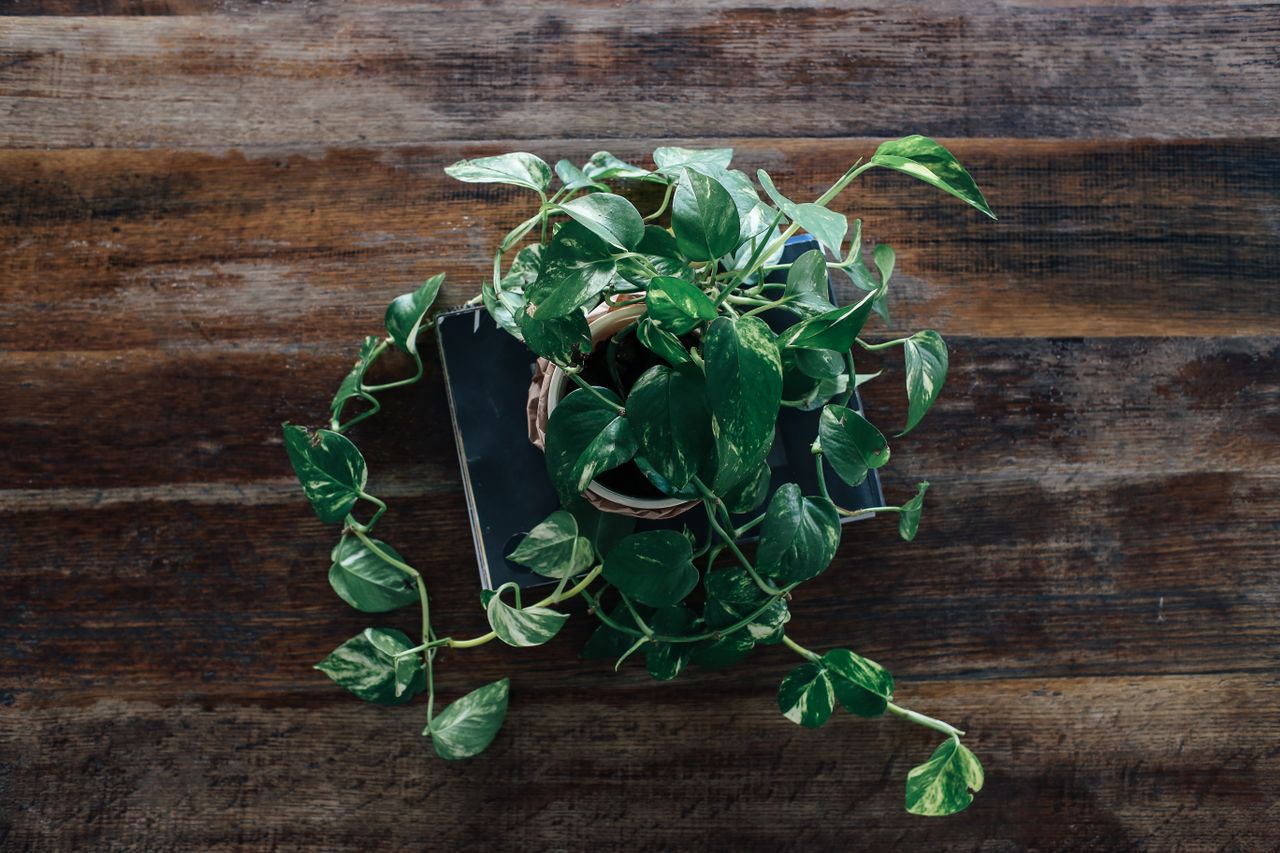
If there is one houseplant every American home should have — one plant that delivers beauty, resilience, air-purifying benefit, and a genuinely satisfying growing experience regardless of your skill level — it is the Pothos.
Epipremnum aureum and its close relatives are the most widely grown houseplants in the United States. They trail dramatically from shelves, cascade down bookcases, drape from hanging planters, and climb moss poles. They grow in offices with fluorescent lighting and in bright sunlit apartments. They forgive missed waterings, recover from neglect, and reward even the most minimal attention with fast, satisfying growth.
But “easy plant” doesn’t mean “no learning required.” Even the most forgiving plants have preferences — and understanding those preferences is the difference between a Pothos that simply survives and one that genuinely thrives, producing large, lush leaves with vigorous trailing growth that transforms any room.
This guide covers everything: all major varieties compared, care requirements for each factor, propagation, common problems diagnosed, and the specific habits that unlock the best Pothos growth you’ve ever seen.
Table of Contents
- Pothos 101: What Makes This Plant So Special
- Pothos Varieties: The Complete 2026 Comparison Guide
- Light Requirements: Matching Variety to Location
- Watering Pothos: The Correct Approach
- Soil, Drainage & Pot Selection
- Humidity & Temperature
- Fertilizing for Maximum Growth
- How to Propagate Pothos (Free Plants Forever)
- Training & Styling: Trailing vs. Climbing
- Repotting Your Pothos
- The 7 Most Common Pothos Problems Diagnosed
- Frequently Asked Questions
1. Pothos 101: What Makes This Plant So Special
The plant sold in America as “Pothos” is primarily Epipremnum aureum, native to the Solomon Islands in the South Pacific. In its natural habitat it grows as a forest floor vine, trailing along the ground and climbing trees using aerial roots — eventually reaching leaves that can grow to 3 feet across on mature climbing specimens.
Indoors, Pothos stays much more compact, but it retains the core properties that make it exceptional:
Extraordinary light adaptability: Pothos survives in light conditions that would decline most other plants — from near-complete artificial light to bright indirect natural light. This range is almost unmatched among popular houseplants.
Drought tolerance: Thick stems store enough moisture to allow Pothos to go 2–3 weeks without water during active growth, longer in winter, without suffering permanent damage.
Self-communicating: Pothos droops visibly when it needs water — then perks back up completely within hours of being watered. This clear, reliable communication makes it one of the most beginner-friendly plants available.
Fast growth: Under good conditions, Pothos grows several inches per week during spring and summer. The speed of growth produces constant visual reward and abundant material for propagation.
Air purifying: Featured in NASA’s landmark Clean Air Study, Pothos removes formaldehyde, benzene, and carbon monoxide from indoor air.
One honest caveat: Pothos is toxic to cats and dogs — the calcium oxalate crystals in its leaves and stems cause oral irritation, drooling, and vomiting if ingested. For pet-safe trailing alternatives, see our pet-safe indoor plants guide. If you have pets and love Pothos, place it in hanging planters at a height your pet genuinely cannot access.
2. Pothos Varieties: The Complete 2026 Comparison Guide
What most people don’t realize is that “Pothos” describes an entire family of varieties — each with distinct visual characteristics, light requirements, and care nuances. Choosing the right variety for your specific space and light conditions dramatically affects success.
Golden Pothos (Epipremnum aureum)
Appearance: The classic. Heart-shaped leaves in medium green with irregular yellow-gold splashes and marbling. The most widely available variety in the USA — found at every nursery, Home Depot, and Lowe’s nationwide.
Light: The most light-flexible variety — performs well in low, medium, or bright indirect light. In low light, the yellow variegation fades toward solid green (the plant reduces its chlorophyll-free yellow areas when light is scarce). In bright indirect light, variegation is most vivid.
Difficulty: Very Easy. The ideal first plant.
Best placement: Any room. Especially good for offices, low-light living rooms, and any space where other plants struggle.
Neon Pothos (Epipremnum aureum ‘Neon’)
Appearance: Solid, uniform chartreuse-yellow leaves with no variegation. The most visually striking single-color variety — its electric lime-green color is genuinely unlike anything else in the houseplant world.
Light: Needs more light than Golden Pothos to maintain its vibrant color. In low light, the color deepens toward regular green, losing the neon quality. Bright indirect light keeps it at its most electric.
Difficulty: Very Easy.
Best placement: Near bright windows, sunlit kitchens, or anywhere that needs a bold pop of living color.
Marble Queen Pothos (Epipremnum aureum ‘Marble Queen’)
Appearance: Heavily variegated with white and cream, often more white than green on individual leaves. One of the most striking variegated houseplants available at any price point.
Light: Needs the most light of all common Pothos varieties. Heavy white variegation means less chlorophyll — less energy production per leaf — meaning the plant needs more light to compensate. Low light causes the variegation to revert toward green and significantly slows growth.
Difficulty: Easy, but less forgiving than Golden Pothos in low light.
Best placement: Bright indirect light — east or south-facing windows are ideal. Not suitable for dim corners.
Care note: Marble Queen grows more slowly than solid-green or lightly variegated varieties — this is normal and expected given the lower chlorophyll content.
Satin Pothos / Silver Pothos (Scindapsus pictus)
Appearance: Technically a different genus (Scindapsus rather than Epipremnum), but universally sold as “Satin Pothos” in the USA. Matte, velvety dark green leaves with silver iridescent spots — a remarkably different texture and look from standard Pothos varieties.
Light: Bright indirect light preferred. More light-sensitive than true Epipremnum — avoid direct sun, which bleaches the silver markings.
Difficulty: Easy.
Best placement: A bright room where the velvety texture can be appreciated up close — a shelf at eye level shows off the unique surface quality beautifully.
Manjula Pothos (Epipremnum aureum ‘Manjula’)
Appearance: Broad, wavy-edged leaves with a complex mix of white, cream, green, and silver variegation — no two leaves look identical. One of the most collectible and sought-after Pothos varieties.
Light: Bright indirect light. Heavy variegation (similar to Marble Queen) means it needs good light to grow vigorously.
Difficulty: Easy–Moderate.
Best placement: A bright shelf or plant stand where the distinctive wavy leaves and complex variegation can be properly seen.
Pearls and Jade Pothos (Epipremnum aureum ‘Pearls and Jade’)
Appearance: Smaller leaves than most Pothos varieties, with white and silver-grey variegation that appears in smaller flecks and edges rather than broad splashes. More restrained and refined-looking than Golden or Marble Queen.
Light: Medium to bright indirect. Tolerates lower light better than Marble Queen.
Difficulty: Easy.
Best placement: Smaller shelves, desk displays, or as a refined trailing plant where the detailed markings can be seen at close range.
Global Green Pothos (Epipremnum aureum ‘Global Green’)
Appearance: Two-toned deep green with lighter green centers — an all-green variegation that looks lush and tropical without the high light demands of white-variegated varieties.
Light: Medium to bright indirect. More tolerant of lower light than white-variegated types due to its all-green coloration.
Difficulty: Very Easy.
Best placement: Mid-light rooms, offices, or anywhere that Golden Pothos thrives but you want a different look.
Cebu Blue Pothos (Epipremnum pinnatum ‘Cebu Blue’)
Appearance: Narrow, elongated blue-green leaves with a distinctive silvery sheen. Produces fenestrations (natural splits in leaves) as it matures — resembling a miniature Monstera. Highly collectible.
Light: Bright indirect light for best growth and fenestration development.
Difficulty: Easy–Moderate.
Best placement: Bright rooms where it can be given a moss pole to climb — climbing growth encourages the fenestrated mature leaf form.
Variety Quick-Reference
| Variety | Light Needs | Growth Rate | Difficulty | Pet Safe |
|---|---|---|---|---|
| Golden Pothos | Low–Bright indirect | Fast | Very Easy | ❌ No |
| Neon Pothos | Medium–Bright indirect | Fast | Very Easy | ❌ No |
| Marble Queen | Bright indirect | Moderate | Easy | ❌ No |
| Satin/Silver | Bright indirect | Moderate | Easy | ❌ No |
| Manjula | Bright indirect | Slow–Moderate | Easy–Moderate | ❌ No |
| Pearls & Jade | Medium–Bright | Moderate | Easy | ❌ No |
| Global Green | Medium–Bright | Fast | Very Easy | ❌ No |
| Cebu Blue | Bright indirect | Moderate | Easy–Moderate | ❌ No |
3. Light Requirements: Matching Variety to Location
The golden rule: Match your Pothos variety to your available light, not the other way around.
Low light rooms (north-facing windows, interior rooms, dim offices): Golden Pothos and Global Green are your best options. Understand that low light means slower growth and reduced variegation intensity — but the plant will survive and maintain basic health.
Medium indirect light (a few feet from east or west-facing windows): Most Pothos varieties perform well here. This is the sweet spot for Golden Pothos, where it grows vigorously with vivid variegation.
Bright indirect light (near east or south-facing windows, behind a sheer curtain on west-facing windows): Best for Marble Queen, Manjula, Satin Pothos, and Cebu Blue. All varieties will show their best color, fastest growth, and largest leaves in bright indirect light.
Direct sun: Avoid for all Pothos varieties. Direct sun scorches and bleaches leaves, particularly damaging to white-variegated types like Marble Queen.
Artificial light: Pothos is one of the best plants for purely artificial light environments. Under good quality LED office lighting or a dedicated grow light (12–14 hours per day), Golden and Neon Pothos maintain healthy growth indefinitely.
4. Watering Pothos: The Correct Approach
Pothos is the plant that forgives overwatering least gracefully of all its forgiving qualities — while underwatering is easily corrected, chronic overwatering causes root rot that can kill even this resilient species.
When to Water
The rule: Water when the top 1–2 inches of soil are dry. Not when the very surface looks slightly dry — when a full inch or two of soil depth is actually dry to the finger test.
The droop signal: Pothos droops visibly when it genuinely needs water — leaves look slightly limp, slightly matte rather than glossy, and the stems lose their turgidity. This is a reliable signal, but aim to water shortly before the plant reaches dramatic drooping — consistent slight drought is preferable to boom-bust extremes.
Seasonal adjustment:
- Spring/Summer: Every 7–10 days in most US homes
- Fall: Every 10–14 days
- Winter: Every 14–21 days (sometimes longer in low-light, cool rooms)
Never water on a fixed calendar schedule — always check soil first. For the complete plant-responsive watering framework, see our guide to watering indoor plants.
How to Water
Water thoroughly — slowly pour over the entire soil surface until water flows freely from drainage holes. Then wait. Don’t water again until the soil has dried to the 1–2 inch mark.
Water type: Room temperature filtered water is ideal, though Pothos is less sensitive to tap water minerals than Calatheas or Ferns. If your tap water is heavily chlorinated, let it sit overnight before using.
5. Soil, Drainage & Pot Selection
Ideal Soil Mix
Pothos isn’t fussy about soil, but performs best in a well-draining, aerated mix that holds some moisture without becoming waterlogged:
Recommended: Standard quality potting mix + 20–25% perlite. This combination drains well, aerates the root zone, and retains just enough moisture without waterlogging.
Avoid: Dense, peat-heavy mixes without amendment; garden soil; or overly rich mixes that stay wet for extended periods.
Pot Material
Best: Any pot with drainage holes. Material is less critical for Pothos than for moisture-sensitive plants.
- Plastic or glazed ceramic: Retains moisture longer — good for warmer, brighter rooms where the plant dries out faster
- Terracotta: Dries faster — good for lower-light rooms or anyone who tends to overwater
Critical: Never plant Pothos directly in a pot without drainage holes. The cachepot method (drainage-holed nursery pot inside a decorative pot) is perfectly fine. For full pot selection guidance, see our best planters and pots guide.
Pot Size
Choose a pot only 1–2 inches larger in diameter than the current root ball. Oversized pots hold excess soil that stays wet long after the plant has absorbed what it needs — the most common cause of Pothos root rot.
6. Humidity & Temperature
Humidity
Pothos tolerates the full range of typical American home humidity levels — from the 20–30% of winter-heated homes to the 50–60% of naturally humid environments. It’s one of the most humidity-flexible houseplants available.
For best appearance (glossy, unwrinkled leaves), 40–50% relative humidity is ideal. In chronically dry conditions, leaves may develop slightly wrinkled texture and crispy edges — adding a small humidifier or pebble tray improves appearance, though the plant’s health is rarely seriously affected by normal indoor humidity ranges.
Temperature
Ideal range: 65–85°F (18–29°C) — encompassing most standard US home temperatures.
Avoid:
- Temperatures below 50°F (10°C) — causes cell damage and blackening of leaves
- Cold drafts from windows in winter — localized cold causes rapid leaf damage even when room temperature is adequate
- Air conditioning vents blowing directly on the plant — dries and chills leaves simultaneously
7. Fertilizing for Maximum Growth
Pothos is a moderate feeder — it grows well with regular fertilization but doesn’t require heavy feeding.
Schedule: Once per month during the active growing season (March through September). Reduce to every 6–8 weeks in fall. Stop or significantly reduce in winter.
Fertilizer: Balanced liquid fertilizer (10-10-10 or 20-20-20) diluted to half the recommended strength. Full-strength fertilizer risks salt buildup and fertilizer burn on roots.
Signs of over-fertilization: Brown leaf tips, white crusty deposits on soil surface, wilting despite moist soil. Fix by flushing soil thoroughly with plain water to leach excess salts.
Signs of under-fertilization: Slow growth, small new leaves, pale or faded coloration despite adequate light. Fix by resuming a regular monthly fertilization schedule.
Pro tip for maximum growth: Use a fertilizer with a slightly higher nitrogen component (the first number in the NPK ratio) during spring and summer — nitrogen drives leaf and stem growth, which is exactly what you want from a fast-growing trailing plant.
8. How to Propagate Pothos (Free Plants Forever)
Pothos is the easiest propagation project in the houseplant world — an ideal starting point for anyone new to plant propagation and a reliable, fast source of free plants for experienced collectors.
Water Propagation Method
Step 1 — Take a cutting: Using clean scissors, cut a 4–6 inch stem section just below a node (the small bump where a leaf attaches to the stem). Your cutting should have 2–4 leaves and at least one node — this is where roots will emerge.
Step 2 — Prepare the cutting: Remove any leaves that would be submerged in water. Submerged leaves rot and contaminate the water. Leave only the leaves above the waterline.
Step 3 — Place in water: Put the cutting in a glass or vase with room-temperature water, ensuring at least one node is submerged. Place in bright indirect light.
Step 4 — Change water weekly: Replace the water every 5–7 days to prevent bacterial buildup and maintain oxygen levels. Within 7–14 days, white roots will emerge from the submerged nodes.
Step 5 — Transfer to soil: Once roots reach 1–2 inches, transfer to a small pot with well-draining potting mix. Keep consistently moist for the first 2 weeks post-transfer to ease the transition from water to soil.
For a full propagation guide covering all methods and a complete propagation station setup, see our DIY plant propagation station guide.
Soil Propagation Method
For those who prefer going directly to soil: take cuttings as above, dip the cut end in rooting hormone (optional but improves speed), plant 1–2 inches into moist potting mix, cover with a clear plastic bag or humidity dome to maintain moisture, and place in bright indirect light. Roots typically establish within 3–4 weeks.
9. Training & Styling: Trailing vs. Climbing
One of the most underappreciated aspects of Pothos care is that how you grow it affects how it looks. The same plant grown as a trailer versus a climber produces visibly different results:
Training as a Trailer
Allow stems to hang freely from a high shelf, hanging planter, or the top of a bookcase. As stems trail downward, they lengthen rapidly — a well-grown trailing Pothos can produce stems 6–10 feet long under good conditions. The leaves tend to stay at their current size (or gradually reduce slightly as they grow further from the light source).
Best for: Dramatic cascading displays, bookshelves, high floating shelves, hanging planters, top of refrigerator. For shelf and hanging planter styling ideas, see our indoor plants home décor guide.
Training as a Climber
Provide a moss pole, bamboo stake, trellis, or wall hooks for Pothos stems to attach to and climb. When a Pothos climbs, it behaves more like it does in nature — and nature tells it to produce larger, more mature leaves. Cebu Blue Pothos in particular develops fenestrations (leaf splits) when climbing that never appear on trailing specimens.
How to attach: Use plant tape, soft twist ties, or small S-hooks to gently secure stems to a moss pole. Aerial roots from the stem will eventually grip the pole naturally.
Best for: Statement corner plants, maximizing leaf size, encouraging mature growth forms.
Pruning for Fullness
Left unpruned, Pothos develops long bare stems with leaves only at the growing tips — a “leggy” appearance. Regular pruning creates a dramatically fuller, bushier plant:
- Cut stems back by one-third in spring
- Cut just above a leaf node
- Use the cuttings for propagation — never waste a Pothos cutting
- The pruned stem produces new growth from the node below the cut, filling in the bare sections
10. Repotting Your Pothos
Pothos typically needs repotting every 12–18 months — fast growth means it fills pots quickly.
Signs it’s time: Roots growing from drainage holes, the plant drying out unusually fast after watering, or visible root circling at the soil surface.
Process: Move up one pot size (1–2 inches larger in diameter). Use fresh potting mix — don’t reuse exhausted old soil. Pothos is resilient enough that repotting can be done year-round if needed, though spring is ideal. For the complete repotting process, see our step-by-step repotting guide.
11. The 7 Most Common Pothos Problems Diagnosed
Problem 1: Yellow Leaves
Most likely cause: Overwatering — the most common Pothos problem. Confirm: Check soil. If consistently moist or wet, overwatering is the cause. Fix: Let soil dry out completely. Check drainage. Reduce watering frequency. Remove yellow leaves — they won’t return to green.
Other causes: Natural aging (a single lower leaf yellowing on an otherwise healthy plant is normal), too little light, or nutrient deficiency in long-unfertilized plants.
Problem 2: Brown Leaf Tips
Cause: Low humidity, fluoride in tap water, or fertilizer salt buildup. Fix: Switch to filtered water, flush soil with clean water to remove salt buildup, add a humidifier or pebble tray. Trim brown tips at a slight angle.
Problem 3: Leggy Growth (Long Bare Stems)
Cause: Insufficient light, or unpruned growth over time. Fix: Move to brighter location. Prune stems back to the last healthy node to encourage bushy regrowth. Propagate the cuttings.
Problem 4: Small New Leaves
Cause: Insufficient light (most common), or the plant is trailing away from the light source. Fix: Move to a brighter location. If trailing, ensure the growing tips are positioned toward the light source, or consider training it to climb a pole instead — climbing encourages larger mature leaves.
Problem 5: Variegation Reverting to Green
Cause: Insufficient light. Variegated areas (white, yellow, silver) contain no chlorophyll and produce no energy — in low light, the plant increases its chlorophyll-producing green areas to compensate. Fix: Move to brighter indirect light. New growth will restore variegation under adequate light.
Problem 6: Wilting Despite Moist Soil
Cause: Root rot — damaged roots can’t transport water even when it’s available in the soil. Fix: Remove from pot, inspect roots, trim all rotted tissue (dark, mushy, foul-smelling), repot in fresh dry soil in a clean pot, reduce watering significantly going forward.
Problem 7: Black Patches on Leaves
Cause: Cold damage — from a cold draft, proximity to a window in winter, or temperatures below 50°F. Fix: Move away from cold sources. Black patches are permanent — trim affected leaves. New growth in a warmer location will emerge healthy.
12. Frequently Asked Questions
Q: How often should I water my Pothos? There is no universal schedule — it depends on your light level, pot size, season, and home temperature. The reliable method: water when the top 1–2 inches of soil are dry to your finger. In most US homes during the growing season, this means every 7–10 days. In winter, every 14–21 days or longer.
Q: Can Pothos grow in just water permanently? Yes — Pothos is one of the few houseplants that can live indefinitely in water rather than soil. Keep in a clean vessel, change water every 7–10 days, add a diluted liquid fertilizer to the water monthly (at about ¼ of the normal soil concentration), and place in bright indirect light. Water-grown Pothos develops roots specifically adapted to aquatic conditions over time.
Q: Why is my Pothos growing so slowly? The three most common causes: insufficient light, winter dormancy, or being root-bound. Check light first — move to a brighter location. If it’s winter, growth will naturally slow; resume normal growth expectations in spring. If the plant is root-bound, repot into a slightly larger container.
Q: Is Pothos really safe in a room with pets? No — Pothos is toxic to both cats and dogs. If your pets have access to the room, either use a hanging planter at a height they genuinely can’t reach or choose a pet-safe trailing alternative. Our pet-safe indoor plants guide includes several beautiful trailing plants that are completely non-toxic.
Q: Can Pothos grow outside in the USA? In USDA hardiness zones 10–12 (Southern Florida, Hawaii, coastal Southern California), Pothos can grow outdoors year-round and becomes an aggressive vine. In all other US climate zones, it must be kept indoors or brought inside before temperatures drop below 50°F. Note that Pothos is considered an invasive species in some tropical regions — never plant it outdoors in warm climates where it can escape to natural areas.
Q: How long do Pothos plants live? With proper care, Pothos can live indefinitely — decades with regular repotting, occasional pruning, and consistent care. There are documented cases of Pothos plants 20+ years old. Unlike annual plants that complete their lifecycle and die, Pothos is a true perennial houseplant that simply keeps growing.
For the complete foundational care principles that apply across your whole plant collection, see our plant care for beginners guide and browse more low-maintenance options in our best low-maintenance indoor plants guide.