
Calathea Care Guide: How to Grow the Most Beautiful Houseplant Alive
Tags: calathea, calathea brown edges fix, calathea care guide, calathea humidity needs, calathea leaves curling causes, calathea watering schedule USA, how to care for calathea indoors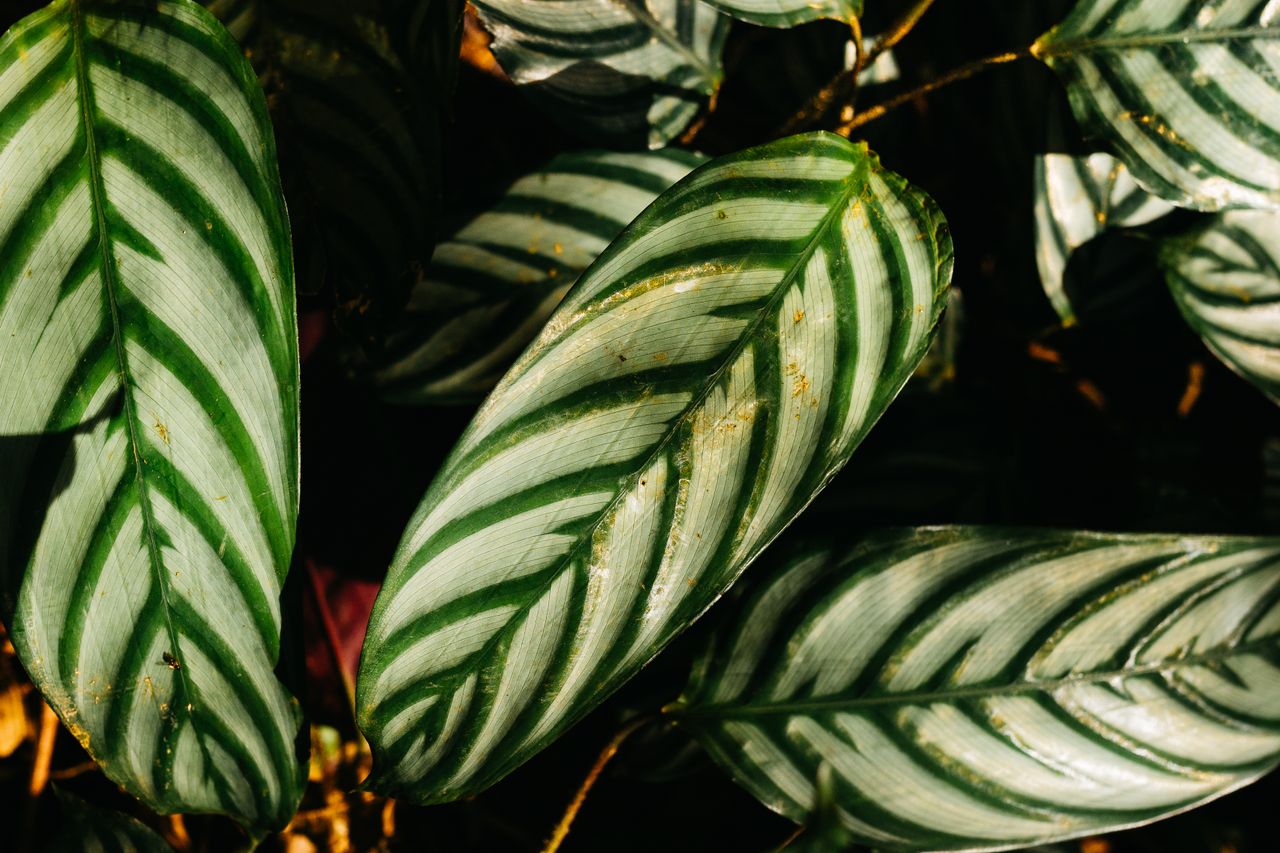
No plant rewards careful attention quite like a Calathea. With leaves that fold upward at night and open toward the light each morning, patterns that look hand-painted by a botanical artist, and a color range spanning deep burgundy to silver-green to peacock blue — Calatheas are, without question, among the most spectacular foliage plants available to American home growers.
They also have a reputation. Ask around in plant communities and you’ll hear it: “Calatheas are difficult.” “Mine always gets brown edges.” “I’ve killed three.”
Here’s the truth: Calatheas aren’t difficult — they’re specific. They have clear, consistent preferences around water quality, humidity, and light that, once understood and accommodated, produce a thriving, stunning plant. The owners who struggle with Calatheas are almost always doing one of three things wrong — and this guide fixes all three.
Table of Contents
- Understanding Calatheas: What They Are & Why They Move
- The Calathea Genus in 2026: Key Varieties to Know
- Light Requirements: The Goldilocks Zone
- Water: The #1 Make-or-Break Factor
- Humidity: The Secret to Perfect Leaves
- Soil, Drainage & Pot Choice
- Temperature & Placement
- Fertilizing Calatheas
- Repotting & Root Care
- The 6 Most Common Calathea Problems (& Exact Fixes)
- Calathea Varieties: A Quick-Reference Guide
- Frequently Asked Questions
1. Understanding Calatheas: What They Are & Why They Move
Calatheas (now largely reclassified under the genus Goeppertia, though most sellers still use Calathea) are tropical plants native primarily to the rainforests of South America, particularly Brazil. They are members of the Marantaceae family — the “prayer plant” family — named for the characteristic daily leaf movement shared by all its members.
Nyctinasty: The Living Animation
Calathea leaves rise and fold upward at night, then lower and open toward the light during the day. This movement — called nyctinasty — is driven by changes in water pressure in specialized structures called pulvini at the base of each leaf stalk. The precise biological purpose is debated, but the most widely accepted theory is that the movement tracks the sun’s position to maximize photosynthesis.
For plant owners, this movement is one of the most captivating things in the houseplant world. The first time you notice your Calathea’s leaves in a different position than they were at bedtime, it feels like the plant is genuinely alive in a way that static plants aren’t. For more on the wellness and psychological value of this kind of active plant observation, see our plants and mental wellness guide.
Calatheas as Pet-Safe Plants
One of the most valuable and underappreciated qualities of Calatheas: they are completely non-toxic to cats and dogs per the ASPCA. In a world where many of the most popular and visually striking houseplants (Pothos, Peace Lily, Snake Plant) are toxic to pets, a Calathea’s combination of spectacular visual drama and pet safety makes it especially valuable for households with animals. See our pet-safe indoor plants guide for the full pet-safe plant list.
2. The Calathea Genus in 2026: Key Varieties to Know
The Calathea/Goeppertia genus contains hundreds of species, with dozens regularly available in US garden centers and online retailers. Here are the most commonly found and most visually distinctive:
| Variety | Notable Feature | Difficulty |
|---|---|---|
| C. ornata ‘Pinstripe’ | Deep green leaves with fine pink/white pin stripes | Moderate |
| C. lancifolia ‘Rattlesnake’ | Long wavy leaves with dark oval spots | Easy–Moderate |
| C. makoyana ‘Peacock’ | Translucent oval “windows” pattern | Moderate |
| C. medallion | Bold circular pattern, purple underside | Moderate |
| C. zebrina ‘Zebra Plant’ | Velvety leaves with bold zebra stripes | Moderate |
| C. roseopicta ‘Dottie’ | Near-black leaves with hot pink ring | Moderate–High |
| C. orbifolia | Large, round leaves with silver stripe bands | Moderate |
| C. ‘White Star’ | Green with bold white stripes | Moderate |
| C. warscewiczii | Velvety dark green, purple underside | High |
| C. musaica ‘Network’ | Fine mosaic/grid pattern | Easy–Moderate |
Best variety for beginners: C. lancifolia (Rattlesnake Plant) or C. musaica (Network) — both are more forgiving of humidity and water quality variations than other varieties.
3. Light Requirements: The Goldilocks Zone
Calatheas need the specific light condition that most of their natural habitat provides: bright, filtered, indirect light — no direct sun, but no dim corners either.
In their native South American rainforest habitat, Calatheas grow beneath a forest canopy. They receive abundant ambient light filtering through leaves above them, but direct sunlight never hits their leaves directly. Replicating this indoors is the key light goal.
What Happens With Too Much Light
Direct sunlight hitting Calathea leaves causes bleaching — the rich, deep colors fade toward pale yellow-green, and the intricate patterns become washed out and indistinct. In severe cases, crisp brown scorch patches develop on exposed leaf sections. The beautiful patterns that make Calatheas worth growing literally disappear under too much direct sun.
Fix: Move back from south or west-facing windows, or filter direct sun with a sheer curtain. A few feet back from a bright window typically provides ideal conditions.
What Happens With Too Little Light
In genuinely low light, Calatheas grow slowly, produce smaller leaves, and the rich color contrasts of their patterning become muted. They won’t die as quickly as many plants in low light, but they won’t thrive either.
Fix: Move closer to a window. East-facing windows (morning direct sun, bright indirect the rest of the day) are ideal for most Calatheas. North-facing windows are too dim for peak performance unless supplemented with a grow light.
Practical Light Test
Hold your hand about 12 inches above the plant during mid-morning. A distinct, soft shadow (not sharp and harsh, not invisible) indicates ideal bright indirect light for Calathea care.
4. Water: The #1 Make-or-Break Factor
If there is a single factor that determines Calathea success or failure in American homes, it’s water — specifically, water quality and watering frequency. Both matter enormously.
Water Quality: Why This Is Non-Negotiable for Calatheas
Calatheas are unusually sensitive to the minerals and chemicals present in most American municipal tap water — particularly:
Fluoride: Added to most US municipal water supplies. Calatheas are among the most fluoride-sensitive common houseplants, and chronic exposure causes progressive leaf tip browning that looks identical to humidity problems. Many owners spend months trying to increase humidity when the real issue is their tap water.
Chlorine & Chloramines: Standard municipal disinfectants. While Calatheas tolerate these better than fluoride, accumulated exposure contributes to leaf tip damage over time.
Water hardness (mineral content): High mineral content in tap water causes salt buildup in soil over time, contributing to leaf edge browning.
What to use instead:
- Filtered water (pitcher filter or under-sink filter): Best everyday option. Removes chlorine, chloramines, and significantly reduces fluoride.
- Distilled water: Ideal but costly for regular use with multiple plants.
- Rainwater: The gold standard. If you have outdoor space, collecting rainwater for Calathea use is genuinely worth the minimal effort.
- Tap water left out overnight: Allows chlorine to dissipate but does NOT remove fluoride or minerals. Better than nothing but not the primary solution for sensitive Calatheas.
Switching to filtered water alone resolves brown tip issues in the majority of cases where owners have been using straight tap water.
Watering Frequency
Calatheas prefer consistently moist soil — not wet, not allowed to fully dry. This is distinct from the “let it dry between waterings” approach appropriate for most other houseplants.
The target is a soil that stays lightly moist at all times at root level — damp but never soggy. Allow only the top ½ inch to dry between waterings, rather than waiting for 1–2 inches of dryness as you would for Pothos or Snake Plant.
Practical schedule: For most US homes with average indoor conditions, this means checking Calatheas every 5–7 days and watering when the surface feels barely dry to the touch.
Signs of underwatering: Leaves curl inward (the plant’s moisture-conservation response), soil pulls away from pot edges, leaf edges begin to crisp and brown.
Signs of overwatering: Yellowing lower leaves, soft or mushy leaf bases, soil stays wet for over 10 days after watering, sour smell from soil.
For the complete framework on reading soil moisture accurately before each watering decision, see our guide to watering indoor plants.
Watering Method
Bottom watering is particularly recommended for Calatheas — placing the pot in a basin of filtered water for 20–30 minutes allows even soil saturation from below without wetting the leaf bases, which can promote fungal disease in the dense rosette growth that many Calatheas produce.
5. Humidity: The Secret to Perfect Leaves
Calatheas are native to humid tropical rainforests. They want humidity levels of 50–70% — significantly higher than the typical American home provides, particularly in winter when central heating drops indoor humidity to 20–30%.
Insufficient humidity is one of the two most common causes of the dreaded Calathea brown edges (water quality is the other). Both typically occur together in homes with hard tap water and dry heated air.
How to Raise Humidity for Calatheas
Option 1 — Small humidifier (most effective): A small ultrasonic humidifier placed near your Calathea, running for several hours per day, maintains the consistent elevated humidity these plants need. This is the most reliable solution and the method used by serious Calathea collectors. Ultrasonic models are quiet, affordable ($25–$50 at major US retailers), and double as a sleep wellness tool.
Option 2 — Pebble tray: Place the pot on a shallow tray filled with pebbles and water, ensuring the pot base sits above the water level (not submerged). As water evaporates, it raises local humidity immediately around the plant. Less effective than a humidifier but a meaningful improvement with zero cost if you have the materials.
Option 3 — Plant grouping: Grouping Calatheas together with other plants creates a localized humidity microclimate through collective transpiration. Particularly effective when combined with a pebble tray or occasional misting.
Option 4 — Misting: Misting Calathea leaves with filtered water 2–3 times per week provides brief humidity spikes. Less consistent than a humidifier but provides some benefit. Always use filtered or distilled water for misting — hard tap water leaves unsightly mineral spots on the beautiful patterned leaves.
What doesn’t work: Misting once a week and expecting it to compensate for chronically dry indoor air. Misting must be frequent to have meaningful impact, and even frequent misting can’t fully replace a humidifier in genuinely arid conditions.
6. Soil, Drainage & Pot Choice
Soil Mix
Calatheas need a soil that retains some moisture (unlike succulents) but still drains freely (unlike a dense peat-only mix that becomes waterlogged):
Recommended mix: 2 parts quality potting mix + 1 part perlite + 1 part orchid bark or coco coir.
This combination provides the consistent moisture Calatheas prefer while maintaining aeration and preventing the waterlogged conditions that cause root rot. Standard potting mix alone is often too dense and moisture-retentive for optimal Calathea health.
Pot Choice
Material: Glazed ceramic or plastic pots retain moisture longer than terracotta — better suited to Calatheas’ consistent moisture needs. Unglazed terracotta dries too quickly and requires more frequent watering to maintain the even moisture Calatheas prefer.
Size: Follow the standard rule — choose a pot only 1–2 inches larger in diameter than the current root ball. Oversized pots hold excess soil moisture that Calathea roots can’t access, increasing root rot risk.
Drainage: Drainage holes are essential. For full pot selection guidance, see our best planters and pots guide.
7. Temperature & Placement
Calatheas are sensitive to temperature extremes in both directions:
Ideal temperature: 65–85°F (18–29°C) — comfortably within the range of most American homes kept at a normal living temperature.
Avoid:
- Temperatures below 60°F (15°C) — causes leaf damage and growth shutdown
- Cold drafts from windows in winter
- Direct airflow from air conditioning vents (dries leaves and lowers local temperature)
- Sudden temperature fluctuations (moving from a warm room to a cold garage, etc.)
Best indoor placement: An east-facing room where morning light is bright but gentle, with stable temperature, good ambient humidity (kitchen or bathroom often qualify), and no direct HVAC vent airflow.
8. Fertilizing Calatheas
Calatheas are moderate feeders — they benefit from regular fertilization during the growing season but are sensitive to over-fertilization, which causes leaf tip burn and salt buildup in the soil.
Schedule: Once per month during the active growing season (March–September in most US climates). Reduce to every 6–8 weeks in fall. Stop or significantly reduce in winter.
Fertilizer type: A balanced liquid fertilizer (10-10-10 or similar) diluted to half the recommended strength. Full-strength fertilizer is too concentrated for Calatheas and a frequent cause of fertilizer burn.
Signs of over-fertilization: Brown leaf tips appearing rapidly, white crusty deposits on soil surface or pot exterior.
Remedy for over-fertilization: Flush the soil thoroughly with a large volume of filtered water to leach out excess mineral salts.
9. Repotting & Root Care
Calatheas typically need repotting every 12–18 months, or when roots are visibly circling the pot or growing from drainage holes.
Best timing: Spring, as the plant enters its active growing phase.
Repotting process: Calathea roots are relatively delicate — work gently when removing from the old pot. This is also an excellent opportunity to divide the plant if it has formed multiple crowns — simply separate the crowns with their attached root sections and pot each independently. One Calathea can become two or three plants during a repot.
After repotting: Keep in slightly lower light for 1–2 weeks and maintain consistent moisture to support re-establishment. For the complete repotting process, see our step-by-step repotting guide.
10. The 6 Most Common Calathea Problems (& Exact Fixes)
Problem 1: Brown Leaf Tips & Edges
The most common Calathea complaint. Almost always caused by one or both of:
- Fluoride/mineral content in tap water
- Low humidity
Fix: Switch to filtered or distilled water immediately. Add a humidifier or pebble tray. Trim the brown edges with clean scissors at a slight angle to follow the leaf’s natural shape — this is purely cosmetic and doesn’t harm the plant. Address the causes and new growth will emerge clean.
Problem 2: Leaves Curling Inward
Cause: Underwatering OR low humidity (both trigger the same moisture-conservation response).
Diagnosis: Check soil moisture first. If the soil is dry, water immediately with filtered water. If the soil is moist, the curling is humidity-related — increase ambient humidity.
Fix: Water thoroughly with filtered water if the soil is dry; leaves typically uncurl within 6–12 hours. For humidity-related curling, add a humidifier or pebble tray and mist with filtered water.
Problem 3: Yellow Leaves
Cause: Overwatering (most likely), low light, or natural aging of older lower leaves.
Fix: Check soil moisture. If consistently wet, reduce watering frequency and improve drainage. If the yellowing affects only a single older lower leaf while the plant is otherwise healthy, this is natural leaf turnover — remove and move on.
Problem 4: Leaves No Longer Moving (No Nyctinasty)
Cause: Low light (insufficient energy for the movement mechanism), consistently dry soil, or a plant that is significantly stressed by environmental conditions.
Fix: Move to brighter indirect light. Ensure consistent soil moisture. A healthy, well-placed Calathea should move reliably every day/night cycle.
Problem 5: Pale, Faded Patterns
Cause: Too much direct light washing out the pigmentation, OR too little light causing chlorophyll reduction.
Fix: For bleaching from too much sun — move away from direct light exposure. For general pallor from too little light — move to brighter indirect light. Optimal Calathea color always occurs in bright, filtered indirect light.
Problem 6: Root Rot
Cause: Consistently waterlogged soil, oversized pot, or poor drainage.
Symptoms: Yellowing, wilting despite moist soil, mushy stems at the base, unpleasant soil odor.
Fix: Remove from pot, trim all rotted roots with clean scissors, repot in fresh well-draining mix in an appropriately-sized pot, hold off on watering for several days, and significantly reduce watering frequency going forward.
11. Calathea Quick-Care Reference
| Factor | Requirement |
|---|---|
| Light | Bright indirect — no direct sun |
| Water | Filtered or distilled; keep consistently moist |
| Humidity | 50–70% ideal; minimum 40% |
| Temperature | 65–85°F; avoid below 60°F |
| Soil | Well-draining; potting mix + perlite + bark |
| Fertilizer | Monthly (growing season), half-strength balanced |
| Repotting | Every 12–18 months |
| Pet Safety | Non-toxic to cats and dogs ✅ |
| Air Purifying | Moderate VOC absorption |
12. Frequently Asked Questions
Q: Why does my Calathea have brown edges despite correct watering? The most likely cause is tap water quality — specifically fluoride content, which causes progressive tip and edge browning that looks identical to humidity damage. Switch to filtered or distilled water and the issue typically resolves within one or two growth cycles. Continue trimming existing brown edges for appearance, but address the water quality first.
Q: How often should I water my Calathea? There’s no universal answer — it depends on your pot size, soil mix, room temperature, and humidity. The target is keeping the top ½ inch of soil barely dry before each watering, while the deeper soil stays consistently moist. For most US homes, this typically means watering every 5–10 days. Always use filtered or distilled water.
Q: Are Calatheas good for beginners? With specific expectations set clearly, yes. Calatheas aren’t beginner-proof in the way a Snake Plant or ZZ Plant is — they require filtered water, consistent humidity above average indoor levels, and accurate moisture management. But they’re not particularly demanding in terms of time or attention — they just need the right conditions. Start with C. lancifolia (Rattlesnake) or C. musaica (Network), as these are the most forgiving varieties. Our full plant care for beginners guide covers the foundational skills that set you up for Calathea success.
Q: Why did my Calathea stop moving? If your Calathea has stopped its daily leaf movement, it’s typically an environmental signal: insufficient light (most common), chronic moisture stress, or a significant drop in temperature. Review your light placement first — this is the most frequent cause. A Calathea receiving adequate bright indirect light and consistent moisture should move reliably every day/night cycle.
Q: Is Calathea the same as prayer plant? “Prayer plant” as a common name is used for several related species. Maranta leuconeura is technically the original “prayer plant,” but Calatheas share the same daily leaf movement and are members of the same Marantaceae family. Both are commonly called prayer plants in casual use.