
Bird of Paradise Plant Care Guide: How to Grow Strelitzia Indoors
Tags: bird of paradise indoor plant, bird of paradise leaves curling, bird of paradise leaves turning brown, bird of paradise plant, birds of paradise plant, how often to water bird of paradise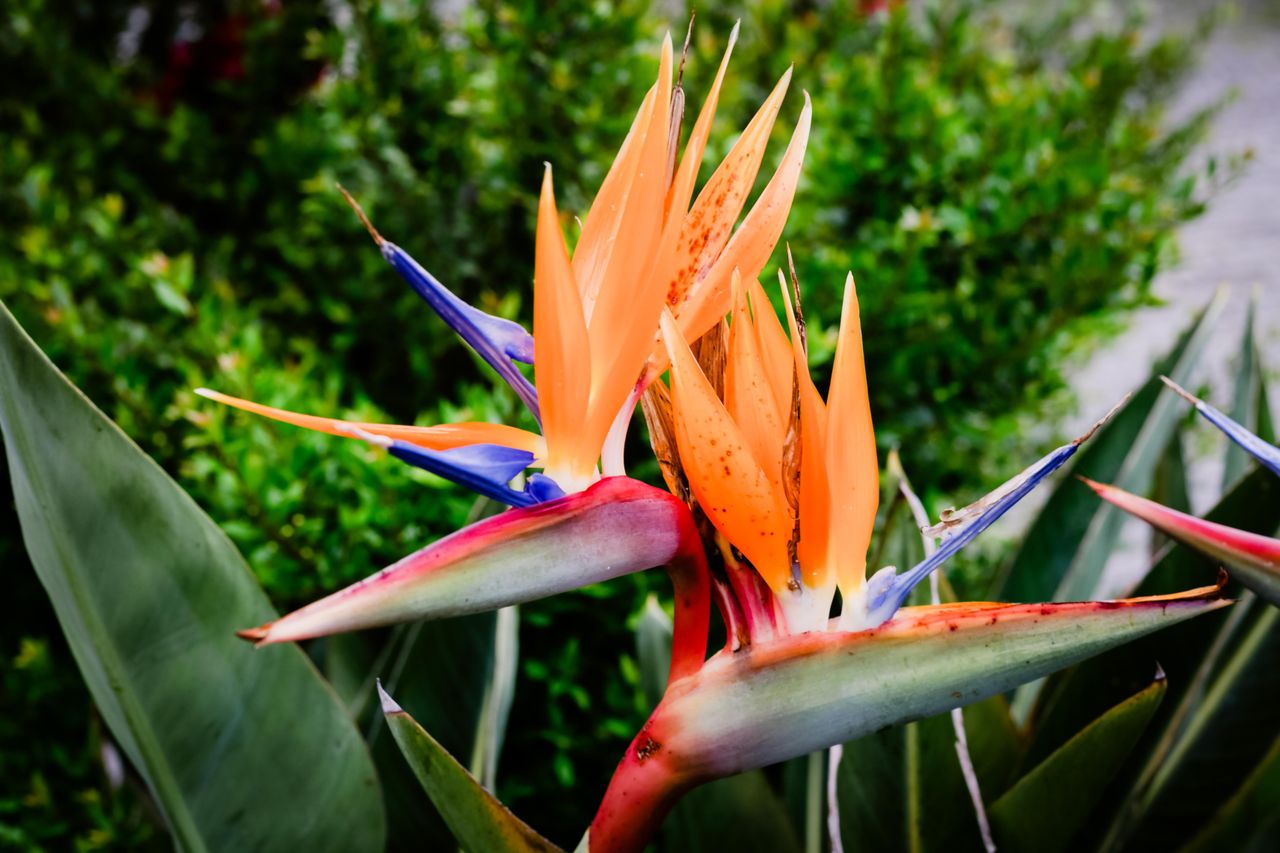
There are statement plants. And then there is the Bird of Paradise.
Few houseplants command a room the way Strelitzia does — broad, paddle-shaped leaves fanning outward like a tropical sculpture, reaching heights of 4, 6, even 8 feet indoors with the right conditions, creating the kind of dramatic architectural presence that most plants spend their entire lives failing to achieve.
In its native South Africa, the Bird of Paradise produces what may be the most spectacular flower of any commonly grown plant — vivid orange and electric blue crests that genuinely look like the head of a tropical bird bursting from a green sheath. In American homes, getting those flowers is a real but achievable challenge that requires understanding what this plant actually needs — which is quite different from what most care guides suggest.
This guide covers everything honestly: the biology behind the iconic leaf splitting, why your indoor BOP probably won’t flower without specific intervention, the exact care requirements that produce large, healthy foliage, and the counterintuitive techniques that can actually trigger blooms. Plus everything competitors routinely miss.
Table of Contents
- What Is a Bird of Paradise? The Naming Story Nobody Tells
- The 5 Strelitzia Species: How to Tell Them Apart
- The Science of Leaf Splitting (It’s Not Damage)
- The New Leaf Unfurling Mystery
- Bird of Paradise Light Requirements: What “Bright” Really Means
- How Often to Water a Bird of Paradise
- Bird of Paradise Humidity & Temperature
- Soil, Drainage & Pot Selection
- Fertilizing for Maximum Leaf Size
- How to Get Your Bird of Paradise to Flower Indoors
- The Root Restriction Strategy for Blooms
- Pruning Bird of Paradise
- Repotting: The Strategic Decision
- Propagation by Division
- Bird of Paradise Leaves Turning Brown: 6 Causes Diagnosed
- Bird of Paradise Leaves Curling: Causes & Fixes
- Complete Problems & Solutions Guide
- Bird of Paradise Indoor Plant: Styling & Placement
- Bird of Paradise & Pets: Toxicity Facts
- US Buying Guide & Price Ranges
- Frequently Asked Questions
1. What Is a Bird of Paradise? The Naming Story Nobody Tells
Strelitzia is a genus of five species of monocotyledonous flowering plants native to South Africa — specifically to the Eastern Cape and KwaZulu-Natal provinces, where they grow in coastal scrub, riverbanks, forest margins, and open grassland.
The Naming Story: Queen Charlotte of Mecklenburg-Strelitz
The genus name Strelitzia doesn’t come from anything tropical or bird-related. It was named in 1773 by English botanist Sir Joseph Banks in honour of Queen Charlotte of Mecklenburg-Strelitz — the German-born wife of King George III of Britain. Charlotte was born in the duchy of Mecklenburg-Strelitz in northern Germany, and Banks — who served as director of the Royal Botanic Gardens at Kew — named the genus after her duchy when botanical specimens first arrived at Kew from the Cape Colony.
According to the historical records preserved by the Oxford University Herbaria, the species name reginae means “of the queen” in Latin — a double dedication. So the full botanical name Strelitzia reginae translates, essentially, to “the queen’s plant from the Strelitz duchy.”
The common name “Bird of Paradise” came later and independently — from the striking resemblance of the flower to the head of a tropical bird of paradise, complete with an “beak” (the green spathe), a “crest” (the orange sepals), and “plumage” (the brilliant blue petals).
In Its Native South Africa
In the wild, Strelitzia reginae grows in dense clumps along coastal and riverbank areas of the Eastern Cape. It is specifically adapted to nutrient-poor, well-draining soils and full, intense South African sun. The plant is pollinated almost exclusively by sunbirds — small, nectar-feeding birds that land on the blue petals, which function as a perch, inadvertently collecting and transferring pollen as they feed.
This evolutionary relationship with sunbirds — rather than insects — explains the flower’s unusual structure, its positioning, and its vivid coloration. The plant engineered its flower specifically for a bird visitor, not a bee.
2. The 5 Strelitzia Species: How to Tell Them Apart
Most US care guides cover only two species. All five are worth knowing — both because several appear in US retail and because their care differences are significant.
Strelitzia reginae — Orange Bird of Paradise
The most popular species. Compact — 4–6 feet tall indoors. Distinctive elongated, paddle-shaped leaves on long petioles. Produces the iconic orange-and-blue flowers most associated with the common name. The species used as South Africa’s national flower symbol.
Best for: Most US home environments. The most manageable size for indoor growing. Most likely to flower indoors with proper conditions.
Strelitzia nicolai — Giant White Bird of Paradise
The species most commonly sold as a large floor plant in US stores. Significantly larger than reginae — reaching 6–8 feet indoors, up to 20 feet outdoors. Broader, more banana-like leaves. Produces white-and-blue flowers (not orange) that are less spectacular than reginae’s and far more rarely produced indoors.
Best for: Statement floor plant applications where maximum height and leaf drama is the goal. Its large leaves are the primary attraction for indoor use — flowering is secondary.
Important distinction: Most of the large “Bird of Paradise” floor plants sold at Home Depot, Lowe’s, and Costco in the USA are Strelitzia nicolai, not reginae. The two are often mislabeled. If your plant has very broad, banana-like leaves and is already 4+ feet tall, it’s almost certainly nicolai.
Strelitzia juncea — Rush-Leaved Bird of Paradise
The unusual one. Mature plants produce leaves that are reduced to just the midrib — essentially leafless sticks, giving it a rush-like or bamboo appearance. Produces the same orange-and-blue flowers as reginae. Very drought-tolerant. Rare in US retail but increasingly available from specialty nurseries.
Best for: Collector specimens, minimalist aesthetic, very high-light environments.
Strelitzia alba — White Bird of Paradise
Similar in size to nicolai, with white flowers. Sometimes confused with nicolai — the main distinguishing feature is leaf width (alba has narrower leaves). Rare in US retail.
Strelitzia caudata — Mountain Strelitzia
The largest species — a genuine tree in its native high-altitude South African habitat. Very rare in cultivation and US retail. Not a standard houseplant option.
Quick ID Guide
| Feature | reginae | nicolai | juncea |
|---|---|---|---|
| Indoor height | 4–6 ft | 6–10 ft | 3–5 ft |
| Leaf shape | Paddle, narrow | Banana, very broad | Rush-like, minimal |
| Flower color | Orange + blue | White + blue | Orange + blue |
| US availability | Common | Very common | Specialty only |
| Flowers indoors | Possible | Rare | Possible |
3. The Science of Leaf Splitting (It’s Not Damage)
Every Bird of Paradise owner eventually panics about the same thing: the large, beautiful leaves develop tears and splits along their length. It looks like damage. It feels wrong. Owners assume something is wrong with their care.
It is completely normal, biologically intentional, and cannot — and should not — be prevented.
Why Leaves Split: The Wind Resistance Adaptation
All five Strelitzia species evolved in coastal and grassland habitats where strong, consistent winds are a fundamental environmental feature. The Eastern Cape coast where S. reginae grows is known for its persistent sea winds.
A large, solid, paddle-shaped leaf in a strong wind would function as a sail — catching the wind and generating enormous mechanical stress on the petiole and root system, potentially uprooting or snapping the plant.
Strelitzia evolved an elegant solution: the leaves are designed to split along parallel lateral veins when they encounter wind resistance. Each split reduces the leaf’s effective surface area, converting one large sail into multiple smaller strips that allow air to pass through rather than catching it. The photosynthetic tissue is preserved — the leaf continues functioning — but the wind resistance is dramatically reduced.
The result: a plant that can survive full coastal exposure with broad leaves that a solid-leafed plant couldn’t maintain.
What This Means Indoors
Indoors, without wind, splitting still occurs — usually from normal leaf movement during watering, cleaning, brushing past the plant, or even the plant’s own growth movement. It’s the leaves doing what they’re genetically programmed to do.
You cannot prevent splitting entirely. What you can do:
- Minimize traffic around the plant — position in a low-traffic area where leaves aren’t frequently brushed
- Keep away from fans, HVAC vents, and direct air currents that create indoor “wind”
- Handle leaves gently during cleaning and care
But a split-free Bird of Paradise is biologically unrealistic. The splits are evidence the plant is healthy and growing actively — not a sign of care failure.
4. The New Leaf Unfurling Mystery
This is a fascinating biological detail that zero competitor guides explain — and that every Bird of Paradise owner eventually wonders about.
When a new Strelitzia leaf emerges, it appears as a tightly rolled tube — like a narrow green cigar pushing up from the center of the plant. As it unfurls, you may notice that the interior of the tube contains water — the new leaf emerges in a water-filled sheath that provides hydraulic pressure to drive the unfurling process.
This water-filled tube is the “unfurling mechanism” — the plant moves water into the rolled leaf cells, and the resulting turgor pressure literally pushes the leaf open in the same way that water pressure inflates a balloon. As the leaf fully unfurls and its cells mature, this hydraulic water is reabsorbed into the plant’s vascular system.
Practical implication: If you notice water dripping from a tightly rolled new leaf when you tilt or water the plant — this is normal. Do not attempt to manually unroll a new leaf — the hydraulic unfurling process needs to happen at its own pace. Forcing a leaf open before it’s ready damages the internal cell structure.
New leaves take 1–4 weeks to fully unfurl from the tight roll stage to the open, mature leaf form. During this period, keep the plant consistently watered — adequate moisture directly supports the hydraulic unfurling process.
5. Bird of Paradise Light Requirements
This is where the most important practical distinction lies — and where most US care guides get it significantly wrong.
The Critical Truth: BOP Needs MORE Light Than Most Guides Say
The Bird of Paradise is a full-sun plant in its native South African habitat. It evolved for intense, direct subtropical sunlight for 6–10 hours per day. The “bright indirect light” recommendation that appears in many guides is technically survivable but not the condition under which this plant thrives.
For healthy foliage: Bright indirect light — near a south or east-facing window — is adequate. The plant maintains its leaves and grows slowly.
For maximum leaf size and growth rate: Direct sun for 2–6 hours daily plus bright indirect light the rest of the day. This is the level that produces the large, dramatic leaves BOP is famous for.
For flowering: Direct sun for a minimum of 4–6 hours daily is generally considered the threshold for flowering potential. Without this light level, indoor flowering is essentially impossible regardless of all other care factors.
Practical Window Positions
South-facing window (best for flowering potential): The highest-intensity natural light in US homes. Position directly in front of, or within 2 feet of, a south-facing window. This is the only natural window position that reliably provides the light intensity approaching what a BOP needs for flowering.
East-facing window (good for foliage): Provides bright direct morning sun followed by bright indirect light. Good for healthy growth and large leaf production. Flowering is unlikely but plant health is excellent.
West-facing window (good for foliage): Strong afternoon direct sun — comparable to east-facing in total daily light. Position directly at the window for maximum exposure.
North-facing window (inadequate): Insufficient for Bird of Paradise. Growth is very slow, leaves are small, and the plant gradually declines. A grow light is essential in this position.
Grow Light Specifications
- Minimum for healthy foliage: 400–600 FC / 80–120 μmol/m²/s PPFD for 14 hours daily
- For flowering potential under grow lights: 800–1,200 FC / 160–240 μmol/m²/s for 16 hours daily — approaching the light intensity of a south-facing window
- Full-spectrum white LED strongly recommended
See our complete grow lights guide for specific product recommendations.
Acclimation Protocol (Critical When Moving Plants)
If your Bird of Paradise has been growing indoors in moderate light and you move it to a bright outdoor position (or vice versa) — gradual acclimation is essential.
Sun-adapted leaves have different internal structure than shade-adapted leaves. Moving a shade-adapted BOP to full sun causes sunscald — brown, bleached patches that appear within days. Moving a sun-adapted BOP to shade causes rapid yellowing.
The 2-week acclimation protocol:
- Week 1: Move to a position with 1–2 hours of direct sun (or increase grow light intensity by 50%)
- Week 2: Move to 3–4 hours of direct sun (or full target grow light intensity)
- Week 3: Place in final target position
This gradual transition gives leaf cells time to adjust their internal pigment and structural composition to the new light regime.
6. How Often to Water a Bird of Paradise
The Correct Approach
Bird of Paradise has a specific watering preference that sets it apart from many tropical houseplants: it prefers a wet-then-dry cycle — thorough watering followed by a meaningful drying period — rather than the consistently moist soil preferred by plants like Calathea or Ferns.
This mirrors its native South African habitat, where seasonal rainfall delivers heavy water followed by dry periods — not constant moisture.
Water when the top 2–3 inches of soil are dry. The deeper root zone can remain slightly moist, but the upper 2–3 inches should feel clearly dry before the next watering.
Watering Frequency by Season
Spring (March–May): Every 7–10 days. Active growth begins, water demand increases.
Summer (June–August): Every 5–7 days in bright, warm conditions. The BOP is a surprisingly thirsty plant during peak growing season — it has large leaf area and fast growth that demands consistent moisture. In very bright conditions, you may water every 5 days.
Fall (September–November): Every 10–14 days. Growth slows, reduce watering frequency accordingly.
Winter (December–February): Every 14–21 days. Minimum watering while maintaining enough moisture to prevent the roots from completely drying out — unlike true succulents, BOP roots shouldn’t go completely dry for extended periods.
How to Water
Water thoroughly — slowly and evenly across the entire soil surface until water flows freely from drainage holes. The large root system needs complete saturation, not surface wetting.
Bottom watering is particularly effective for Bird of Paradise — place the pot in a basin of water for 20–30 minutes to allow the large root mass to absorb water evenly from below. This ensures the deepest roots receive moisture that top watering sometimes misses in large pots.
Empty the saucer after watering — BOP roots are susceptible to rot from prolonged standing water.
For the complete plant-responsive watering framework, see our guide to watering indoor plants.
7. Bird of Paradise Humidity & Temperature
Humidity
Ideal: 50–70% relative humidity.
Tolerated: 40–50% (most US home conditions). The Bird of Paradise is more humidity-tolerant than many tropical species — it won’t immediately decline in typical US home humidity during summer.
Problematic: Below 35% (common in US homes during winter heating season). At this level, brown leaf tips and edges accelerate significantly, and growth slows.
Solutions in order of effectiveness:
- Small humidifier placed nearby (most reliable)
- Pebble tray with water beneath the pot
- Grouping with other large transpiring plants
- Regular leaf misting with room-temperature water (least effective but provides some benefit)
Temperature
Ideal range: 65–85°F (18–29°C) — standard US home temperatures.
Minimum: Strelitzia reginae is surprisingly cold-tolerant — it can handle brief exposure to temperatures as low as 25–30°F (-4 to -1°C) outdoors in protected positions. Strelitzia nicolai is more tender — keep above 50°F (10°C) reliably.
Indoors: Both species do well in standard US home temperatures year-round, provided they’re not near cold drafts from winter windows or direct HVAC vent airflow.
USDA hardiness: Both species are hardy outdoors in zones 10–12. In zones 8–9, reginae survives with protection; in zones below 8, all Strelitzia must be brought indoors before frost.
8. Soil, Drainage & Pot Selection
Ideal Soil Mix
Bird of Paradise has thick, fleshy, moisture-storing roots — adapted to its native boom-bust rainfall cycle. These roots need:
- Good moisture retention (stores water between watering cycles)
- Excellent drainage (prevents waterlogging between cycles)
- Strong aeration (fleshy roots need oxygen, highly susceptible to rot)
Recommended mix:
- 50% quality potting mix
- 30% perlite
- 20% orchid bark or coarse sand
Commercial alternative: A quality indoor potting mix with added perlite (approximately 3:1 ratio) works well and is widely available across the USA.
Avoid: Very dense, peat-heavy mixes that retain moisture for too long between waterings. The BOP’s fleshy roots rot quickly in chronically wet conditions.
Pot Selection
Material: Terracotta is excellent for Bird of Paradise — its porosity helps the soil dry appropriately between the BOP’s preferred wet-dry cycles. The additional weight of terracotta also provides stability for a tall, top-heavy plant.
Size: This is where strategic thinking matters — see Section 11 (The Root Restriction Strategy for Blooms) for the full discussion of pot size choices.
Drainage: Essential. For full pot selection guidance, see our best planters and pots guide.
9. Fertilizing for Maximum Leaf Size
The Bird of Paradise is a heavy feeder compared to most houseplants — it supports large, rapidly growing leaves that demand significant nutrients during the growing season.
What to Use
A balanced liquid fertilizer (10-10-10 or 20-20-20) diluted to half strength is the standard recommendation. For emphasis on leaf growth specifically, a formula slightly higher in nitrogen (the first number) drives lush leaf production.
Recommended schedule:
- Spring and Summer (March–September): Every 2 weeks — more frequently than most houseplants. The BOP’s growth rate during peak season justifies this more frequent feeding.
- Fall (September–November): Every 4 weeks, reducing concentration.
- Winter: Stop completely. Unused fertilizer salts accumulate in the soil during the low-growth winter period and damage roots progressively.
Fertilizer Salt Flush
Because Bird of Paradise is fertilized more frequently than most houseplants, mineral salt buildup in the soil is a real concern over time. Every 2–3 months during the growing season, flush the soil thoroughly — water heavily until a large volume of water has passed through the drainage holes. This leaches accumulated mineral salts before they reach damaging concentrations.
Signs of salt buildup: White crusty deposits on the soil surface or pot exterior; brown leaf tips appearing despite adequate humidity; leaves looking slightly scorched at the tips despite correct watering.
10. How to Get Your Bird of Paradise to Flower Indoors
This is the section every BOP owner eventually wants. The honest truth first: most indoor Birds of Paradise in the USA never flower — not because it’s impossible, but because achieving the conditions required for blooming is genuinely challenging without the right setup.
Here’s what the research and experienced growers actually say:
The Four Requirements for Indoor Flowering
Requirement 1 — Plant maturity (3–5 years minimum): Strelitzia plants do not flower until they reach reproductive maturity — typically a minimum of 3–5 years from seed, or 2–3 years for a purchased nursery specimen that was already some age. Young plants simply cannot flower regardless of conditions.
Requirement 2 — High, direct light (the most commonly unmet requirement): A minimum of 4–6 hours of direct sunlight daily is the generally cited threshold for flowering potential. In most US homes, only south-facing windows in summer approach this level. A very high-output grow light (800–1,200 FC / 160+ μmol/m²/s for 16 hours) is the indoor alternative.
Requirement 3 — Root restriction (the counterintuitive one): A Bird of Paradise that has ample root space and large pot tends to direct its energy toward vegetative growth (more leaves, bigger leaves) rather than reproductive growth (flowers). A plant that is slightly root-bound — filling its pot without room to expand further — receives a biological signal to allocate energy toward reproduction rather than growth.
This is why the standard repotting advice (“repot every 2 years into a larger container”) actively works against flowering for mature plants. Once a BOP reaches its mature size and you want it to flower — stop repotting it into larger containers.
Requirement 4 — Temperature differential (cool nights): In their native South African habitat, Strelitzia experiences warm days and significantly cooler nights — the coastal Eastern Cape has temperatures that can drop to 45–55°F on winter nights. This temperature differential triggers the hormonal changes that initiate flower bud formation. Providing a 10–15°F temperature drop overnight (moving the plant to a cooler room or near a cool window at night during fall) mimics this trigger.
The Flowering Protocol Summary
If you genuinely want to pursue flowering on a mature, established indoor BOP:
- Ensure the plant is at least 3–5 years old and has reached mature size
- Stop repotting — allow it to become somewhat root-bound
- Position in the highest-light location you can provide — south-facing window in direct sun for maximum hours
- Allow nighttime temperatures to drop to 50–60°F (10–15°C) during fall and early winter
- Maintain excellent overall care (consistent water, regular fertilization)
- Be patient — even with all conditions met, flowering may take a full additional season
11. The Root Restriction Strategy for Blooms
This section expands on the counterintuitive pot size strategy that most guides completely overlook.
Two Different Goals = Two Different Approaches
Goal 1 — Maximum leaf size and growth: Use a larger pot (pot up by 2–3 inches regularly). More root space = faster growth = larger leaves. This is the correct approach for a young plant you’re growing toward maturity, or a mature plant you’re primarily enjoying as a foliage plant.
Goal 2 — Triggering flowers: Once the plant is mature, keep it in the current pot. Allow the root system to fill the container. When the plant shows signs of being root-bound (roots from drainage holes, drying out quickly), move up only 1 inch in pot diameter rather than the usual 2–3 inch jump.
The key distinction: root restriction doesn’t mean neglect — the plant still needs excellent water, light, and fertilizer care. It simply means the root system is operating in a deliberately restricted space that signals to the plant’s hormonal system that it’s time to reproduce rather than continue expanding vegetatively.
12. Pruning Bird of Paradise
Bird of Paradise needs minimal pruning compared to many houseplants. Here’s when and how:
When to Prune
Dead or brown leaves: Remove at any time. Cut at the base of the petiole (the long stem connecting the leaf to the plant’s central clump) with clean, sharp pruning shears.
Damaged or split leaves (if aesthetically undesirable): Remove individual damaged leaves, or trim individual split sections if you prefer cleaner-looking edges. Cut parallel to the natural grain of the leaf for the most natural appearance.
Spent flower stalks: After a flower bloom is finished, cut the stalk at the base. This directs energy toward new growth rather than maintaining a dead stalk.
Do not prune: Green, healthy leaves — even older ones. Unlike some plants that benefit from leaf removal to redirect energy, the BOP’s large leaf area is its primary energy-generating system. Removing healthy leaves reduces the plant’s ability to grow and flower.
Pruning Tools
Use clean, sharp pruning shears or a serrated hand saw for thick petioles. Sterilize with isopropyl alcohol before use — clean cuts prevent disease entry through fresh wounds.
13. Repotting: The Strategic Decision
When you repot your Bird of Paradise depends on what you want from it:
For a young plant (under 3–4 years old): Repot every 1–2 years in spring, moving up 2–3 inches in diameter each time. Encourage maximum root expansion and vegetative growth.
For a mature plant (3+ years) being grown for foliage: Repot every 2–3 years when roots are clearly outgrowing the container (visible from drainage holes, plant drying extremely fast).
For a mature plant being managed for flowering: Repot as infrequently as possible — only when the plant shows signs of significant stress from being root-bound (wilting despite watering, dramatically slowed growth). When you do repot, move up only 1 inch in diameter.
The Repotting Process
Bird of Paradise has thick, fleshy roots that can be quite large and tangled. Work gently — these roots are more brittle than the fine roots of most houseplants and snap easily under rough handling.
Important: If the plant is severely root-bound with roots tightly circling the root ball, cut 3–4 vertical slits through the outer root mass with a clean knife before repotting. This encourages outward root growth into the new soil rather than continuing to circle.
For the complete repotting process, see our step-by-step repotting guide.
14. Propagation by Division
Division is the only practical propagation method for Bird of Paradise at home. Seed propagation is technically possible but requires soaking seeds for several days before planting, and the resulting plants can take 7–10 years to reach flowering size — making it impractical for most home growers.
Division Method
Division is best done during spring repotting when the plant has multiple stems/shoots growing from the base.
Step 1: Remove the plant from its pot and gently clear soil from around the root mass to expose the rhizome connections between individual shoots.
Step 2: Identify natural separation points between shoots — locations where the rhizome between two shoots can be separated without major root damage.
Step 3: Using a clean, sharp knife or pruning saw, cut through the rhizome at the separation point. Each division must have:
- At least 1–2 healthy shoots with leaves
- A viable root system attached
Step 4: Allow cut surfaces to dry for 30–60 minutes before potting — this helps callous the wound and reduces rot risk.
Step 5: Pot each division in appropriately sized containers with fresh potting mix. Water lightly and place in lower light for 2–4 weeks while the divided root systems re-establish.
Important: Divisions experience significant transplant shock — expect some leaf yellowing and drop in the weeks after division. This is normal. New growth confirms successful establishment.
15. Bird of Paradise Leaves Turning Brown: 6 Causes Diagnosed
This is the most searched BOP problem — and the most commonly misdiagnosed because different types of browning look superficially similar but require different treatments. Location and texture are the critical diagnostic factors.
Brown Type 1: Dry, Crispy Edges and Tips
Pattern: Browning begins at the leaf tips and edges, progressing inward. Dry and papery to the touch.
Most likely causes:
- Low humidity (most common in US homes during winter)
- Underwatering — the plant’s large leaf area loses moisture faster than the roots supply it
- Mineral salt buildup from fertilizer or tap water
- Draft or HVAC vent exposure — dry air channeled directly at leaves
Fix: Check soil moisture first. If dry — water thoroughly. If adequately moist — raise humidity with a humidifier or pebble tray. Move away from vents and drafts. Switch to filtered water if tap water is mineral-heavy.
Brown Type 2: Dark, Soft, Wet-Looking Patches (Especially at Leaf Bases)
Pattern: Brown that appears soft or mushy rather than crispy. May start at the base of a leaf where the petiole meets the main stem.
Most likely cause: Root rot from overwatering — the most serious BOP problem.
Fix: Stop watering immediately. Remove from pot and inspect roots — trim all brown, mushy root tissue with clean scissors. Repot in fresh, dry mix. Resume conservative watering.
Brown Type 3: Bleached, Whitish-Brown Patches on Leaf Faces
Pattern: Irregular patches on the leaf surface, concentrated on the side facing the light source. Dry and papery — sometimes bleached white before browning.
Cause: Direct sun scorching / sunburn. Particularly common when plants are moved from a lower-light position to a bright window without acclimation.
Fix: Move away from direct sun or filter with a sheer curtain. Acclimate gradually (Section 5).
Brown Type 4: Entirely Brown, Dead Leaves (Older Lower Leaves)
Pattern: Entire older, lower leaves turning uniformly brown and dying.
Cause: Natural aging. Older leaves at the base of the clump naturally die as new leaves emerge from the center. This is normal leaf turnover.
Fix: Remove dead leaves cleanly at the petiole base. No care adjustment needed.
Brown Type 5: Brown with Yellow Border (Yellow-Brown Halo)
Pattern: Brown patches surrounded by a yellow halo on otherwise green leaves.
Cause: Bacterial or fungal leaf spot — promoted by water sitting on leaves, poor airflow, or infected soil.
Fix: Remove affected leaves. Improve airflow around the plant. Water at soil level only — avoid wetting leaves. Apply copper-based fungicide if widespread.
Brown Type 6: Light Brown, Papery Patches After New Leaf Unfurls
Pattern: The inner surface of a newly unfurled leaf shows light brown streaking or patches that weren’t there before the leaf opened.
Cause: Mechanical damage that occurred to the leaf while it was still in the rolled tube stage — the damage becomes visible only when the leaf unfurls. Often caused by a physical impact or extreme temperature event during unfurling.
Fix: Cosmetic only — the damage is done before the leaf opened. Ensure new developing leaves aren’t exposed to extreme temperatures or physical impact.
16. Bird of Paradise Leaves Curling: Causes & Fixes
Leaf curling — leaves rolling inward or downward along their length — is the BOP’s clearest stress signal and fortunately the most easily resolved.
Cause 1: Underwatering (Most Common)
How to identify: Soil is dry at 2–3 inch depth. Curling accompanies wilting or limp leaves. Pot feels light.
Fix: Water thoroughly and deeply. A severely underwatered BOP should uncurl noticeably within 6–12 hours. Bottom watering is particularly effective for getting water quickly to the large, deep root system.
Cause 2: Low Humidity
How to identify: Soil moisture is correct, but the air is very dry (winter heating season, air-conditioned rooms). The curling is less severe than drought-related curling and may be accompanied by brown leaf tips.
Fix: Increase humidity — humidifier, pebble tray, or grouping with other plants. Misting provides brief relief but must be consistent to have sustained impact.
Cause 3: Root Bound
How to identify: Plant dries out extremely quickly after watering. Roots visible at drainage holes or soil surface. Despite watering, the plant continues to curl because the root system is too crowded to adequately supply the large leaf area with moisture.
Fix: Repot into a slightly larger container with fresh potting mix. Balance this against the flowering strategy (Section 11) if the plant is mature.
Cause 4: Cold Stress
How to identify: Curling appeared after a temperature drop — a cold night, a drafty window, HVAC turned on for the season. May be accompanied by darkening of the affected leaf areas.
Fix: Move to a warmer, stable temperature position. Recovery may be slow — cold-stressed leaves don’t always fully recover.
17. Complete Problems & Solutions Guide
| Problem | Most Likely Cause | Fix |
|---|---|---|
| Leaves curling | Underwatering (most common) | Water thoroughly; check root bound |
| Crispy brown tips and edges | Low humidity or underwatering | Humidifier; increase watering |
| Soft brown patches at base | Root rot from overwatering | Inspect roots; dry out; repot |
| Bleached patches on leaf face | Sunscald | Move from direct sun; acclimate gradually |
| Yellow leaves, lower first | Overwatering | Stop watering; check soil; allow to dry |
| Yellow leaves, entire plant pale | Insufficient light | Move to brighter position or add grow light |
| Leaves splitting | Normal wind adaptation | Do nothing — this is healthy |
| New leaf won’t unfurl | Normal process (up to 4 weeks) | Wait; ensure adequate watering |
| Slow or no growth | Insufficient light (most common) | Increase light significantly |
| No flowers after years of care | Insufficient light + wrong pot size | South window + allow root restriction |
| Brown patches with yellow halo | Fungal/bacterial leaf spot | Remove affected leaves; improve airflow |
| Small, pale new leaves | Insufficient light or nutrition | Increase light; resume fertilization |
18. Bird of Paradise Indoor Plant: Styling & Placement
The Bird of Paradise is one of the most architecturally powerful plants in the US houseplant market — and using it effectively in interior design requires understanding its visual strengths.
The corner anchor: A large BOP (S. nicolai) in a room corner, with its fan-like leaves spreading outward, creates the most dramatic focal point available from a single plant. Position in a bright corner opposite a south or west-facing window for maximum visual impact and adequate light.
The window framing plant: Flanking either side of a large south-facing window with two BOP specimens creates a symmetrical, almost classical interior composition — the backlight through the large leaves is extraordinary.
Styling with pots: The BOP’s tropical character suits rattan baskets, terracotta, and light concrete planters — natural, organic materials that complement rather than compete with the plant’s bold form. See our indoor plants home décor guide for broader plant styling guidance.
Rotate regularly: Every 2–3 weeks, rotate the pot a quarter turn to ensure even light distribution and balanced canopy development on all sides.
19. Bird of Paradise & Pets: Toxicity Facts
The Bird of Paradise (Strelitzia species) is mildly toxic to cats and dogs per ASPCA classification. This distinguishes it from the Money Tree (non-toxic) and Monstera (moderate toxicity) in the spectrum of popular houseplant pet safety.
What causes toxicity: The flowers and seeds contain hydrocyanic acid (a cyanide compound) and tannins. Ingestion of flowers or seeds causes the most significant symptoms.
Typical symptoms from ingestion: Nausea, vomiting, mild lethargy, drowsiness.
The practical risk assessment: The plant’s large, upright growth form and smooth leaf surfaces make it less attractive to pets than many other houseplants. The leaves themselves cause milder symptoms than the flowers (which indoor plants rarely produce). The primary concern is for pets that actively chew on houseplants.
If your pet ingests any part: Contact your veterinarian or ASPCA Animal Poison Control Center (888-426-4435).
For households with active plant-chewing pets, consider the pet-safe indoor plant alternatives — the Areca Palm and Parlor Palm offer similar tropical, large-format aesthetics with zero toxicity.
20. US Buying Guide & Price Ranges (2026)
Price Ranges
| Form/Size | Typical Price | Common Source |
|---|---|---|
| S. nicolai (small, 12–18 in) | $20–$45 | Home Depot, Lowe’s, Trader Joe’s |
| S. reginae (small) | $25–$50 | Nurseries, The Sill |
| S. nicolai (medium, 2–3 ft) | $50–$100 | Nurseries, Bloomscape, Costa Farms |
| S. nicolai (large, 4–5 ft) | $100–$200 | Nurseries, Costco seasonal, IKEA |
| S. nicolai (statement, 6+ ft) | $200–$500 | Specialty plant retailers, Etsy |
| S. reginae (mature, blooming size) | $60–$150 | Specialty nurseries |
| S. juncea (rare) | $40–$120 | Specialty nurseries, Etsy |
Where to Buy
Best value for large nicolai: Costco (seasonal — typically spring and summer), IKEA garden sections, Home Depot garden center.
Best selection and quality: Local independent nurseries — particularly those specializing in tropical plants in southern US states (Florida, California, Texas) where BOP is also an outdoor landscape plant.
Best for online ordering: Bloomscape (bloomscape.com) and The Sill (thesill.com) ship established plants nationwide with solid packaging.
Best for rare species and collector plants: Etsy specialty plant sellers — S. juncea, mature S. reginae, and large established specimens.
What to Look For When Buying
- Deep, rich green leaves without yellowing or browning beyond normal tip wear
- No visible insects on leaf undersides or soil surface
- Multiple leaves (at least 3–5) indicating an established plant, not a recently divided single shoot
- Stable, upright posture — a severely drooping plant has been underwatered in store
- Firm petioles — soft, mushy petioles at the base indicate root rot
21. Frequently Asked Questions
Q: How often should I water a bird of paradise? Every 5–7 days in peak summer, every 7–10 days in spring and fall, every 14–21 days in winter. Always check before watering — water when the top 2–3 inches of soil are dry. In summer growing conditions, BOP is thirstier than most large houseplants and shouldn’t be left bone dry for extended periods.
Q: Why are my bird of paradise leaves curling? Almost always underwatering — the most common cause. Water thoroughly and deeply, and most BOP leaves uncurl within 6–12 hours. Less commonly: low humidity, being root-bound, or cold stress. Check the soil first — if dry, water is the answer.
Q: Why are my bird of paradise leaves turning brown? There are six distinct brown leaf patterns with different causes (see Section 15). The most important diagnostic: dry crispy browning at tips and edges = low humidity or underwatering; soft wet browning at leaf bases = root rot from overwatering; bleached patchy browning on leaf faces = sunscald.
Q: Will my bird of paradise flower indoors? Possibly — but only with the right conditions: 3–5+ years of age, minimum 4–6 hours of direct daily sunlight (or equivalent grow light), slightly root-bound pot, and cool nighttime temperatures in fall. Most indoor BOPs in typical US home conditions don’t flower — not because they’re sick, but because the light requirement genuinely exceeds what most homes provide without a south-facing window.
Q: Why are my bird of paradise leaves splitting? This is completely normal — not damage. All Strelitzia species evolved split leaves as a wind resistance adaptation in their coastal South African habitat. You cannot prevent it and shouldn’t try. See Section 3 for the full biological explanation.
Q: How big does a bird of paradise get indoors? S. reginae typically reaches 4–6 feet indoors. S. nicolai typically reaches 6–10 feet indoors (and can push higher in very bright conditions with generous pot size). Both are slow-growing compared to their potential outdoor size, and root restriction through pot size directly controls ultimate indoor size.
Bird of Paradise Quick-Care Reference
| Factor | Requirement |
|---|---|
| Light | Bright direct to indirect; 4–6 hrs direct for flowering |
| Water | When top 2–3 inches dry; thoroughly |
| Frequency | Every 5–7 days (summer) to 14–21 days (winter) |
| Humidity | 50–70% preferred; tolerates 40% |
| Temperature | 65–85°F; reginae hardy to 25°F briefly; nicolai above 50°F |
| Soil | Well-draining: potting mix + perlite + bark |
| Fertilizer | Every 2 weeks (spring/summer), balanced; flush salts quarterly |
| Repotting | 1–2 years (young); 2–3+ years (mature/flowering strategy) |
| Propagation | Division only (practical); seed takes 7–10 years to flower |
| Leaf splitting | Normal — do not try to prevent |
| Pet Safety | ⚠️ Mildly toxic to cats and dogs |
| Difficulty | Easy to moderate — very forgiving on care, demanding on light |