
The Ultimate Monstera Deliciosa Care & Growing Guide
Tags: monstera deliciosa, monstera deliciosa care, monstera deliciosa care guide, monstera deliciosa growing guide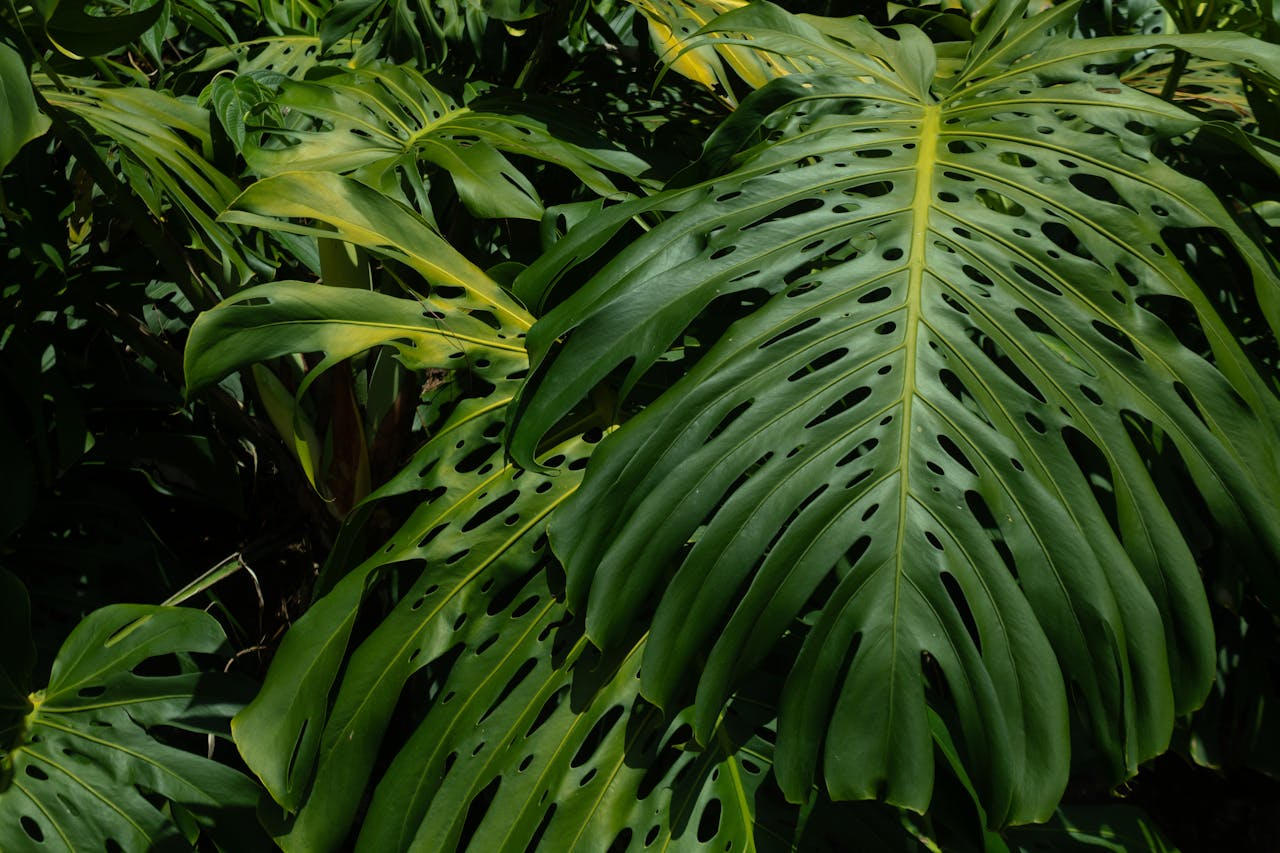
| Tropical– Origin | Bright Indirect– Light | 1–2 Weeks– Watering | Spring/Summer– Best Growth | 5–10yrs– Lifespan indoors |
The Monstera deliciosa — also called the Swiss cheese plant — is the most recognisable houseplant of the decade. Its dramatic split leaves are everywhere from interior design shoots to social media feeds. But it’s also one of the most misunderstood plants in cultivation, with a surprising number of owners keeping it in conditions that prevent it from ever developing its signature fenestrated leaves.
This guide gives you everything you need to grow a genuinely thriving Monstera — not just a surviving one.
1. Light Requirements
Monstera deliciosa needs bright indirect light for 5–8 hours per day. In its natural habitat — the rainforest floors of Central America — it receives filtered light through a dense canopy. Direct afternoon sun through a window scorches leaves quickly.
Best positions: within 1.5–2 metres of an east, south, or west-facing window. A sheer curtain filters harsh direct sun while maintaining brightness.
| 🌞 USA/UK Note: In northern climates (UK, northern USA states), Monstera benefits from the brightest south-facing window available in winter. In southern US states, west-facing windows with afternoon shade are often ideal. |
2. Watering — The Most Common Mistake
Water when the top 3–5cm of soil feels dry — test with your finger, not a calendar. In summer this typically means every 7–10 days; in winter every 14–21 days. The Monstera’s number one killer is overwatering.
Signs of overwatering: yellowing lower leaves, soggy soil that never dries, musty smell, wilting despite wet soil (root rot).
Signs of underwatering: leaves drooping but soil completely dry, brown crispy leaf edges, very lightweight pot.
3. Soil Mix
Monstera needs a well-draining, chunky mix that retains some moisture but never becomes waterlogged. The ideal home mix:
- 60% standard potting compost
- 20% perlite (drainage and aeration)
- 20% bark chips or orchid bark (mimics natural growing medium)
Avoid: standard potting compost alone (retains too much moisture), garden soil (too heavy, poor drainage).
For full soil guidance, see our complete article on the best soil mix for vegetable gardens — the same principles of drainage and aeration apply to tropical houseplants.
4. Repotting Your Monstera
Repot every 1–2 years, or when roots emerge from drainage holes or circle the root ball densely. Spring is the best time — the plant is entering its active growth period and recovers quickly.
| Pot size | Choose a pot 5–8cm larger in diameter than the current one — not too much larger |
| Pot material | Terracotta is excellent — porous walls allow roots to breathe |
| Method | Water thoroughly 24 hours before repotting. Gently loosen root ball, remove old soil, position in new pot, backfill, water well |
| After repotting | Keep in bright indirect light, reduce watering for 2–3 weeks while roots re-establish |
| Signs it needs repotting | Roots from drainage holes, roots circling pot base, very fast drying after watering, stunted growth despite good conditions |
5. The Fenestration Question — Why Aren’t My Leaves Splitting?
This is the most common Monstera question. Young Monstera plants produce solid, uncut leaves. Fenestration (the characteristic holes and splits) develops as the plant matures and receives adequate light.
If your Monstera is producing large solid leaves with no splits after 2+ years: insufficient light is almost always the cause. Move it significantly closer to a window and increase brightness. Fenestration will begin appearing on new leaves within a few months.
6. Support — Moss Poles and Stakes
Monstera is a climbing plant in nature — it uses aerial roots to attach to trees and grow upward. Providing a moss pole or coir pole encourages the natural climbing habit and produces significantly larger leaves with better fenestration.
- Insert the pole when repotting to avoid disturbing roots later
- Attach stems loosely with plant ties — never wire or rigid clips
- Mist the moss pole occasionally — Monstera aerial roots absorb moisture from it
- A 60–90cm pole is sufficient for the first few years; extend as the plant grows
7. Propagation
Monstera is propagated by stem cuttings. Each cutting needs at least one node (the bump on the stem where a leaf attaches) and ideally one aerial root.
- Cut below a node with clean, sharp scissors or secateurs
- Allow the cut end to dry for 30–60 minutes (callusing reduces rot risk)
- Place in water or moist potting mix — water propagation lets you monitor root development
- Roots develop in 3–6 weeks in water at room temperature
- Pot on when roots are 3–5cm long — don’t wait until they’re overgrown
8. Common Problems & Fixes
| Problem | Likely Cause | Fix |
| Yellow lower leaves | Overwatering / root rot | Stop watering; check roots; repot if root rot present |
| Brown crispy edges | Low humidity or underwatering | Mist leaves; place on pebble tray; check soil moisture |
| No leaf splits | Insufficient light | Move closer to bright window; add grow light in winter |
| Pale, washed-out leaves | Too much direct sun | Move back from window or add sheer curtain |
| Leggy, long stems | Low light | Move to brighter position; aerial roots seeking light |
| Drooping leaves | Underwatering or repotting stress | Check soil; if dry, water thoroughly; if recently repotted, normal for 2 weeks |
9. Monstera Growing Calendar (UK & USA)
| Spring (Mar–May) | Best time to repot, propagate, begin feeding. New growth accelerates. Move to brighter position. |
| Summer (Jun–Aug) | Peak growth. Water more frequently; check soil every 4–5 days. Feed every 2 weeks. |
| Autumn (Sep–Nov) | Begin reducing feed. Reduce watering frequency. Move away from cold windows. |
| Winter (Dec–Feb) | Rest period. Water very sparingly (every 2–3 weeks). No feeding. Minimal repotting. |
FAQ
Q: Why does my Monstera have no holes in its leaves?
A: Young Monstera plants produce solid leaves until they mature. Fenestration develops with age and good light. If your plant has been growing for over 2 years without developing splits, insufficient light is almost certainly the cause — move it to a significantly brighter position.
Q: How fast does Monstera grow?
A: In ideal conditions (bright indirect light, warm temperatures 18–27°C/65–80°F, regular feeding in spring and summer), Monstera can produce one new leaf every 2–4 weeks during the growing season. In low light or winter, growth slows significantly.
Q: Is Monstera toxic to cats and dogs?
A: Yes. Monstera deliciosa is toxic to cats, dogs, and humans if ingested, due to insoluble calcium oxalate crystals. Keep out of reach of pets and children. Symptoms include oral irritation, drooling, and vomiting.
Q: How big does a Monstera get indoors?
A: Indoors, Monstera typically reaches 2–3 metres in height with good conditions and support. Individual leaves can grow to 45–60cm wide on a mature plant. Growth is easily managed by pruning and choosing a smaller pot.
| 📚 Authority Sources • Gardeners’ World — Monstera growing guide • NC State Extension — Monstera deliciosa |
| 🌿 More from plantcarehacks.com → Best indoor plants that grow without sunlight → Why are my plant leaves turning yellow? |