
Succulent Care Guide: How to Keep Succulents Alive & Thriving
Tags: succulent, succulent care guide, succulent care guide beginners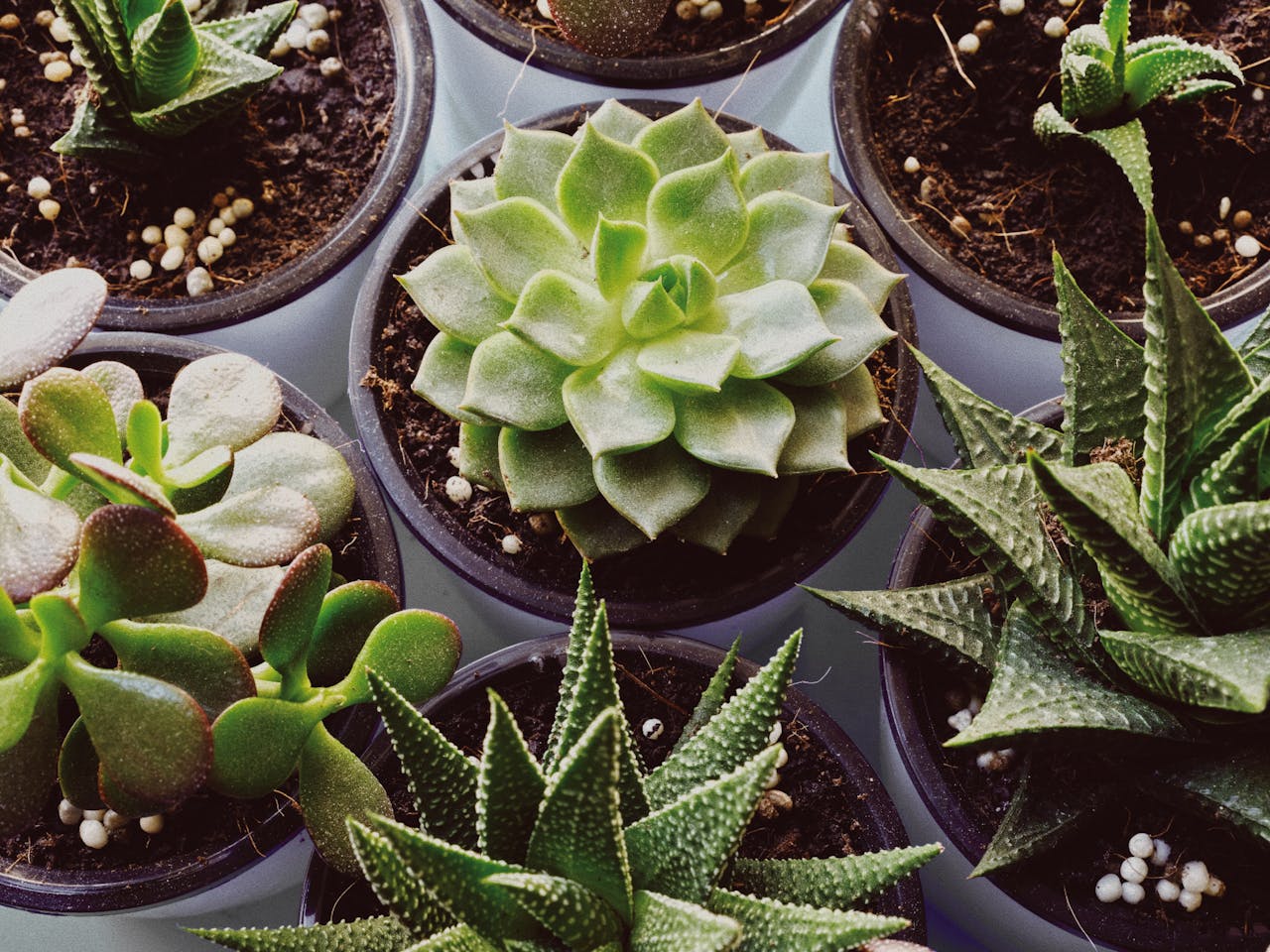
| 90% Killed by overwatering | 6+hrs Daily light needed | Free Propagation cost | 2–4 wks Watering interval | 500+ Succulent varieties |
Succulents have a reputation as indestructible, zero-effort plants. This reputation is half true: succulents are genuinely forgiving of neglect and drought. They are, however, extremely unforgiving of overwatering and insufficient light — the two things most indoor environments provide in abundance.
Understanding the actual conditions succulents evolved in — hot, dry, with intense sun and very infrequent rain — is the foundation of keeping them alive and beautiful indoors.
1. Light: The Non-Negotiable Requirement
Succulents need a minimum of 6 hours of bright light per day. In their natural habitats — deserts, rocky hillsides, and arid regions worldwide — they receive intense, direct sunlight for most of the day.
Indoors, the brightest spot is almost always not bright enough unless it’s a south or west-facing windowsill with direct sun access. Signs that your succulent needs more light: stretching (etiolation) — the stem growing long and thin as the plant reaches toward light; pale, faded colouring; soft leaves.
| 💡 The Etiolation Warning If your succulent is growing tall and lanky with increasing gaps between leaves rather than staying compact and rosette-shaped, it is etiolating — reaching desperately for more light. The only fix is significantly more light. Once etiolated, that growth cannot be reversed — but new compact growth will form at the top when light improves. |
For homes without adequate natural light: LED grow lights are highly effective for succulents. Run for 12–14 hours per day positioned 15–20cm above the plants.
2. Watering: The Soak and Dry Method
The single most important succulent care technique is the soak and dry method: water thoroughly until water drains from the base of the pot, then do not water again until the soil has dried out completely. Not partially dry — completely dry.
In summer: this typically means watering every 2–4 weeks. In winter: once a month or less.
| Summer watering | Every 14–21 days — when soil is fully dry |
| Winter watering | Every 4–6 weeks — succulents go semi-dormant in winter |
| Water temperature | Room temperature — cold water shocks roots |
| Watering method | Water the soil, not the leaves — water sitting in rosette centres causes rot |
| Drainage | Non-negotiable — pots without holes kill succulents; never use saucers that hold water |
| Overwatering signs | Soft, transparent, mushy leaves; stem rot at soil level; dropping leaves with slight touch |
3. Soil: Drainage is Everything
Standard potting compost retains too much moisture for succulents. The ideal succulent soil drains almost immediately after watering and dries out quickly.
Ready-made succulent and cactus compost is widely available at garden centres in both the UK and USA. For best results, mix it 50/50 with perlite or coarse horticultural grit for even faster drainage.
- Never use garden soil — too dense, too moisture-retentive, may contain pests
- Never use regular potting compost alone — retains too much moisture
- Add 30–50% perlite to any compost for succulents
- The soil should feel completely dry within 24–48 hours of watering in good conditions
4. Pots and Containers
Terracotta pots are the best choice for succulents. Terracotta is porous — moisture evaporates through the walls, keeping the root zone drier and dramatically reducing overwatering risk. This mirrors the naturally rocky, porous growing conditions succulents evolved in.
If you love the look of glazed or ceramic pots, they work — but require much more careful watering (soil dries out more slowly) and must have drainage holes. No drainage holes = succulent death.
5. Free Propagation: Leaf Propagation and Offsets
Leaf propagation:
Many succulents (Echeveria, Sedum, Graptopetalum) can be propagated from individual leaves. Gently twist a healthy, firm leaf from the stem — it must come away cleanly with the base intact. Lay on dry succulent compost and mist lightly every 2–3 days. Tiny rosettes develop at the base of the leaf over 4–8 weeks.
Offsets (pups):
Many succulents produce offsets — small plants that grow at the base of the parent. When the offset is 1/3 the size of the parent, it can be gently removed and potted separately. Allow the separation wound to callus for 24 hours before planting.
Stem cuttings:
For taller, leggy succulents, cut the rosette head from the stem, allow to callus for 2–3 days, then plant in dry succulent compost. Don’t water for the first week — this encourages root development.
6. Most Popular Succulent Varieties: Care at a Glance
| Variety | Light | Watering | Size | Best For |
| Echeveria | Full sun | Every 3 wks | 5–15cm | Windowsill rosettes |
| Haworthia | Bright indirect | Every 3–4 wks | 5–10cm | Low light tolerance |
| Aloe vera | Bright indirect | Every 2–3 wks | 30–60cm | Practical + decorative |
| Jade plant | Bright indirect | Every 2–3 wks | 60–100cm | Long-lived statement |
| String of pearls | Bright indirect | Every 2–3 wks | Trailing | Hanging baskets |
| Crassula | Full sun | Every 3 wks | 10–30cm | Easy beginner |
FAQ
Q: Why are my succulent leaves falling off when I touch them?
A: Leaves that drop with minimal touch are typically a sign of overwatering. The roots have become damaged and cannot support the leaves, which drop as the plant sheds excess weight. Check roots for rot (brown, mushy). If root rot is present, remove affected roots, let the plant dry out completely before repotting into fresh dry succulent compost. Reduce watering drastically going forward.
Q: My succulent is turning brown and mushy at the base — can I save it?
A: Stem rot at the base is advanced overwatering damage. If the rot hasn’t reached the leaves, cut the stem above the rot, let the cut end callus for 2–3 days, then plant the healthy top section in dry succulent compost. This effectively propagates the healthy part. Don’t water for the first week — the stress encourages root development.
Q: Can succulents survive outdoors in the UK?
A: Some can. Hardy succulents — Sempervivum (houseleeks), Sedum, and some Agave varieties — are fully UK-hardy and thrive outdoors year-round. Tender succulents like Echeveria and most cacti need to come indoors in autumn. Check the specific hardiness rating when buying.
| 🌿 More from plantcarehacks.com → Best indoor plants that grow without sunlight → 12 genius ways to decorate your home with plants on a budget |