
Snake Plant Growing Guide: The Near-Indestructible Houseplant
Tags: snake plant, snake plant care, snake plant care and growing guide, snake plant care guide, snake plant growing guide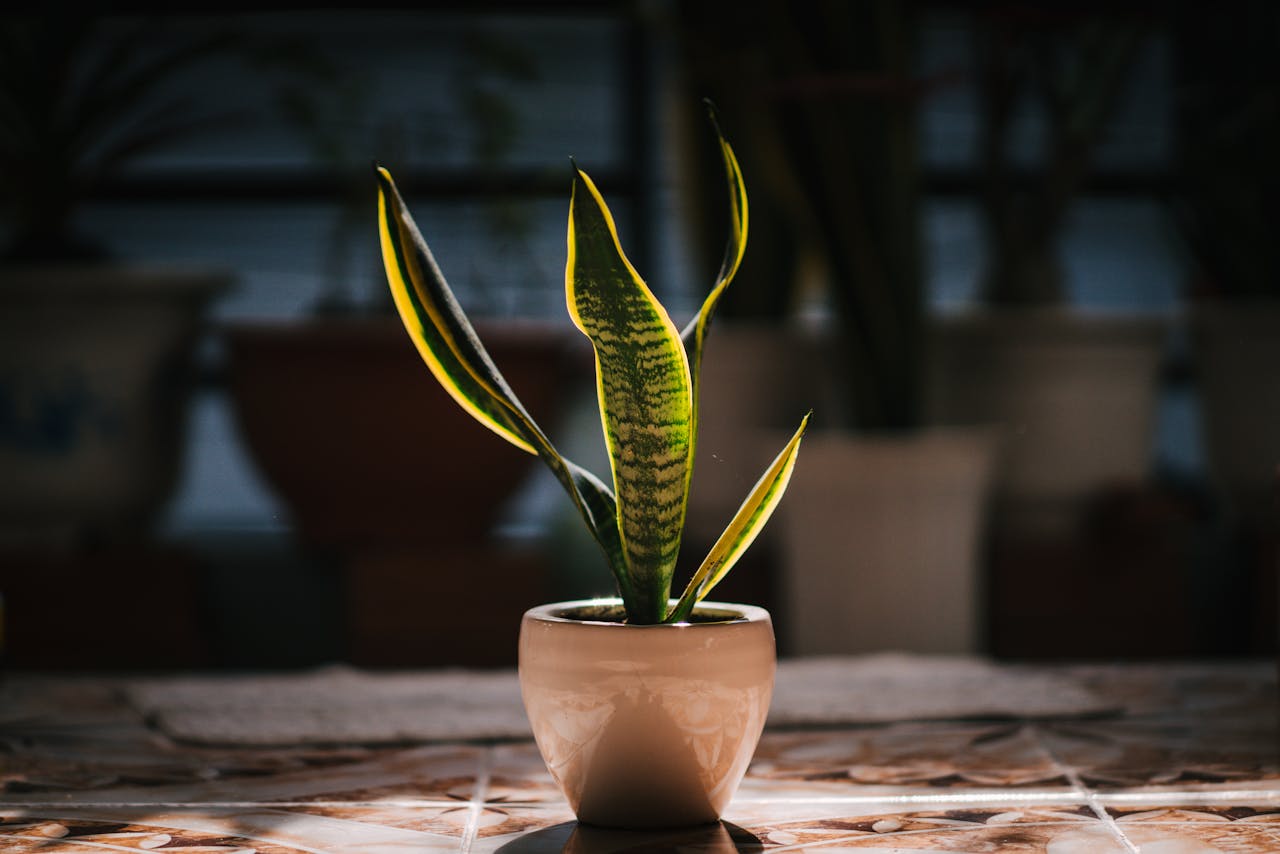
| Near Zero Maintenance | 1–2/month Watering winter | Extremely Low Light minimum | Night O₂ Bedroom safe | Free Propagation |
The snake plant (Sansevieria, now reclassified as Dracaena trifasciata) has one claim to fame above all others: it is the most tolerant of neglect of any commonly available houseplant. It survives — even thrives — in conditions that would kill most other plants. Low light, irregular watering, temperature fluctuations, dust, dry air, and occasional weeks of complete inattention are all within its tolerance.
Yet despite this, many people manage to kill their snake plants. The cause is almost always the same: overwatering. This guide gives you everything you need to grow a genuinely healthy, architecturally impressive snake plant.
1. Why Snake Plants Survive Where Others Don’t
Snake plants are native to West Africa — specifically dry, rocky habitats in Nigeria, the Democratic Republic of Congo, and Ethiopia. They evolved in conditions of:
- Inconsistent, infrequent rainfall followed by extended dry periods
- Poor, well-draining soils with minimal organic matter
- Low to moderate light under tree canopies and rocky outcrops
- Temperature fluctuations between warm days and cooler nights
Every element of indoor living — warm rooms, indirect light, infrequent watering — approximates these conditions. This evolutionary background explains why a snake plant in a dark corner of an office will still be alive and green five years later.
2. Light Requirements
Snake plants tolerate almost any light condition, from very low light to bright indirect. In low light they grow slowly but remain healthy. In bright indirect light they grow faster and may produce more vivid colouring.
Direct afternoon sun through a south-facing window in summer can scorch the leaves — move back slightly or filter with a sheer curtain. The classic ‘indestructible corner plant’ position — away from windows in a dimly lit room — is fine for snake plants, though growth will be minimal.
3. Watering — The Critical Rule
Water thoroughly when the soil is completely dry — not slightly dry, not mostly dry, but completely dry throughout the pot. In summer this is typically every 2–3 weeks. In winter this drops to once a month or less.
| ⚠️ The Overwatering Warning Overwatering is responsible for the vast majority of snake plant deaths. The plant stores water in its thick leaves and rhizomes, allowing it to go weeks without water. Consistently moist soil leads to root rot — often irreversible once established. When in doubt, don’t water for another week. |
The bottom watering method works particularly well for snake plants: place the pot in a tray of water for 20–30 minutes, allowing the roots to draw up what they need. Remove and drain completely. This encourages deeper root growth and avoids water sitting on the leaves or crown.
4. Soil and Pots
Snake plants need fast-draining soil. Standard potting compost retains too much moisture. The ideal mix:
- 50% potting compost or cactus mix
- 50% perlite or coarse sand
Terracotta pots are ideal — their porous walls allow soil to dry faster. If using glazed ceramic or plastic, water even less frequently than you think you need to.
Drainage holes are non-negotiable. A snake plant in a pot without drainage holes will eventually develop root rot regardless of how carefully you water.
5. Snake Plant Varieties
| Dracaena trifasciata | The classic snake plant — upright, grey-green with yellow edges. Most common variety. |
| ‘Moonshine’ | Pale silver-green leaves with a soft, ghostly appearance. Very architectural. |
| ‘Cylindrica’ (spear plant) | Round, cylindrical leaves growing in a fan shape. Highly distinctive. |
| ‘Hahnii’ (bird’s nest) | Compact rosette form; stays low and wide rather than tall. Ideal for small spaces. |
| ‘Laurentii’ | Classic variety with yellow margins on upright leaves. Very common in UK and US garden centres. |
| ‘Black Gold’ | Dark green leaves with golden-yellow edges. One of the most striking varieties. |
6. Propagation — Three Methods
Division (fastest and most reliable):
When repotting, separate the plant by gently pulling apart the root ball — each section with its own roots and leaves can be potted separately. This is the fastest way to multiply snake plants and produces large plants immediately.
Leaf cuttings in water (most satisfying visually):
- Cut a healthy leaf into 8–10cm sections. Note which end is ‘up’ — cuttings planted upside down will not root.
- Place each section root-end-down in a glass of water.
- Roots develop in 4–8 weeks. Keep in bright indirect light and change water every week.
- Pot on when roots reach 3–5cm. Note: variegated varieties (like Laurentii) will revert to plain green when propagated by leaf cutting — use division to preserve variegation.
Leaf cuttings in soil:
Same as water method but insert the lower 2–3cm of each cutting into slightly moist succulent compost. Keep barely moist. Pups (new small plants) emerge from the base of the cutting in 8–12 weeks.
7. Repotting
Snake plants are slow-growing and prefer to be pot-bound — they often flower when their roots have completely filled the pot. Repot only when:
- Roots are visibly growing from drainage holes
- The pot is cracking from root pressure (snake plants are strong enough to split terracotta)
- The plant is toppling because the root ball has outgrown the pot’s base
When you do repot, choose a pot only 3–5cm larger. Repot in spring using the fast-draining mix described above. Water once after repotting and then leave it for 3–4 weeks before the next watering.
8. Snake Plants and Air Quality
Snake plants were among the plants studied in NASA’s 1989 Clean Air Study, demonstrating the ability to remove benzene, formaldehyde, trichloroethylene, and xylene from enclosed air. They are also one of a small group of plants that perform CAM photosynthesis — absorbing CO₂ and releasing oxygen at night rather than during the day, making them a genuinely useful bedroom plant.
For a complete guide to plants that improve bedroom air quality, see our article on best plants for bedroom air quality and sleep.
FAQ
Q: My snake plant leaves are turning yellow at the base — what’s happening?
A: Yellow, soft leaves at the base of a snake plant almost always indicate root rot from overwatering. Remove the plant from its pot and check the roots. Healthy roots are white/tan and firm; rotted roots are brown, black, or orange and mushy. Trim all rotted material, dust cuts with cinnamon, and repot in fresh dry succulent mix. Water very sparingly for the next 6–8 weeks.
Q: My snake plant is growing very slowly — is this normal?
A: Yes. Snake plants are naturally slow growers, particularly in lower light and winter. A few new leaves per year is normal and healthy. If growth has completely stopped for over a year in a plant that should be growing, assess light levels (more light = more growth) and consider whether it needs repotting.
Q: Do snake plants really clean the air?
A: Snake plants have demonstrated measurable VOC-removal capacity in laboratory studies (NASA Clean Air Study). The real-world effect in a typical room with ventilation is less dramatic than the laboratory results suggest, but there is genuine benefit — particularly in poorly ventilated rooms. The night-oxygen production is a real and unique feature that most plants don’t share.
Q: Can I keep a snake plant in the bathroom?
A: Yes — snake plants tolerate the low light and humidity of most bathrooms well. Ensure good drainage and avoid watering more than you would in any other location. The main bathroom risk is overwatering due to the assumption that the humid air means more watering is needed — it doesn’t.
| 🌿 More from plantcarehacks.com → Best indoor plants that grow without sunlight → Why are my plant leaves turning yellow? → How to get rid of aphids on plants naturally |