
Best Soil for Indoor Plants: The Complete Guide to Potting Mix, Ingredients & DIY Recipes
Tags: aroid soil mix, best potting mix indoor plants, coco coir vs peat moss, DIY potting mix, indoor plant soil, orchid soil mix, perlite vs pumice, potting mix ingredients, potting soil for plants, soil amendments houseplants, soil for houseplants, soil for tropical plants, succulent soil mix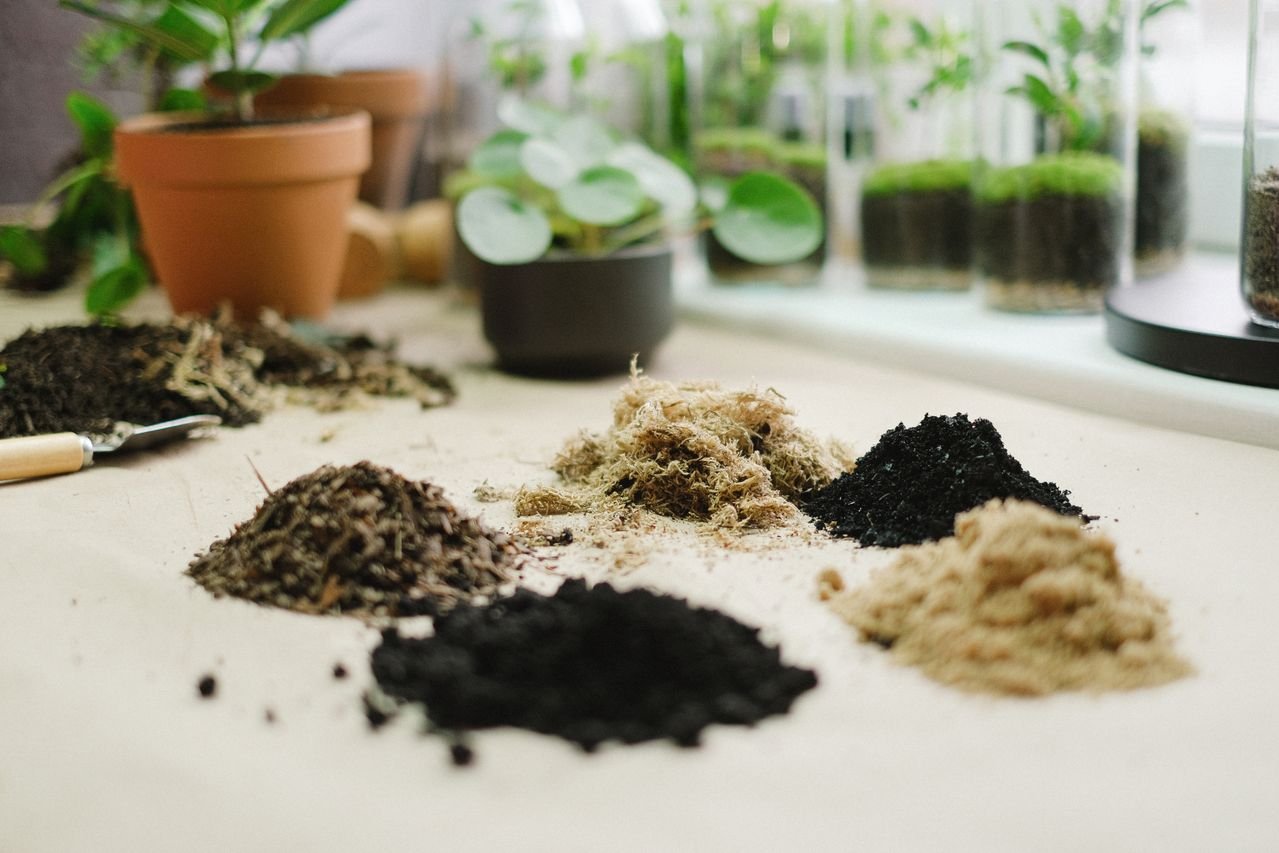
Finding the best soil for indoor plants is essential for healthy plants, strong plant roots, and consistent plant growth. Whether you grow tropical plants, succulents, or a variety of indoor plants in an indoor garden or container plants on a windowsill, choosing the right soil mix and indoor potting mix will determine moisture retention, soil aeration, and drainage.
Repotting plants and choosing the right soil mix depends on the specific needs of your plants. For succulents and cacti, use a mix for succulents or a mix that retains minimal moisture and provides quick drainage. For moisture-loving or tropical plants, use an indoor potting mix with higher moisture retention and organic material. For orchids, use a specialized orchid mix that favors chunky bark and fast drainage.
Quick Checklist for Indoor Plant Soil
- Identify the type of plant and its water needs.
- Choose a potting mix that provides good drainage and moisture retention as needed.
- Include perlite or pumice for aeration.
- Use peat moss or coco coir for moisture retention and organic material for nutrients.
- Avoid garden soil in pots; use labeled indoor potting soil or best potting soil mixes.
With the right indoor soil — whether a tried-and-true bag of soil, a mix you assemble yourself, or a recommended product like FoxFarm Ocean Forest or Miracle-Gro Indoor Potting Mix — your potted plants can thrive, showing healthy growth and strong roots. Choose the best soil mix for indoor plants to match the specific needs of your houseplant collection.Most houseplant advice focuses on what happens above the soil: how much light, how often to water, which fertilizer to use. But the most impactful variable in your entire plant care system is invisible — the growing medium inside the pot.
Soil determines how long moisture stays available to roots. It controls how much oxygen reaches root cells between waterings. It regulates pH, which unlocks or locks out nutrients regardless of what you’re fertilizing with. It either harbors or discourages the fungus gnats that appear in every indoor gardener’s life at some point. And it changes over time — compressing, breaking down, and gradually becoming something very different from what you originally put in the pot.
Get the soil right and plants forgive a lot of other imperfections. Get it wrong and you’re fighting root rot, nutrient deficiencies, and pest problems that seem to have no explanation — because the explanation is six inches underground.
This guide gives you the complete picture: the science of why soil matters, every ingredient explained clearly, the specific recipes that work for every major plant category, the top US products honestly reviewed, and the framework for matching your soil choice to your specific growing situation and watering habits.
Table of Contents
- Why Soil Is the Foundation: The Root Zone Science
- Why Garden Soil Fails Indoors (The Physics Explanation)
- Soil Particle Size: Why This Determines Everything
- Root Zone Oxygen: The Hidden Factor Behind Every Soil Recommendation
- Every Soil Ingredient Explained: What It Does & When to Use It
- Peat Moss vs Coco Coir: The Sustainability Decision
- Perlite vs Pumice: A Proper Comparison
- Worm Castings: The Underrated Superingredient
- Biochar: The Emerging 2026 Amendment
- Soil pH and Nutrient Availability: The Chart That Changes Everything
- Mycorrhizal Fungi: What Premium Mixes Add (And Why It Matters)
- The Soil Compression Timeline: When & Why to Change Your Soil
- Best Soil by Plant Type: Complete Recipe Guide
- Matching Soil to Your Watering Habits
- The Fungus Gnat–Soil Connection
- Top US Potting Mix Brands: Honest Breakdown
- DIY Potting Mix Master Recipes
- Soil Troubleshooting Guide
- Frequently Asked Questions
1. Why Soil Is the Foundation: The Root Zone Science
The most fundamental misunderstanding about houseplant soil is what it needs to accomplish. Most people think of soil as something that holds water for plants to drink. That’s half the job.
The root zone has two competing needs that pull in opposite directions:
Need 1 — Moisture: Roots absorb water for photosynthesis, nutrient transport, cell pressure (turgor), and every metabolic process in the plant. Soil must hold enough water to supply roots between waterings.
Need 2 — Oxygen: Root cells are aerobic — they respire oxygen to produce the energy that drives root function. Oxygen-deprived roots stop absorbing water and nutrients within hours. Prolonged oxygen deprivation causes root cell death and creates the anaerobic (oxygen-free) conditions in which pathogenic bacteria (Pythium, Phytophthora) that cause root rot thrive.
The tension: Water fills pore spaces. Oxygen occupies pore spaces. They compete for the same real estate in the soil.
The goal of every soil design decision is managing this tension — retaining enough moisture for the plant’s needs while ensuring enough pore space remains air-filled for adequate root oxygenation between waterings.
This explains the entire logic of indoor soil formulation. Chunky ingredients, perlite, orchid bark — they all exist to maintain air-filled pore spaces even when the soil is moist.
2. Why Garden Soil Fails Indoors (The Physics Explanation)
“Don’t use garden soil for indoor plants” appears in every care guide. Most of them don’t explain the actual mechanism — just “it’s too heavy” or “it causes root rot.” Here’s the real physics:
Outdoor soil self-aerates continuously:
- Earthworms physically turn and loosen the soil, maintaining pore structure
- Freeze-thaw cycles in winter crack compacted particles, opening new pores
- Rain drives water deeply and quickly through large volumes of soil, while surrounding soil wicks moisture away laterally
- Plant roots decay and create channels and pores as they die and decompose
Indoor containers eliminate all of these aeration mechanisms:
- No earthworms
- No freeze-thaw
- Gravity moves water only downward through the container — there’s no lateral wicking
- The same small volume of soil is watered repeatedly without the structural renewal that outdoor soil gets
The result: garden soil in a container compacts within weeks. Pore spaces close. Water movement slows. Root oxygenation drops. Root rot follows. This is not a coincidence — it’s a predictable physical outcome.
Indoor potting mix solves this by using ingredients that maintain their structure under container conditions: perlite (doesn’t compress), orchid bark (slow to decompose), coarse sand (maintains particle size) — ingredients that hold their pore-creating structure even without earthworms or freeze-thaw renewal.
3. Soil Particle Size: Why This Determines Everything
This is the soil science concept that unlocks all the rest — and the one most guides completely skip.
Two types of pore spaces exist in any growing medium:
Macropores (large pores): Spaces between larger particles — between chunks of orchid bark, between perlite granules, between coarse sand grains. Water moves through macropores quickly under gravity — it drains. Air fills macropores as water drains out.
Micropores (small capillary pores): Tiny spaces within and between fine particles — the spaces within peat fiber, between fine sand grains, within coco coir. Water is held in micropores by capillary force against gravity. This is where plant-available water is stored between waterings.
Why this matters for every soil decision:
More chunky/large particles → more macropores → faster drainage → more oxygen → lower water retention
More fine particles → more micropores → slower drainage → less oxygen → higher water retention
This single framework explains:
- Why succulent mixes (heavy sand and perlite) drain so quickly
- Why moisture-loving plants (Calathea, ferns) do better in fine, peat-rich mixes
- Why aroids need chunky mixes with bark
- Why adding perlite to any mix improves drainage
4. Root Zone Oxygen: The Hidden Factor Behind Every Soil Recommendation
Building on Section 1 and 3 — here’s the specific biology of what happens when oxygen is absent from the root zone:
With adequate oxygen: Root cells respire aerobically, producing ATP for active nutrient absorption, cell division, and water uptake. The microbiome is dominated by beneficial aerobic bacteria and fungi.
When oxygen is depleted (waterlogged soil):
- Root cells switch to anaerobic respiration — less efficient, produces ethanol as a byproduct
- Ethanol accumulates in root tissue, becoming toxic
- Root cells begin dying within 24–72 hours in completely anaerobic conditions
- Anaerobic bacteria colonize — including Pythium, Phytophthora, and other root rot pathogens that consume root tissue
- Dead roots can no longer absorb water — the plant begins wilting despite wet soil
- The cycle accelerates
The practical implication: When you see a wilting plant in wet soil, the roots have likely already lost their ability to absorb water. More water won’t help — it will accelerate the anaerobic decay. The plant needs dry conditions and root assessment, not more moisture.
Understanding this mechanism changes how you think about every soil and watering decision.
5. Every Soil Ingredient Explained: What It Does & When to Use It
Peat Moss
What it is: Decomposed organic material (primarily Sphagnum moss) harvested from northern peat bogs. What it does: Retains moisture very effectively due to high micropore content; provides slightly acidic pH (4.0–5.0); lightweight; provides some structure. Best for: Moisture-loving tropicals, ferns, Calathea, African violets, any plant that needs consistently moist soil. Amount in mix: 30–60% depending on moisture needs. Concern: See Section 6 (sustainability issues).
Coco Coir (Coconut Fiber)
What it is: Processed fibers from coconut husks — a byproduct of coconut processing. What it does: Similar moisture retention to peat but slightly higher pH (5.5–6.8); rehydrates much more easily than dried peat; more sustainable than peat. Best for: Most tropical plants; a direct peat substitute. Important preparation note: Compressed coco coir bricks and some bagged coco coir contain residual salts from processing. Rinse thoroughly before use to prevent salt stress in sensitive plants. Quality pre-washed coco coir (such as Canna Coco) is ready to use directly.
Perlite
What it is: Expanded volcanic glass — heated to ~1,600°F until it pops like popcorn, creating a lightweight, porous white granule. What it does: Creates macropores that drain quickly; prevents compaction; virtually pH neutral; doesn’t decompose; improves aeration. Best for: Adding to any mix that needs better drainage. Suitable for almost every plant. Amount in mix: 20–40% depending on drainage needs. Limitation: Floats to the surface when watered heavily — over time, perlite may migrate to the top of the pot. See Pumice for a solution.
Orchid Bark / Pine Bark
What it is: Chipped bark from pine or fir trees, available in fine (3–10mm), medium (10–20mm), and coarse (20–40mm) grades. What it does: Creates large macropores for excellent drainage and aeration; slow to decompose (2–5 years depending on grade); slightly acidic pH; mimics the epiphytic conditions aroids and orchids evolved in. Best for: Aroids (Monstera, Philodendron, Pothos), orchids, epiphytic plants, any plant that needs excellent aeration. Amount in mix: 20–40% for aroid mixes; 60–80% for orchid mixes.
Coarse Sand (Builder’s Sand)
What it is: Coarse-grained sand (NOT fine play sand or beach sand). What it does: Improves drainage; increases weight/stability; adds macropores. Best for: Succulents, cacti, aloe, Mediterranean plants (olive, rosemary). Important: Use only coarse-grade horticultural or builder’s sand. Fine sand actually makes drainage worse — the tiny particles fill macropores between soil particles, creating a denser medium.
Pumice
What it is: Natural volcanic rock, porous and lightweight. What it does: Similar to perlite but stays in place (doesn’t float); the porous surface provides sites for beneficial microbial colonization; long-lasting. Best for: Any mix where you want perlite-like drainage without the floating issue; high-end mixes for rare plants. Amount in mix: 20–30%. Interchangeable with perlite in most recipes.
Vermiculite
What it is: Expanded mica mineral, similar to perlite in texture but slightly different function. What it does: Retains moisture (more than perlite); improves aeration; adds some potassium and magnesium; softer texture than perlite. Best for: Seed starting mixes; moisture-loving plants where you want aeration without too much drainage. Note: Use sparingly in mixes for drought-tolerant plants — vermiculite retains more moisture than perlite and can work against drainage goals.
Sphagnum Moss (Long-Fiber)
What it is: Dried whole Sphagnum moss — different from peat (which is decomposed Sphagnum). What it does: Holds enormous amounts of water (up to 20× its weight); slightly acidic pH; antimicrobial properties (reduces disease risk); excellent for propagation. Best for: Propagation substrate; wrapping moss poles; mounting orchids and bromeliads; covering the surface of moisture-loving plant pots. Note: As a primary growing medium, it can hold too much moisture for many plants — best used as a component.
Worm Castings (Vermicompost)
What it is: The solid excrement of earthworms fed organic matter. What it does: Provides slow-release nutrients (5× more N, 7× more P, 11× more K than typical soil per volume); near-neutral pH; contains beneficial enzymes, humic acids, and living microorganisms; cannot burn plants even at relatively high percentages. Best for: Any mix where you want to add slow-release nutrition organically. Amount in mix: 10–20% maximum. More than 20% can cause drainage issues.
See Section 8 for the complete worm castings science breakdown.
Activated Charcoal
What it is: Carbonized organic material processed for maximum surface area. What it does: Adsorbs (surface-binds) toxins, odors, and excess dissolved compounds; used in terrarium mixes to prevent anaerobic conditions. Best for: Closed terrarium layers; drainage layers in pots without holes. Note: Different from biochar — see Section 9.
Compost
What it is: Decomposed organic matter. What it does: Adds slow-release nutrients; improves water retention; supports beneficial soil life. Indoor caveat: Fresh compost can attract fungus gnats (the organic material provides breeding substrate). Use well-cured, finished compost to reduce this risk. See Section 15.
6. Peat Moss vs Coco Coir: The Sustainability Decision
The environmental issue with peat moss:
Peat bogs accumulate organic material at approximately 1mm per year — meaning 1 foot of peat represents roughly 300 years of growth. Major peat deposits in Scotland, Canada, and Ireland have taken thousands of years to form. Once harvested, they cannot regenerate on any human-relevant timescale.
Peat bogs are also significant carbon stores — when drained and harvested, they release sequestered carbon. UK legislation has increasingly restricted horticultural peat use; several major retailers have voluntarily phased it out.
Coco coir’s advantages:
Coco coir is a byproduct of coconut processing — material that would otherwise be agricultural waste. It is renewable, widely available (coconuts are grown annually), and performs comparably to peat for most applications:
- Similar moisture retention to peat
- Higher pH than peat (5.5–6.8 vs 4.0–5.0) — closer to the neutral range most plants prefer, requiring less limestone amendment
- Rehydrates much more easily than dried peat after drying out
- More sustainable sourcing
The one preparation requirement: Rinse coco coir before use if not pre-washed. Residual salts from processing can cause salt stress in sensitive plants. Quality commercial products are pre-washed; compressed bricks should be rinsed.
Recommendation for plantcarehacks.com users: For new purchases, choose coco coir over peat moss — it performs equally well for most plants and is the more sustainable choice. Both work; sustainability favors coco coir.
7. Perlite vs Pumice: A Proper Comparison
Both perlite and pumice are volcanic materials used for drainage and aeration. Both work well. Here are the meaningful differences:
| Feature | Perlite | Pumice |
|---|---|---|
| Origin | Heated volcanic glass | Natural volcanic rock |
| Weight | Very light | Slightly heavier |
| Floatation | Floats to surface when watered | Stays in place |
| Particle uniformity | Fairly uniform | Variable natural sizes |
| Microbial surface | Smooth — limited colonization | Porous — excellent microbial colonization |
| Longevity in mix | Stable but migrates upward | Stable and stays distributed |
| Availability | Any garden center, widely available | Specialty stores, some garden centers |
| Price | Inexpensive ($5–$15/bag) | More expensive ($10–$30/bag) |
| Best for | Budget-conscious mixes; any general use | Premium mixes; long-term plantings; rare plants |
Bottom line: Perlite is the practical choice for most growers. Pumice is the premium choice for collectors growing rare plants in mixes that won’t be repotted for several years.
8. Worm Castings: The Underrated Superingredient
Worm castings (vermicompost) are one of the most nutritionally complete, plant-safe soil amendments available — and dramatically underutilized in most indoor plant care.
The Chemistry
Per unit volume compared to typical garden soil:
- 5× more available nitrogen
- 7× more available phosphorus
- 11× more available potassium
- Contains humic acids — complex organic molecules that improve nutrient uptake by chelating (binding to) nutrients and making them more bioavailable to roots
- Contains beneficial enzymes — including proteases, phosphatases, and others that continue breaking down organic matter in the soil
- Contains living beneficial microorganisms — bacteria and fungi that compete with pathogens and improve nutrient cycling
Why They Don’t Burn
Unlike synthetic fertilizers or fresh manure, worm castings release nutrients slowly — they’re bound in complex organic molecules that microorganisms break down over time, making nutrients gradually available. This means:
- You can use up to 20% worm castings by volume without any burn risk
- They continue providing nutrition for months
- They improve soil biology (not just chemistry)
How to Use Them
In potting mix: Add 10–20% worm castings to any basic mix. Mix thoroughly.
As top dressing: Apply ½ inch layer of worm castings over the soil surface. Water in. Nutrients leach down to the root zone with each watering.
Best brands in USA: Wiggle Worm Pure Worm Castings, Unco Industries Earthworm Castings, or locally produced castings from vermicomposting operations (often found at farmers markets and local nurseries).
9. Biochar: The Emerging 2026 Amendment
Biochar is increasingly used in premium plant mixes — and increasingly discussed in US plant communities in 2026. Here’s what it actually is and does:
What it is: Organic material (wood, plant waste) charred at high temperatures with limited oxygen (pyrolysis). The result is a stable carbon structure with extremely high surface area.
What it does in soil:
- Creates long-term aeration: Unlike bark (which decomposes in 2–5 years), biochar is essentially permanent — it won’t compress or break down. A mix containing biochar maintains its structure for decades.
- Extraordinary microbial habitat: The porous surface of biochar provides housing for beneficial bacteria and fungi. Biochar-amended soils develop richer, more diverse microbial communities.
- Cation exchange capacity (CEC): Biochar has high CEC — it holds positively charged nutrient ions (Ca²⁺, Mg²⁺, K⁺) and releases them gradually to roots.
- pH-raising effect: Biochar is alkaline (pH 7.5–9.0 depending on source material). Use in moderation with acid-preferring plants.
Amount in mix: 5–10% maximum. More can raise pH too significantly and create other issues.
Where to buy: Available from specialty horticulture suppliers and increasingly at garden centers. BioChar Now and Wakefield BioChar are the most widely available US brands.
The difference from activated charcoal: Biochar is produced at lower temperatures, retains its organic structure, and is used for soil amendment and microbial habitat. Activated charcoal is processed for maximum adsorption surface area and is primarily used for toxin removal.
10. Soil pH and Nutrient Availability: The Chart That Changes Everything
This is the single most important soil science concept for understanding why your plants may look unhealthy despite correct watering and fertilizing.
Soil pH (potential of Hydrogen) measures how acidic or alkaline your growing medium is, on a scale from 0 (extremely acidic) to 14 (extremely alkaline), with 7 being neutral.
Why pH Determines Nutrient Availability
Most nutrients in the soil exist as ions. Whether these ions are available for root absorption depends heavily on pH — certain pH levels cause nutrients to form insoluble compounds that roots cannot absorb, even when the nutrients are physically present in the soil.
At low pH (below 6.0):
- Aluminum and manganese reach toxic levels
- Phosphorus becomes less available
- Calcium and magnesium become scarce
At high pH (above 7.5):
- Iron, manganese, zinc, copper, and boron become unavailable (causing yellow interveinal chlorosis despite correct fertilizing)
- Phosphorus again becomes unavailable
At pH 6.0–7.0 (the sweet spot for most houseplants):
- Maximum range of nutrients is simultaneously available
- Beneficial soil microorganisms are most active
pH Targets by Plant Group
| Plant Group | Ideal pH Range |
|---|---|
| Most tropical houseplants | 6.0–7.0 |
| Aroids (Monstera, Pothos, Philodendron) | 5.5–7.0 |
| Ferns & Calathea | 5.5–7.0 |
| Succulents & Cacti | 6.0–7.5 |
| Orchids | 5.5–6.5 |
| Aloe & Mediterranean plants | 7.0–8.5 |
| African Violets | 6.0–7.0 |
How to Adjust pH
To lower pH (make more acidic):
- Add elemental sulfur
- Use acidifying fertilizer
- Add peat moss (inherently acidic)
- Use sulfur-containing fertilizers
To raise pH (make more alkaline):
- Add dolomitic limestone (also adds calcium and magnesium)
- Add ground limestone
- Use hard tap water over time (natural alkalinity)
Testing your soil pH: Inexpensive pH test strips work for a basic reading. Digital pH meters ($10–$30) are more accurate and reusable. Test when the soil is moist.
11. Mycorrhizal Fungi: What Premium Mixes Add
Some premium potting mixes (Espoma Organic, Dr. Earth) include mycorrhizal fungi — and this is not just marketing.
What mycorrhizal fungi do:
Mycorrhizal fungi form symbiotic relationships with plant roots — the fungal threads (hyphae) colonize the root surface and extend outward into the soil, dramatically expanding the root system’s effective reach.
- A root system with mycorrhizal colonization can have up to 700× more effective surface area than roots alone
- The fungi are particularly effective at absorbing phosphorus — a nutrient that doesn’t move well through soil water and is difficult for roots to access
- In exchange, the plant provides the fungi with sugars from photosynthesis
The phosphorus inhibition caveat:
High concentrations of phosphorus in the soil actually inhibit mycorrhizal colonization — the fungi don’t colonize when phosphorus is already abundant (they’re not needed). This means heavy use of phosphorus-rich fertilizers may prevent mycorrhizal relationships from forming.
Practical implication: If you’re using a mycorrhizal-inoculated potting mix, avoid immediately fertilizing with a heavy phosphorus (10-20-10 or similar) fertilizer. Allow the fungi time to colonize roots first, then fertilize lightly.
12. The Soil Compression Timeline: When & Why to Change Your Soil
Potting mix is not permanent. Here’s what happens over time — and why it matters:
Months 1–6: Fresh potting mix is at its best. Pore structure is open, drainage is as fast as the recipe allows, microbial life is active, nutrients are available.
Months 6–12: Organic materials (peat, coco coir, fine bark) begin decomposing. Pore structure gradually becomes finer. Drainage slows slightly. Some nutrients depleted.
Months 12–24: Peat and coco coir have broken down significantly. What was a chunky, airy mix has become a denser, finer medium. Drainage is noticeably slower than when fresh. Root oxygenation decreases. Fungus gnat pressure may increase as the decomposed organic matter becomes more gnat-attractive.
24+ months: The mix has physically compacted. Roots often circle the perimeter looking for better conditions. The soil may become hydrophobic (repelling water rather than absorbing it). This is when root rot risk peaks for overwatered plants.
When to change soil:
- Every 12–18 months for moisture-sensitive plants (Calathea, ferns, orchids)
- Every 18–24 months for most tropical houseplants
- Every 2–3 years for drought-tolerant plants (succulents, ZZ plant, snake plant)
- Always replace during repotting — never return a plant to its old, compacted mix in a new pot
For the complete repotting guide, see our step-by-step repotting guide.
13. Best Soil by Plant Type: Complete Recipe Guide
Recipe 1: General Tropical Houseplants
Best for: Pothos, Peace Lily, Spider Plant, Dracaena, Chinese Evergreen, Rubber Plant
Mix:
- 60% quality potting mix (coco coir-based preferred)
- 20% perlite
- 20% worm castings
Why it works: Moisture-retentive enough for plants that prefer consistently moist soil; well-aerated enough to prevent root rot; worm castings provide slow-release nutrition.
Commercial shortcut: Miracle-Gro Indoor Potting Mix used straight from the bag — adequate for this plant group with no amendment needed.
Recipe 2: Aroid Mix
Best for: Monstera, Philodendron, Pothos (statement plants), Hoya, Anthurium, Alocasia
Mix:
- 40% quality potting mix
- 30% orchid bark (medium grade)
- 20% perlite
- 10% worm castings
Why it works: The orchid bark creates the large macropores that mimic the epiphytic bark surfaces aroids evolved on; excellent aeration; fast drainage prevents the overwatering that kills these popular plants. See our Monstera care guide for how this mix performs in practice.
Commercial shortcut: Rosy Soil Aroid Mix or DIY with the recipe above.
Recipe 3: Moisture-Loving Plants
Best for: Calathea, Maranta, Ferns, Peace Lily, Boston Fern, Maidenhair Fern
Mix:
- 50% potting mix
- 25% perlite
- 15% coco coir
- 10% worm castings
Why it works: Higher peat/coco content retains moisture longer for plants that cannot tolerate drying out; perlite prevents waterlogging; consistent moisture without anaerobic conditions. See our Calathea care guide.
Commercial shortcut: Espoma Organic Potting Mix — well-formulated for moisture-loving plants.
Recipe 4: Succulent & Cactus Mix
Best for: Aloe vera, Cactus, Echeveria, Haworthia, Jade Plant, ZZ Plant, Snake Plant
Mix:
- 40% potting mix
- 30% coarse sand (builder’s sand)
- 20% perlite
- 10% pumice (optional but excellent)
Why it works: Very fast drainage; minimal moisture retention; high macropore content for maximum root oxygenation between the infrequent waterings these plants need. See our Aloe vera care guide.
Commercial shortcut: Hoffman Organic Cactus & Succulent Soil Mix — widely available, well-formulated.
Recipe 5: Orchid Mix
Best for: Phalaenopsis, Cattleya, Dendrobium, all epiphytic orchids
Mix:
- 60% medium orchid bark
- 20% perlite
- 10% sphagnum moss
- 10% coarse charcoal or pumice
Why it works: Orchids are true epiphytes — they evolved on tree bark with no soil involvement. Their roots need maximum air exposure and rapid drainage; the bark chunks provide the airy, structured environment their roots evolved for.
Commercial shortcut: Miracle-Gro Orchid Potting Mix — formulated specifically for Phalaenopsis and other epiphytic orchids.
Recipe 6: Herb & Edible Plants
Best for: Basil, Mint, Rosemary, Thyme, Chives, indoor herb garden
Mix:
- 50% quality potting mix
- 30% perlite
- 20% compost or worm castings
Why it works: Good balance of moisture retention and drainage; the compost/worm castings provide nutrition for actively growing edible plants without relying on synthetic fertilizers.
Important note: For edible herbs, choose potting mixes without synthetic slow-release fertilizer pellets if you prefer organic production.
Recipe 7: African Violets & Begonias
Best for: African Violets, Begonias, Gloxinia
Mix:
- 50% peat or coco coir
- 30% perlite
- 20% vermiculite
Why it works: These plants need consistently moist, well-aerated, light soil with excellent drainage; the vermiculite component adds potassium while retaining slightly more moisture than perlite alone.
Commercial shortcut: Espoma Violet Mix — the standard recommendation from African Violet Society of America.
14. Matching Soil to Your Watering Habits
Here’s the framework no competitor provides — matching your soil composition to your actual watering behavior:
If You Tend to Overwater / Water Too Frequently
Your soil should: Dry out faster than standard recommendations.
Modify any recipe by: Increasing perlite/pumice to 30–40% of total mix. The faster drying protects roots from the oxygen deprivation that your frequent watering otherwise creates.
Indicator: If your plant consistently has wet soil when you check it despite feeling like you “barely watered it,” you need more drainage.
If You Tend to Forget / Underwater
Your soil should: Hold moisture longer than standard recommendations.
Modify any recipe by: Increasing peat or coco coir content; reducing or eliminating coarse sand and reducing perlite to 15%. Consider adding 10% vermiculite for additional moisture retention.
Indicator: If your plants consistently wilt between waterings and the soil is always bone dry when you check, you need more moisture retention.
If You Water Carefully & Consistently
Standard recipes work perfectly. The recipes in Section 13 are calibrated for plant-responsive watering (checking before watering rather than following a schedule). If you assess soil moisture before every watering, use the standard recipes as written.
15. The Fungus Gnat–Soil Connection
Fungus gnats (Bradysia species) are the most common houseplant pest complaint in the USA — and soil choice directly determines your gnat risk.
Why certain soils attract gnats:
Adult fungus gnats lay eggs in the top 1–2 inches of moist, organic-rich soil. Larvae hatch and feed on organic matter, fungi, and occasionally plant roots in this surface zone. Three factors create ideal gnat breeding conditions:
- Consistently moist soil surface
- Rich organic material (fresh compost, bark, peat)
- Poor drainage keeping the surface wet
Soil choices that reduce gnat risk:
High perlite/pumice content: The inorganic surface material is unattractive to egg-laying adults.
Chunky bark-based mixes: The larger particles create a more open surface that dries faster and provides less egg-laying substrate.
No fresh compost: Well-cured compost or worm castings (which don’t attract gnats) instead of fresh bark or garden compost.
Miracle-Gro Indoor Potting Mix specifically: This mix was reformulated to remove compost and bark — specifically to reduce fungus gnat attraction. Their own marketing calls this out.
Top dressing with sand or perlite: A ½-inch layer of pure coarse sand or perlite on the soil surface dramatically reduces gnat breeding even in organically rich mixes below — the surface layer is where gnats lay eggs.
For the complete fungus gnat elimination protocol, see our fungus gnats guide.
16. Top US Potting Mix Brands: Honest Breakdown
Miracle-Gro Indoor Potting Mix
Best for: Beginners; anyone who wants a reliable, affordable, widely available all-purpose mix. Composition: Coco coir, perlite, fertilizer charge (feeds 6 months), dolomitic limestone (pH adjustment). No fresh compost or bark. pH: ~5.5–6.5 Pros: Widely available, fungus gnat-resistant formula, includes 6-month fertilizer, consistent quality Cons: Synthetic fertilizer included (not organic), not ideal for plants needing very chunky mixes Best for: Pothos, peace lily, snake plant, spider plant, most general tropicals
FoxFarm Ocean Forest
Best for: Heavy-feeding plants; collectors wanting maximum nutrient richness. Composition: Earthworm castings, bat guano, Pacific Northwest sea-going fish, crab meal, aged forest products, sandy loam, sphagnum peat moss pH: ~6.3–6.8 Pros: Extraordinarily nutrient-rich; excellent for vigorous feeders; great microbiome support Cons: Heavy (not ideal for very small pots); strong nutrients may be too much for some sensitive plants initially; not peat-free Best for: Large, vigorous tropicals; Monstera, Fiddle Leaf Fig, Bird of Paradise
Espoma Organic Potting Mix
Best for: Organic growers; general all-purpose organic option. Composition: Sphagnum peat, perlite, humus, worm castings, myco-tone (mycorrhizal fungi) pH: ~6.0–7.0 Pros: Organic; includes mycorrhizal fungi; good all-around performance; widely available Cons: Peat-based (sustainability concern); may stay moist longer than desired for some plants Best for: General tropical houseplants; herb gardens; any grower wanting organic certification
Rosy Soil
Best for: Premium peat-free growing; moisture-sensitive aroids. Composition: Coco coir, rice hulls, worm castings, biochar pH: ~6.5–7.0 Pros: Peat-free; contains biochar; excellent structure; contemporary sustainable formula Cons: Higher price point; less widely available (primarily online) Best for: Rare plants; collectors; growers who want sustainable premium quality
Back to the Roots All Purpose Potting Mix
Best for: Simple, sustainable choice; beginners wanting peat-free. Composition: Coco coir, perlite, organic nutrients pH: ~6.5 Pros: Peat-free; simple formulation; widely available at Home Depot Cons: Less nutrient-rich than FoxFarm or Espoma; may need supplemental fertilization sooner Best for: General tropicals; beginner-friendly all-purpose option
Hoffman Organic Cactus & Succulent Soil Mix
Best for: Succulents, cacti, aloe, snake plant, ZZ plant. Composition: Canadian sphagnum peat, reed sedge peat, limestone, sand, perlite pH: ~6.0–6.5 Pros: Well-calibrated drainage for drought-tolerant plants; widely available; affordable Cons: May still need additional perlite amendment for very drought-tolerant plants Best for: Any succulent, cactus, or drought-adapted houseplant
17. DIY Potting Mix Master Recipes
Making your own mix gives you complete control over composition and is typically more cost-effective than specialty pre-mixed bags for anyone with several plants.
The Versatile Base Mix (Works for 80% of Houseplants)
- 2 parts coco coir or quality potting mix
- 1 part perlite
- 1 part worm castings
Adjust from here: Add orchid bark for aroids; add extra sand for succulents; add extra coco coir for moisture-lovers.
The Aroid Premium Mix
- 2 parts coco coir
- 2 parts medium orchid bark
- 1 part perlite
- 1 part worm castings
- Optional: 5% biochar
The Drought-Buster Succulent Mix
- 2 parts cactus/succulent potting mix
- 2 parts coarse sand
- 1 part perlite
- Optional: small amount of pumice for premium version
The Moisture-Retainer (Calathea/Fern Mix)
- 3 parts coco coir
- 1 part perlite
- 1 part worm castings
- Small amount of horticultural charcoal
The Orchid Mix
- 4 parts medium orchid bark
- 1 part perlite
- 1 part sphagnum moss (long-fiber)
- Small amount of horticultural charcoal
18. Soil Troubleshooting Guide
| Symptom | Likely Soil Cause | Fix |
|---|---|---|
| Water runs straight through without absorbing | Hydrophobic (dried-out peat); soil too old | Bottom water to rehydrate; repot with fresh mix |
| Soil stays wet for 2+ weeks after watering | Too moisture-retentive; insufficient drainage | Add perlite 20–30%; consider repotting with chunkier mix |
| White crust on soil surface | Mineral salt buildup from tap water/fertilizer | Flush thoroughly with plain water monthly |
| Fungus gnats despite correct watering | Organic-rich, moist surface soil | Add perlite/sand top dressing; reduce surface moisture |
| Yellow leaves despite correct watering | pH issue preventing nutrient uptake | Test pH; adjust with sulfur (lower) or limestone (raise) |
| Plant wilting in moist soil | Compacted old soil; root rot from anaerobic conditions | Repot in fresh mix; check and trim roots |
| Soil pulling away from pot edges | Dried-out hydrophobic mix | Bottom water to rehydrate; consider repotting |
| Very slow plant growth despite good light | Depleted soil nutrition; compressed old mix | Repot in fresh nutrient-rich mix; add worm castings |
19. Frequently Asked Questions
Q: What is the best soil for indoor plants overall? For the widest range of common houseplants, a quality coco coir-based potting mix amended with 20–30% perlite and 10–15% worm castings covers most situations well. For plant-specific requirements — aroids needing extra bark, succulents needing extra sand — adjust from this base. No single mix suits all plants; the most important decision is matching drainage speed to your specific plant’s water requirements.
Q: Can I use outdoor garden soil for indoor plants? No — for the specific physics reasons explained in Section 2. Garden soil compacts in containers, eliminating the pore spaces roots need for oxygen. It also introduces pests, pathogens, and weed seeds that thrive in the protected indoor environment. Always use potting mix formulated for containers.
Q: How often should I change my potting soil? Every 12–24 months for most plants, depending on type. Moisture-sensitive plants (Calathea, orchids) benefit from soil refresh every 12–18 months. Drought-tolerant plants (succulents, ZZ plant) can go 2–3 years. Always replace soil during repotting — see our repotting guide.
Q: What’s the best soil for plants that I always overwater? Increase perlite to 30–40% of your total mix. The extra drainage provides a buffer against excess moisture — the soil dries faster, giving overwatered roots more time in oxygenated conditions. Terracotta pots also help — see our pot selection guide.
Q: Is peat moss or coco coir better? Both perform comparably for plant growth. Coco coir is more sustainable (renewable byproduct vs slow-regenerating peat bogs), has a better pH for most plants (5.5–6.8 vs 4.0–5.0), and rehydrates more easily after drying. For new purchases, coco coir is the better choice. See Section 6.
Q: Do I need to sterilize DIY potting mix? No, for most applications. The ingredients typically used in DIY mixes (perlite, orchid bark, coco coir, worm castings) don’t harbor significant plant pathogens. Avoid adding garden soil or uncomposted organic matter, which can introduce problems.
Soil Quick-Reference by Plant
| Plant | Best Soil Type | Key Amendment |
|---|---|---|
| Monstera | Aroid chunky mix | 30% orchid bark |
| Pothos | General tropical or aroid mix | 20–30% perlite |
| Calathea | Moisture-retentive mix | Reduce perlite to 15% |
| Snake Plant | Succulent/cactus mix | Extra perlite + sand |
| ZZ Plant | Succulent/cactus mix | Fast drainage priority |
| Peace Lily | General tropical mix | 20% worm castings |
| Orchid | Bark-dominant orchid mix | 60% orchid bark |
| Aloe Vera | Succulent mix, alkaline | Sand + minimal peat |
| Ferns | Moisture-retentive mix | Higher coco coir |
| Fiddle Leaf Fig | Well-draining general mix | 25% perlite |
| Bird of Paradise | General tropical or aroid | 25% perlite |
| African Violet | Violet-specific mix | Add vermiculite |
| Indoor Herbs | General + compost | 20% worm castings |
| Indoor Olive Tree | Fast-draining, alkaline | Coarse sand 20% |