
How to Repot Indoor Plants: The Complete Step-by-Step Guide
Tags: best soil for repotting, how to repot indoor plants, indoor plant repotting tips, repotting plants step by step, root bound plant signs, when to repot houseplants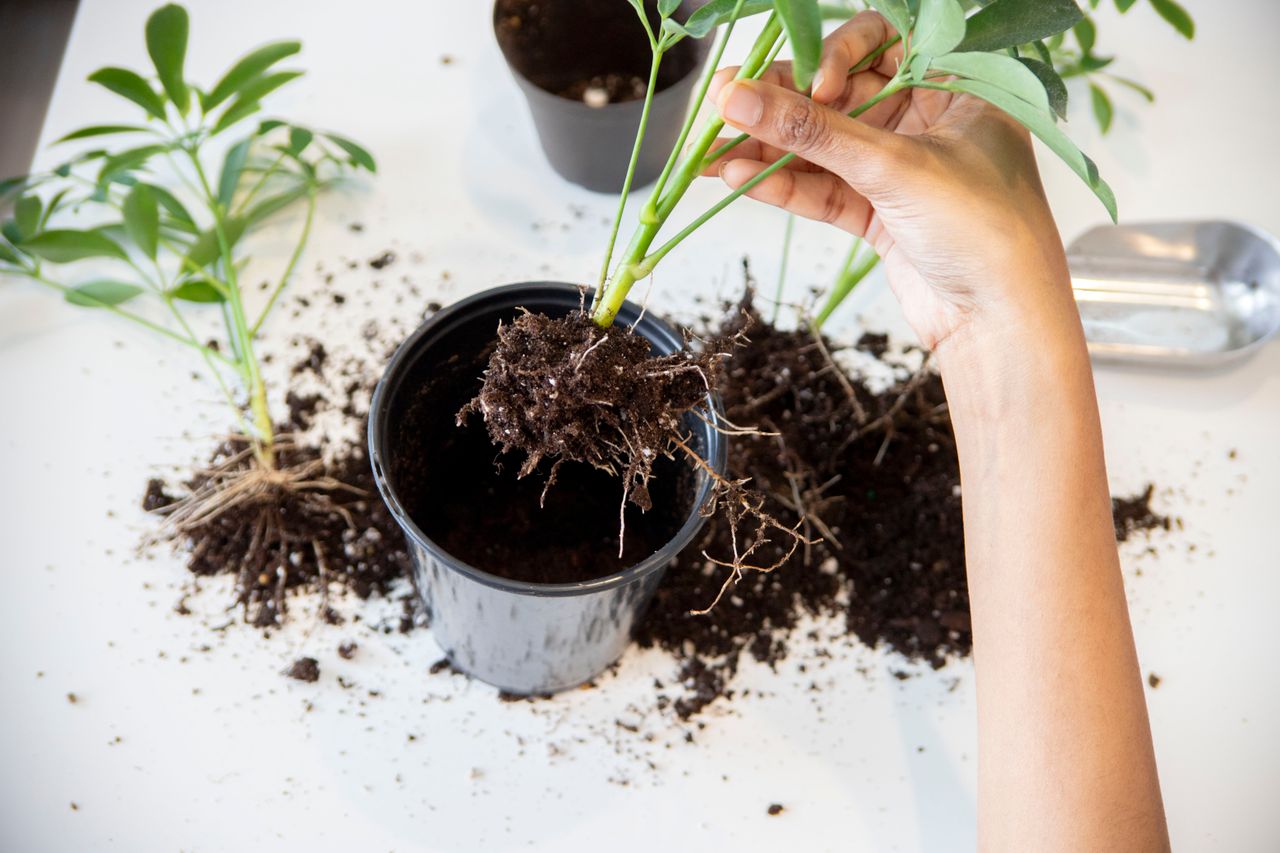
Every indoor plant owner eventually faces the same moment: you notice the roots pushing through the drainage holes, the plant seems to be growing slower despite good care, or the soil dries out suspiciously fast after every watering. You’re looking at a plant that has outgrown its home.
Repotting is one of the most impactful things you can do for a houseplant’s long-term health — and one of the most anxiety-inducing for beginner plant owners. Moving a living plant from one container to another feels risky. What if you damage the roots? What if the plant goes into shock? What if it never recovers?
Here’s the truth: repotting is far less delicate than most people fear. Plants are resilient. Their roots are designed to cope with physical disruption. And the stress of being perpetually root-bound — crammed into a too-small container, unable to grow, cycling through water so fast the roots can barely keep up — is almost always worse than the temporary stress of a careful repot.
This guide walks you through the whole process: how to know when it’s time, how to choose the right new pot and soil, the complete step-by-step technique, plant-specific considerations, and everything you need to do afterward to help your plant settle and thrive in its new home.
Let’s get started. 🌱
Table of Contents
- What Repotting Actually Does for Your Plant
- Signs Your Plant Needs Repotting
- When Is the Best Time to Repot?
- Choosing the Right New Pot
- Choosing the Right Soil Mix
- Everything You Need Before You Start
- Step-by-Step: How to Repot an Indoor Plant
- Repotting Specific Plant Types
- Aftercare: The Critical First 4 Weeks
- Troubleshooting: What to Do When Things Go Wrong
- Potting Up vs. Potting Down vs. Refreshing Soil
- Frequently Asked Questions
1. What Repotting Actually Does for Your Plant
To understand why repotting matters, it helps to understand what happens inside a pot over time.
When you first bring a plant home in a nursery container, there’s a healthy balance between root mass and soil volume. The roots have room to spread, the soil holds appropriate moisture, and the plant grows steadily.
Over months and years, the roots continue expanding — filling every available inch of the container. Eventually, roots begin circling the edges and base of the pot (becoming “root-bound”), growing through drainage holes, and displacing so much of the soil that the growing medium can barely hold moisture. The root-to-soil ratio inverts: too many roots, too little soil.
At this stage, several things happen simultaneously:
Nutrient depletion: The minimal remaining soil becomes exhausted of nutrients far faster than before — there’s simply not enough of it to buffer the plant’s nutritional needs between feedings.
Water regulation failure: A root-bound plant dries out almost immediately after watering because there’s barely any soil to hold moisture. This creates a dangerous boom-bust watering cycle that stresses roots.
Physical growth restriction: Roots hitting hard container walls cannot continue growing outward. The plant above the soil stalls — new growth slows or stops because the root system cannot expand to support it.
Compaction: Old potting mix breaks down over time, compacting into a dense, poorly aerated mass that restricts both drainage and root respiration.
Repotting solves all of these problems simultaneously: fresh soil restores nutrient availability and water regulation; a larger container gives roots room to expand; loosening the root ball breaks up compaction and stimulates new root growth.
The Penn State Extension Garden notes that most houseplants benefit from repotting every 1–2 years, with fast growers potentially needing repotting annually.
2. Signs Your Plant Needs Repotting
Knowing when to repot is as important as knowing how. Here are the definitive signs:
Clear Signals — Repot Soon
Roots growing out of drainage holes: The most obvious indicator. When you see a dense mass of roots pushing through the holes at the bottom, the plant has filled its current container and needs more space.
Roots circling visibly at the soil surface: Roots that have no downward room to grow start appearing at the top of the soil, circling the stem. This is a clear sign the root ball has filled the pot.
The plant drying out extremely fast after watering: If you’re watering every 2–3 days because the soil dries out almost immediately, the root mass has likely displaced most of the soil. This is one of the most common — and commonly missed — signs of a root-bound plant.
The plant visibly pushing itself up or out of the pot: This happens when roots have filled the container so completely that they’ve physically raised the soil line. The plant looks like it’s escaping upward.
Visible roots pressing against a clear nursery pot: Many nursery pots are semi-transparent. Hold the pot up to a light source — if you can see a dense, solid wall of roots against the pot sides, it’s time.
Softer Signals — Worth Investigating
Growth has significantly slowed despite good care: A plant that was growing steadily but has stalled without any obvious change in light or watering may be root-bound. Check by unpotting and examining the root ball.
Yellowing leaves despite correct watering: Nutrient depletion from exhausted soil can cause generalized yellowing. If you haven’t repotted in 2+ years, nutrient depletion may be the culprit even if the plant isn’t visibly root-bound.
The plant topples over in its pot: When top growth significantly outweighs the pot’s ballast, or when roots have consumed the soil and left little weight in the container, the plant becomes physically unstable.
3. When Is the Best Time to Repot?
Timing matters. The best window for repotting most houseplants is early to mid-spring — typically March through May in the United States.
Here’s why spring is ideal:
Active growth phase beginning: Plants emerging from their winter semi-dormancy are generating new root growth — new roots establish more quickly in fresh soil than roots that have stopped growing.
Longer days ahead: After repotting, plants benefit from increasing light and warmth to support recovery and new growth. Spring gives them the entire growing season ahead.
Lower cold-shock risk: In most US climate zones, spring temperatures are stabilizing. The combination of cold room temperatures and root disturbance in winter can slow recovery significantly.
Can You Repot Outside of Spring?
Yes — sometimes you have to. If a plant is severely root-bound, showing root rot, or declining rapidly, waiting until spring isn’t the right call. Repot whenever the plant’s need is urgent.
Summer: Generally fine. Active growth supports recovery. Be mindful of heat stress during repotting — do it in the morning or evening, not during the hottest part of the day.
Fall: Acceptable but less ideal. The plant has less growing season ahead to establish before winter.
Winter: Least ideal for most plants. Reduced light, cooler temperatures, and semi-dormancy slow root re-establishment. Repot in winter only if the plant’s health demands it.
One exception: Succulents and cacti can be repotted year-round because their growth cycles are less strongly tied to seasonal light than tropical houseplants.
4. Choosing the Right New Pot
The right new pot is 1–2 inches larger in diameter than the plant’s current container. This is the golden rule of repotting, and it’s worth internalizing completely.
Why only 1–2 inches larger? A pot significantly bigger than the root ball holds far more soil than the roots can access. That excess soil stays wet long after the plant has absorbed what it needs — creating exactly the waterlogged conditions that cause root rot. Think of it this way: you’re not trying to give the plant a mansion; you’re giving it a slightly larger apartment so it has room to grow comfortably.
Choosing the material: For most repotting situations, your existing decorative pot or a matching new pot is appropriate. If the plant’s current pot has contributed to its problems (e.g., no drainage, material causing moisture retention in a drought-tolerant plant), use repotting as an opportunity to upgrade. For a full guide to pot materials and their functional impacts, see our best planters and pots guide.
Critical: drainage holes. Whatever pot you choose must have drainage holes, or you must use the cachepot method (a drainage-holed inner pot inside a decorative outer container). Repotting into a pot without drainage simply trades one problem for a worse one.
5. Choosing the Right Soil Mix
Fresh potting mix is one of the most important parts of repotting — and one of the most commonly cut-corner parts. Reusing old, compacted soil defeats much of the purpose of repotting.
Here’s what to use for common plant categories:
Tropical Houseplants (Monstera, Pothos, Philodendron, Peace Lily, etc.)
Mix: Quality all-purpose potting mix (not garden soil) + 20–30% perlite for improved drainage and aeration.
Recommended brands: Fox Farm Ocean Forest (excellent nutrient content), Espoma Organic Potting Mix, Miracle-Gro Indoor Potting Mix. All widely available at Home Depot, Lowe’s, and Amazon across the USA.
Why add perlite? Commercial potting mixes are often formulated to retain moisture for commercial growing conditions. Adding perlite lightens the mix, improves drainage, and creates the aerated root environment that most tropical houseplants prefer.
Succulents & Cacti
Mix: Cactus/succulent specific potting mix, or standard potting mix cut 50/50 with coarse perlite or coarse sand.
Why different? Succulents evolved in fast-draining desert soils. A standard potting mix retains far too much moisture for their needs. The cactus mix formula ensures rapid drainage and prevents the root rot that kills more succulents than any other cause.
Orchids
Mix: Bark-based orchid mix only. Never use regular potting mix for orchids — their epiphytic roots need to dry completely between waterings and require significant air circulation, which only a chunky bark-based medium provides.
Herbs
Mix: Standard potting mix + 20–30% perlite. Mediterranean herbs (rosemary, thyme, lavender) prefer even sandier, faster-draining mixes — increase perlite to 40%.
Ferns & Calathea (High-Moisture Plants)
Mix: Peat-based or coco coir-based potting mix with minimal added perlite. These plants need consistently moist soil — a highly aerated mix dries too quickly.
African Violets
Mix: Specifically formulated African Violet mix (widely available). Do not use standard potting mix — AV mix is lighter, more aerated, and pH-balanced for their specific needs.
6. Everything You Need Before You Start
Set yourself up for a smooth, low-stress repotting session by gathering everything before you begin. Trying to find materials mid-repot with soil-covered hands is how mistakes happen.
Checklist:
New pot (1–2 inches larger, with drainage holes)
Fresh potting mix appropriate to your plant type
Perlite (if mixing your own)
Newspaper, a tarp, or an old shower curtain (to work on — repotting is messy)
Clean scissors or pruning shears (for trimming roots if needed)
Watering can with room-temperature water
Spray bottle (optional — for misting roots during process)
Gloves (optional — some plants have irritating sap)
A stick, pencil, or chopstick (for tamping soil around roots)
Workspace: Kitchen counter, bathroom, garage, or outdoors (in mild weather). Lay down your protective covering. Have a trash bag nearby for old soil.
7. Step-by-Step: How to Repot an Indoor Plant
Step 1: Water the Plant 24–48 Hours Before Repotting
Water your plant thoroughly 1–2 days before repotting. Moist soil holds the root ball together better than dry soil (which crumbles and falls apart) and reduces transplant stress on roots. However, avoid waterlogging — you want moist, not saturated.
Step 2: Prepare the New Pot
If using a terracotta pot, soak it in water for 30 minutes beforehand (dry terracotta aggressively wicks moisture from fresh soil). Add a small piece of mesh or a broken pot shard over the drainage hole to prevent soil from washing out. Add 2–3 inches of fresh potting mix to the bottom of the new pot.
Step 3: Remove the Plant from Its Current Pot
For smaller plants: Turn the pot sideways, support the stem and soil surface with one hand, and gently squeeze or tap the sides of the plastic pot to loosen the root ball. Slide the plant out. For stubborn root balls in rigid pots, run a butter knife or thin trowel around the inner edge of the pot to free any roots adhering to the walls.
For larger plants: Lay the plant on its side. Have a second person hold the pot while you gently rock and pull the plant by its base (never by its trunk or stem). Stubborn root balls in large plastic pots can often be released by squeezing the pot sides firmly.
For very stuck plants: Water thoroughly, wait 30 minutes, and try again. You can also carefully cut away a plastic pot with scissors or a utility knife if the plant is truly unmovable.
Step 4: Inspect and Assess the Root Ball
With the plant out of its pot, take a moment to examine the roots:
Healthy roots are white, pale yellow, or light tan — and firm. They should have a fresh, earthy smell.
Circling roots (roots that have grown in a tight circle around the root ball perimeter) should be gently untangled with your fingers or teased apart with a chopstick. If severely tangled, make 3–4 vertical cuts, 1 inch deep, around the outside of the root ball with clean scissors. This stimulates new outward root growth in fresh soil.
Dead or rotten roots are brown or black, soft and mushy, and may smell unpleasant. Trim these back to healthy root tissue with clean scissors before repotting. This is also an opportunity to assess whether root rot is present — if extensive root rot is found, treat accordingly (see our watering guide for root rot recovery steps) before repotting into dry fresh mix.
Old soil: Gently shake or brush off as much of the old, depleted potting mix as you can without aggressively pulling on roots. Replacing old soil with fresh is a primary goal of repotting — the more you remove, the more effectively the repot serves its purpose.
Step 5: Position the Plant in the New Pot
Place the plant in the new pot and assess its height. The soil surface of the root ball should sit 1 inch below the rim of the new pot — this leaves space for watering without overflow and for the surface layer of the new soil.
Adjust the amount of soil in the base of the pot as needed: add more if the plant sits too low, remove some if it sits too high.
Step 6: Fill In with Fresh Potting Mix
Hold the plant upright (centered in the pot) with one hand and use the other to scoop fresh potting mix around the root ball, filling in the gap between the root ball and the pot sides.
Fill in stages, using a chopstick, pencil, or finger to gently tamp the soil down around the roots as you go — this removes large air pockets that can leave roots suspended in empty space rather than in contact with soil. Do not pack the soil too firmly — you want good aeration, not compaction.
Stop filling when the soil surface is about 1 inch below the pot rim.
Step 7: Water Thoroughly
Water the freshly repotted plant slowly and evenly until water flows freely from the drainage holes. This first watering settles the soil, removes remaining air pockets, and makes initial contact between the root ball and new soil.
Allow the pot to drain fully. Then move the plant to its usual location.
Step 8: Add Surface Finish (Optional)
Once watered and drained, you can add a thin top layer of fresh potting mix if any settling has occurred, or add decorative top dressing — a thin layer of fine gravel, decorative pebbles, or moss — for an attractive, finished appearance.
8. Repotting Specific Plant Types
Monstera
Special consideration: Monstera roots are thick, rope-like, and very strong. They can be quite tangled after years in the same pot. Use a chopstick or pencil to carefully separate circling roots before placing in the new container. Support the aerial roots (the brown, rope-like growths from the stem) — they don’t need to be buried but can be directed down into the fresh soil if desired.
Snake Plant
Special consideration: Snake Plants grow from rhizomes — horizontal underground root structures. When repotting, you may find that multiple “pups” (young plants growing from the main rhizome) have formed. This is an excellent opportunity to separate them and pot them individually — instant free plants. See our propagation guide for more on this technique.
Succulents
Special consideration: Allow the plant to dry out for several days before repotting (unlike the pre-watering recommendation for other plants). After repotting, wait 1 week before watering — this allows any minor root damage from repotting to callous over before moisture is introduced, preventing rot.
Orchids
Special consideration: Orchids typically need repotting every 1–2 years when the bark medium has broken down and compacted. Gently remove old bark from around the roots (some bark will cling to roots — leave it if pulling causes damage). Trim dead roots (brown, hollow, shriveled) with sterilized scissors. Use fresh orchid bark mix in a clear or terracotta orchid pot that allows light to reach the photosynthetic roots.
Ferns
Special consideration: Fern roots are delicate and fine. Work gently when removing from the old pot and avoid aggressive root disturbance. Ferns benefit from root division during repotting — if the plant is large and dense, splitting it into two or three sections produces healthier plants than keeping it in one increasingly crowded mass.
Peace Lily
Special consideration: Peace Lilies often form multiple crowns (growth points) that can be separated during repotting. Gently pull apart the individual crowns at the root level — each with its own root system — and pot separately. One large Peace Lily can produce 3–5 smaller plants during a repot.
9. Aftercare: The Critical First 4 Weeks
The 4 weeks after repotting are the most important period for your plant’s adjustment. Here’s how to give it the best start:
Week 1 — Rest: Move the plant back to its usual location. Avoid any additional stress — no fertilizing, no moving, no aggressive pruning. The plant is channeling its energy into root re-establishment. A small amount of wilting or leaf droop in the first 24–48 hours is normal and usually temporary.
Week 1–2 — Water conservatively: Fresh potting mix holds moisture differently from the old soil the plant was accustomed to. Monitor soil moisture carefully with the finger test rather than assuming the usual watering schedule applies. New potting mix often stays moist longer than old, compacted mix.
Week 2–3 — Watch for stress signals: Some leaf yellowing (particularly of older lower leaves) in the first 2–3 weeks post-repot is not unusual and typically resolves on its own. Persistent wilting, multiple yellowing leaves, or soft, mushy stems indicate a problem — check roots for rot if severe decline continues.
Week 4 — First signs of recovery: By week four, most plants show clear signs of successful establishment: new growth emerging, leaves firming up, soil moisture cycling returning to normal patterns. This is a genuinely satisfying milestone.
No fertilizer for 4–8 weeks: Fresh potting mix contains nutrients that provide everything the plant needs initially. Fertilizing too soon after repotting — when roots are still establishing — can cause fertilizer burn on vulnerable new roots. Hold off on feeding for at least 4 weeks, ideally 6–8 weeks.
10. Troubleshooting: What to Do When Things Go Wrong
Problem: Plant wilting severely and not recovering after 3–5 days. Cause: Root damage during repotting, or the plant was already more stressed than apparent before repotting. Fix: Move to a slightly lower-light position (reduces transpiration demand on stressed roots). Check soil moisture — make sure it’s moist but not waterlogged. Ensure no direct air conditioning or heating vent blowing on the plant. If wilting continues beyond a week, gently remove from the new pot and inspect roots for rot.
Problem: Multiple leaves yellowing rapidly in the first two weeks. Cause: Could be transplant shock (moderate) or overwatering of new mix (common). Fix: Let soil dry slightly more than you otherwise would. Remove severely yellowed leaves. Give the plant time — most transplant shock resolves within 3–4 weeks.
Problem: The plant looks exactly the same or worse after 6+ weeks — no new growth. Cause: The pot may be too large (soil staying too wet), light conditions may be insufficient, or root rot may have developed. Fix: Do the finger test — if soil is consistently wet, you’re overwatering or the pot is too large. Move to brighter light if growth has stalled. If concerned about root rot, gently remove and inspect the root ball.
Problem: Soil pulling away from the pot edges again very quickly after repotting. Cause: The new potting mix was too dry when added, and has shrunk on contact with moisture. Fix: Water using the bottom-watering method — place the pot in a basin of water and allow the soil to absorb moisture from below for 30 minutes. This rehydrates compacted, shrunken soil effectively.
11. Potting Up vs. Potting Down vs. Refreshing Soil
Not every plant that needs attention needs a larger pot. There are three distinct situations:
Potting Up: Moving to a larger pot. Appropriate when the plant is root-bound and needs room to continue growing. The standard repotting scenario.
Potting Down (Downsizing): Moving to a smaller pot. Appropriate when: a plant has been in an oversized pot and is struggling with consistently waterlogged soil; a plant has been severely cut back and the root system is now smaller than the pot; or you’re repotting a portion of a divided plant.
Soil Refresh (Same-Size Pot): Replacing old, depleted soil without changing pot size. Appropriate when: the plant is the right size for its pot but the soil has compacted and depleted; you want to add fresh nutrients without encouraging more root growth (e.g., for a plant you want to keep compact); or the plant has recovered from root rot and been trimmed back significantly.
12. Frequently Asked Questions
Q: How do I know if my plant is root-bound? The clearest signs: roots growing from drainage holes, roots visible at the soil surface, the plant drying out extremely fast after watering, and soil that has become very dense and compacted. You can also gently tip the plant from its pot to inspect the root ball directly.
Q: Can repotting kill a plant? Aggressive mishandling during repotting — severely damaging roots, over-pruning healthy roots, repotting into the wrong soil, using an oversized pot — can stress or kill a plant. Done correctly, repotting is one of the most beneficial interventions you can perform. Follow the steps above and you significantly reduce the risk of any serious harm.
Q: Do I need to repot a newly purchased plant? Not immediately. Give new plants at least 2–4 weeks to acclimate to your home environment before repotting. Exception: if the plant is clearly severely root-bound at purchase (roots growing heavily from the drainage holes), repotting soon after acclimation is beneficial.
Q: Can I reuse old potting mix? Old potting mix is depleted of nutrients, potentially harboring pests or pathogens, and often compacted. It’s best used in outdoor garden beds where its deficiencies can be compensated — not reused for container houseplants where it will perform poorly. Always use fresh mix when repotting.
Q: How often should I repot my plants? As a general guideline: fast-growing plants (Pothos, Philodendron, Monstera) every 12–18 months; moderate growers (Snake Plant, Peace Lily, Rubber Plant) every 18–24 months; slow growers (ZZ Plant, Cacti, Succulents) every 2–4 years. But always let the plant’s root behavior be your primary guide rather than a fixed schedule.
Q: My plant is very large and heavy — how do I repot it without help? For very large floor plants, use the “tipping” method: lay the pot on its side on a drop cloth. With a combination of squeezing (plastic pots), tapping (any pot), and careful rocking by the base of the trunk, slide the plant out. Have the new pot prepared and ready to receive the plant immediately. For truly massive plants in ceramic pots, a second person makes the process significantly safer.
Final Thoughts
Repotting is one of those plant skills that feels intimidating before you do it the first time — and feels completely manageable the second time. Plants are far more resilient than they look. Their roots are designed to grow, adapt, and recover. When you give a root-bound plant fresh soil and appropriate space, the response is usually rapid and visually rewarding: new leaves, new energy, new growth.
Make it a spring ritual. Walk through your plant collection every March, check each plant for root-bound signs, and give those that need it a fresh start. Your plants will reward you for the entire growing season.
Keep learning with PlantCareHacks:
- 🌿 Best Planters & Pots for Every Home Style
- 🌿 Plant Care for Beginners: Your First 30 Days
- 🌿 Best Low-Maintenance Indoor Plants for Busy Americans
- 🌿 DIY Plant Propagation Station: Get Free Plants Forever
Give your roots room to grow. 🌱