
Monstera Deliciosa Care Guide: How to Grow the Most Iconic Houseplant in America
Tags: how to grow monstera indoors, monstera deliciosa care, monstera deliciosa light requirements, monstera leaves not splitting, monstera plant care guide, monstera varieties, monstera yellow leaves, swiss cheese plant care, why does monstera have holes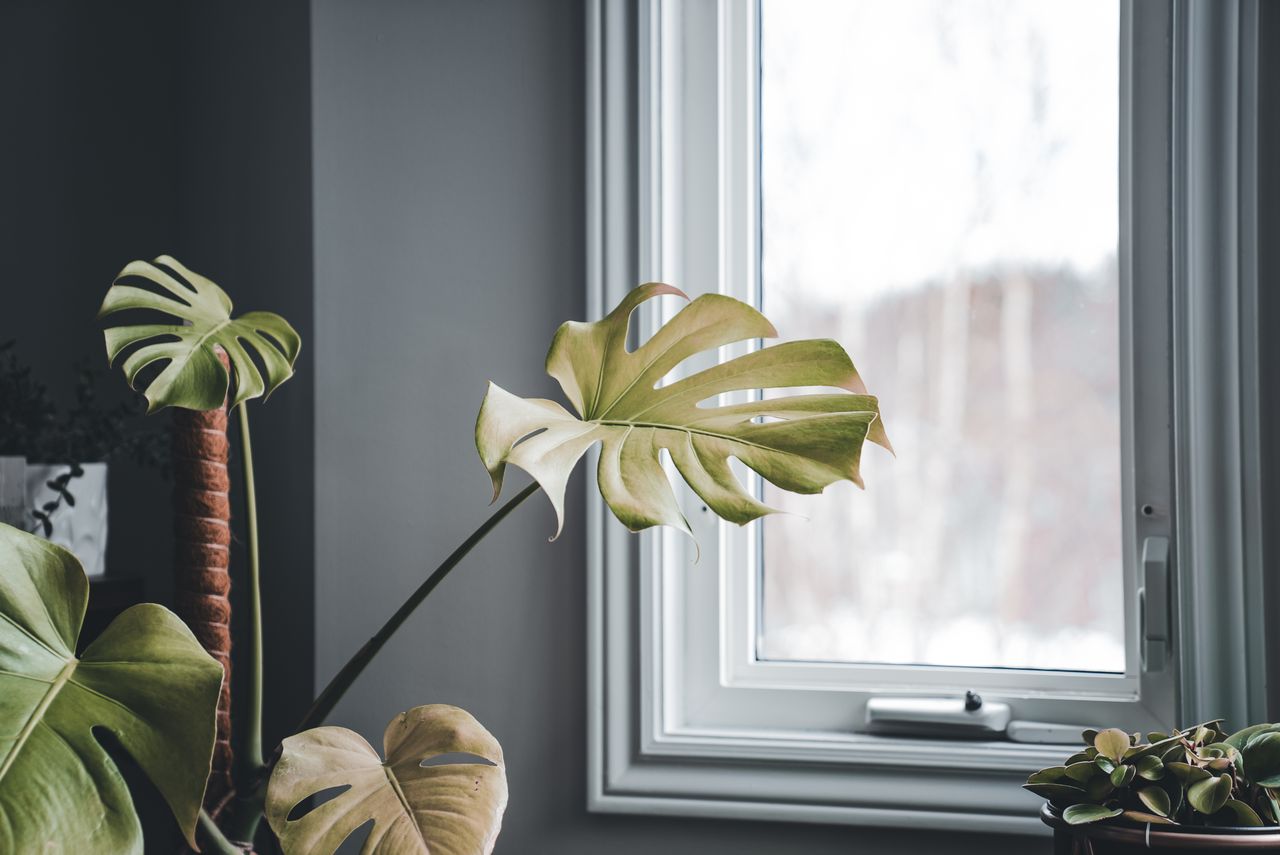
Walk into virtually any American home with a real plant collection and you will almost certainly find one. It occupies a corner of the living room, or frames a window, or climbs a pole in a home office — large, glossy leaves with their signature splits and holes catching the light in a way no other plant quite manages.
The Monstera deliciosa. The Swiss Cheese Plant. The plant that defined a generation of interior design, became the most reproduced leaf motif in modern home décor, and remains — year after year — the most asked-about, most gifted, and most searched houseplant in the United States.
Here’s what surprises most owners: despite its reputation as the quintessential “easy” statement plant, most Monsteras in American homes are dramatically underperforming. They survive, but they produce small leaves without splits. They grow slowly. They never become the sprawling, dramatic specimen that made you want one in the first place.
This guide changes that. It covers not just how to keep a Monstera alive, but how to grow one that genuinely thrives — producing the large, deeply fenestrated leaves that make this plant extraordinary. Everything competitors cover, everything they miss, and the science behind the features that make Monstera one of the most fascinating plants in existence.
Table of Contents
- Monstera Deliciosa: Origin, Biology & the Meaning of Its Names
- Why Monstera Leaves Develop Holes: The Science of Fenestration
- Monstera Varieties: The Complete Comparison Guide
- Light: The Single Most Important Factor
- Watering Monstera Correctly
- Humidity & Temperature
- Soil, Drainage & Pot Selection
- Fertilizing for Maximum Leaf Size & Fenestration
- Moss Poles & Climbing: The Leaf Size Multiplier
- Aerial Roots: What to Do With Them
- Pruning & Shaping
- Propagation: Water, Soil & Air Layering
- Repotting Monstera
- Monstera Varieties: Care Differences at a Glance
- Monstera Problems: Complete Diagnostic Guide
- Pests on Monstera
- Monstera & Pets: The Toxicity Facts
- Frequently Asked Questions
1. Monstera Deliciosa: Origin, Biology & the Meaning of Its Names
Monstera deliciosa is native to the tropical rainforests of southern Mexico and Central America — specifically found from Mexico through Panama, growing in the warm, humid understory of dense forest at low to mid elevations as detailed by the Missouri Botanical Garden.
The Names Tell the Story
Monstera comes from the Latin monstrum — meaning “monstrous” or “extraordinary” — a reference to the plant’s dramatically perforated, enormous mature leaves. The genus contains approximately 48 species, of which deliciosa is by far the most widely cultivated.
Deliciosa means “delicious” in Latin — referring to the edible fruit the plant produces in its natural habitat. The fruit (sometimes called Mexican Breadfruit or Ceriman) develops on a cob-like spadix and, when fully ripe, tastes like a combination of pineapple, mango, and banana. Indoors in the USA, fruiting almost never occurs — the plant requires very specific temperature, maturity, and pollination conditions that most indoor environments don’t provide.
Swiss Cheese Plant: The most common nickname, referring to the holes in the mature leaves that resemble the holes in Swiss cheese.
Growth Habit in the Wild
In nature, M. deliciosa is a hemiepiphyte — it begins its life rooted in the forest floor soil, then climbs aggressively onto tree trunks as it matures, eventually reaching canopy height. As it climbs, it sends out aerial roots that both anchor it to the host tree and absorb moisture and nutrients from the humid air and surfaces around them.
This climbing behavior is the key to understanding everything about how to grow Monstera well indoors — the plant’s physiology and leaf development are fundamentally shaped by its climbing nature.
2. Why Monstera Leaves Develop Holes: The Science of Fenestration
The holes and splits in Monstera leaves — called fenestrations (from the Latin fenestra, meaning “window”) — are one of the most distinctive and most discussed features in the houseplant world. But why do they develop?
The Prevailing Theories
The Light Fleck Theory (Most Widely Cited): In the dense forest understory where Monstera grows, direct sunlight reaches the forest floor only in brief, moving patches called “sunflecks” as the canopy moves in wind. The theory holds that fenestrated leaves maximize exposure to these fleeting light patches by allowing them to pass through to lower leaves rather than being blocked by one enormous solid leaf surface. A large, holey leaf captures more total light than either a small solid leaf or a large solid leaf.
The Wind Resistance Theory: Large solid leaves in exposed tropical forest positions can be damaged or torn by wind and rain. Fenestrations may reduce wind resistance by allowing air and water to pass through the leaf, reducing mechanical stress on the leaf and petiole.
The Root Exposure Theory (2013 research): A 2013 study from the American Naturalist journal proposed a different mechanism — that Monstera’s leaf holes help the plant detect and grow toward the dark patches beneath trees (which indicate a large tree trunk, an ideal climbing host) by allowing more light to reach the lower, soil-detecting organs of the plant. This “shade-detection” model is debated but adds an interesting dimension to the fenestration story.
Why Your Monstera’s Leaves Might Not Have Holes
In practice, there are three reasons Monstera leaves don’t develop fenestrations:
1. The plant is too young. Juvenile Monsteras produce solid, unfenestrated leaves. Fenestration begins as the plant matures — typically after the plant has produced 5–8 leaves and the stems have reached some length. You cannot rush this stage; it’s developmental.
2. Insufficient light. This is the most common reason adult Monsteras don’t fenestrate indoors. Without adequate bright indirect light, the plant doesn’t have the energy to produce large, complex fenestrated leaves. It produces smaller, simpler solid leaves instead. Moving to brighter light is the single most effective intervention.
3. Not climbing. As with Philodendron tortum, Monstera produces dramatically larger, more fenestrated leaves when climbing vertically than when trailing horizontally. A moss pole transforms leaf development over time.
3. Monstera Varieties: The Complete Comparison Guide
“Monstera” is not one plant — it’s a genus of approximately 48 species. Here are the ones most commonly available and most frequently confused in US plant retail:
Monstera deliciosa (Standard)
The plant everyone means when they say “Monstera.” Large, glossy deep-green leaves with both holes within the leaf surface (fenestrations) and splits from the leaf edge toward the midrib. Can reach 3–6 feet tall indoors with proper support. The most widely available and most beginner-friendly large Monstera.
Monstera deliciosa ‘Borsigiana’
The most frequently mislabeled Monstera in US retail. Sold interchangeably with standard deliciosa in most nurseries, Borsigiana grows somewhat faster, stays slightly smaller, and develops fenestrations earlier. Identifying feature: petioles (leaf stalks) are smoother without the geniculum bump that deliciosa develops where the petiole meets the leaf.
Monstera adansonii (Swiss Cheese Vine)
Significantly smaller than deliciosa — a vining, trailing plant with heart-shaped leaves that have holes within the leaf surface but do not split to the edges. Better suited to hanging baskets, shelves, and smaller spaces. Requires similar care to deliciosa but is more sensitive to overwatering and prefers slightly higher humidity.
Monstera albo-variegata (Monstera Albo)
The most sought-after Monstera variety in the US collector market — a variegated form with stunning white and green sector variegation. Can be a half-moon pattern (entire half of a leaf white), sector variegation (large white sections), or speckled. Price range: $100–$500+ for rooted cuttings; established plants $300–$1,500+. Requires more light than green deliciosa to support the chlorophyll-reduced white sections. Very slow-growing.
Monstera Thai Constellation
A tissue-culture-produced variegated variety with stable, speckled cream-and-green variegation resembling a star constellation pattern. More consistent and stable variegation than Albo; slightly more available but still premium-priced ($80–$300+ for established plants). Care similar to Albo — more light than standard green.
Monstera Peru (Monstera karstenianum)
A striking departure from the typical Monstera look — deeply textured, ribbed dark green leaves with no fenestrations at any maturity. A compact climber that’s faster-growing and easier to care for than deliciosa.
Monstera obliqua
One of the most mislabeled plants in the US plant trade. True M. obliqua is extraordinarily rare — documented fewer than 20 times in the wild — with tissue-thin leaves that are more hole than leaf. If you’re sold “Monstera obliqua” at a reasonable price, you almost certainly have M. adansonii. True obliqua costs thousands of dollars per cutting.
Monstera dubia
A “shingling” Monstera — juvenile leaves lie flat against any surface they touch, literally shingling up a tree trunk or wall. Small, heart-shaped leaves with silver markings. A genuinely unique growth habit that creates a living wall effect. Quite rare in US retail.
Quick-Reference Varieties Table
| Variety | Size | Fenestrations | Difficulty | Pet Safe |
|---|---|---|---|---|
| M. deliciosa | Large | Yes — holes + splits | Easy | ❌ Toxic |
| M. borsigiana | Medium-Large | Yes — similar to deliciosa | Easy | ❌ Toxic |
| M. adansonii | Small-Medium | Yes — holes only | Easy-Moderate | ❌ Toxic |
| M. albo-variegata | Large | Yes | Moderate | ❌ Toxic |
| Thai Constellation | Large | Yes | Moderate | ❌ Toxic |
| M. Peru | Small-Medium | No | Easy | ❌ Toxic |
| M. dubia | Small (shingling) | No (juvenile) | Moderate | ❌ Toxic |
4. Light: The Single Most Important Factor
If you take nothing else from this guide, take this: light is the single most important variable in Monstera care, and it’s the variable most US owners get most wrong.
Monstera is frequently described as a “low-light tolerant” plant — and this is technically true in the survival sense. A Monstera in a dim corner will live. It will not thrive. It will produce small, unfenestrated leaves. It will grow slowly. It will look like a shadow of what the plant is capable of.
Bright indirect light — the real target — is considerably more light than most American homes provide.
What “Bright Indirect Light” Actually Means
Bright indirect light: The room is well-lit from natural sources. Near a window but not in the direct sun beam. If you hold your hand 12 inches above the plant during the day, you see a soft but distinct shadow. This is bright indirect.
Medium light: Further from windows. Shadow from the hand test is very faint or barely visible. A Monstera in this light will grow, but slowly and without impressive fenestration.
Low light: No meaningful shadow from the hand test. Very dim. Monstera survival territory, not thriving territory.
Ideal Placement by Window Direction
East-facing window (ideal): Gentle morning direct sun followed by bright indirect light. The best natural light position for most US homes — enough intensity to drive good growth and fenestration without the scorching risk of afternoon sun.
South-facing window (excellent, with positioning): The highest-intensity natural light available in the northern hemisphere. Position the Monstera 3–5 feet away from a south-facing window, or filter with a sheer curtain. This provides outstanding light with reduced burn risk.
West-facing window (good): Strong afternoon direct sun — filter with a sheer curtain or position back from the window. Excellent light availability for growth.
North-facing window (minimum): The dimmest natural light orientation. Monstera will survive but growth is slow and fenestration minimal. Supplement with a grow light for best results.
Grow Light Settings for Monstera
For rooms with insufficient natural light, supplemental grow lighting transforms Monstera performance dramatically:
- Minimum: 200–400 FC / 40–80 μmol/m²/s PPFD for 12 hours daily
- For strong growth and good fenestration: 400–800 FC / 80–160 μmol/m²/s for 14 hours daily
- Full-spectrum white LED is strongly recommended over blurple (red/blue only) lights
For specific product recommendations at every budget, see our complete grow lights guide.
Signs of Incorrect Light
Too little light: Small new leaves without fenestrations; leggy growth toward the light source; slow or stalled growth; leaves staying small even on a mature plant; variegation fading on variegated varieties.
Too much direct sun: Brown, crispy, scorched patches on leaves (particularly where direct sun contacts the leaf surface); bleached, faded coloration; accelerated soil drying.
5. Watering Monstera Correctly
Monstera is a hemiepiphyte — its roots are adapted to periods of relative dryness between rainfall events in its natural habitat. This means overwatering is significantly more dangerous than underwatering for this species.
The Correct Target
Water when the top 2–3 inches of soil are dry. This is the most reliable rule for most US home conditions. The deeper soil can remain slightly moist, but the top 2–3 inches should feel dry to the finger test before you water again.
The 75% Rule (advanced): Some experienced Monstera growers use a moisture meter and water when the reading indicates approximately 75% of the soil volume has dried — catching the plant before the deepest roots experience drought while ensuring the top layers are well-dried.
How to Water
Water thoroughly — slowly and evenly over the entire soil surface until water flows freely from the drainage holes. This ensures the complete root zone receives moisture, not just the top layer. Empty the saucer completely after watering.
Never leave Monstera sitting in standing water — roots deprived of oxygen by waterlogged conditions begin to rot within days.
Seasonal Adjustments
Spring/Summer: Active growth period. Check every 7–10 days; water when the 2–3 inch mark is dry. In very bright, warm conditions this may mean watering every 5–7 days.
Fall: Begin extending intervals. Every 10–14 days.
Winter: Significantly reduce frequency. Every 14–21 days is typical for most US home conditions during winter. Do not water on a calendar — always check first.
Water Quality
Monstera is tolerant of standard US tap water — it’s not sensitive to fluoride or chlorine the way Calatheas or maidenhair ferns are. Room-temperature water is preferable to cold tap water. If your home has very hard water (high mineral content), occasional flushing of the soil with a larger volume of water prevents mineral salt buildup.
For the complete plant-responsive watering framework applicable to all your plants, see our watering guide.
6. Humidity & Temperature
Humidity
Monstera thrives in 50–70% relative humidity — typical of its tropical rainforest origin. However, it tolerates the 40–50% humidity common in most American homes reasonably well, particularly when given adequate consistent watering.
Below 40% (common in winter-heated US homes): Increased risk of brown leaf tips, reduced leaf size, and slowed growth. A small humidifier running during winter heating season significantly improves conditions and plant performance.
Practical humidity tips:
- Keeping the moss pole consistently moist contributes meaningful localized humidity at the aerial root level
- Grouping Monstera with other large plants creates a collective humidity microclimate
- A pebble tray with water beneath the pot provides modest ambient humidity increase
Temperature
Ideal range: 65–85°F (18–29°C) — matching standard US home temperatures.
Minimum: 55°F (13°C). Below this, growth stops and cold damage to leaves and roots begins.
Avoid:
- Cold drafts from windows in winter — rapid temperature drops cause leaf damage and drooping
- Air conditioning vents blowing directly on the plant — chills and dries leaves simultaneously
- Moving the plant frequently between different temperature zones — Monstera prefers environmental stability
7. Soil, Drainage & Pot Selection
Ideal Soil Mix
Monstera’s hemiepiphytic root system needs a mix that is:
- Well-aerated — roots need oxygen, not just moisture
- Fast-draining — prevents waterlogging
- Organically rich — provides nutrients and appropriate moisture retention
The recommended aroid mix:
- 40% quality potting mix (coco coir or peat-based)
- 30% perlite
- 30% orchid bark or bark chips
This produces the chunky, well-aerated, fast-draining substrate that Monstera roots thrive in — significantly better than standard potting mix alone, which is too dense and moisture-retentive for a plant this sensitive to waterlogged roots.
What not to use: Pure potting soil without amendment, garden soil, or any mix that compacts easily or stays wet for extended periods.
Drainage
Every Monstera pot must have drainage holes. No exceptions. If you want to use a decorative cachepot without drainage, use the cachepot method — a drainage-holed nursery pot inside the decorative outer container. For full pot material and sizing guidance, see our best planters and pots guide.
Pot Size
Choose a pot only 2–3 inches larger in diameter than the current root ball when repotting. Oversized pots hold excess soil that retains moisture the roots can’t use — increasing root rot risk significantly.
8. Fertilizing for Maximum Leaf Size & Fenestration
What Monstera Actually Needs
A balanced fertilizer with an NPK ratio around 10-10-10 or 20-20-20 covers Monstera’s nutritional needs well during active growth. Nitrogen drives lush leaf production; phosphorus supports root development; potassium maintains overall plant health and disease resistance.
Recommended products:
- Balanced liquid fertilizer (any major brand, diluted to half strength)
- Dyna-Gro Grow (7-9-5) — popular in US plant communities for aroids
- Any water-soluble balanced fertilizer from garden centers
Schedule:
- Spring and Summer (March–September): Every 2–4 weeks, diluted to half the recommended strength
- Fall: Every 4–6 weeks
- Winter: Stop or reduce to every 6–8 weeks — Monstera’s growth slows and excess fertilizer causes root burn without the active growth to utilize the nutrients
Always fertilize moist soil — applying fertilizer to dry roots concentrates salts and causes fertilizer burn.
Signs of Over-Fertilization
White crusty deposits on soil surface, brown leaf tips appearing rapidly after fertilization, wilting despite moist soil. Fix: flush soil thoroughly with plain water and reduce fertilization frequency.
The Fertilizer-Fenestration Connection
Good nutrition directly supports fenestration development. A well-fed Monstera in bright indirect light produces more and deeper fenestrations than an underfed plant in the same light. Consistent, moderate fertilization throughout the growing season is more effective than occasional heavy feeding.
9. Moss Poles & Climbing: The Leaf Size Multiplier
The single most impactful thing most Monstera owners aren’t doing is providing adequate climbing support. The difference between a trailing, unpole Monstera and a climbing, well-supported one is not subtle — it’s transformative.
Why Climbing Changes Leaf Size
Monstera’s physiology is tuned to the signal of vertical climbing. As it climbs, it produces progressively:
- Larger leaves — mature climbing specimens produce leaves 2–4× larger than their trailing counterparts
- More fenestrations — deeper splits and more holes develop as the plant climbs
- More vigorous overall growth — the plant allocates resources more efficiently when anchored and climbing
A 5-inch pot Monstera on a moss pole will produce more impressive leaves than a 10-inch pot Monstera trailing from a shelf.
Setting Up a Moss Pole
Moss pole types: Coco coir poles (most common, widely available) and sphagnum moss poles (superior — aerial roots attach and draw moisture from live sphagnum more effectively). Mossify poles with live sphagnum are widely respected in US plant communities.
Critical: Keep the pole moist. Aerial roots seek moisture — they will attach firmly to a moist moss pole but ignore a dry one. Water the pole directly when watering the plant, or mist it regularly between waterings.
Pole height: Start with at least 24–36 inches. Monstera grows faster than people expect when given proper conditions — a pole you think is “plenty tall” may be outgrown within a year.
Training: Use soft plant ties to gently direct stems up the pole. As aerial roots make contact with moist moss and begin growing into it, the plant will self-attach.
Important Note: Wall Mounting
Like Philodendron tortum, Monstera aerial roots will grip and adhere to painted walls if given the opportunity — and can damage paint significantly upon removal. If you want to grow Monstera against a wall, mount a wooden board or coco coir panel to the wall first, allowing the roots to grip the board rather than the wall itself.
10. Aerial Roots: What to Do With Them
Monstera produces aerial roots from the stem — brown, rope-like structures that can look alarming if you don’t know what they are. These are completely normal and serve important functions:
In the wild: Aerial roots anchor the plant to host trees and absorb moisture and nutrients from humid air and surfaces.
Indoors: Your options:
- Direct into the soil: Gently guide aerial roots down into the pot — they’ll continue growing and absorbing water from the soil, effectively expanding the plant’s root system.
- Into the moss pole: Aerial roots directed into and growing through a moist moss pole contribute to climbing vigor and leaf size.
- Leave them: Aerial roots hanging in the air don’t harm the plant. They look unusual but are completely healthy.
- Trim them: If aerial roots become unwieldy and you don’t want them directed anywhere, trim with clean scissors. This doesn’t harm the plant — new aerial roots will grow from other nodes.
Do not: Force, bend, or snap aerial roots aggressively — this can damage the stem at the root junction.
11. Pruning & Shaping
Monstera doesn’t require regular pruning for health, but pruning is useful for:
Controlling size: If your Monstera is outgrowing its space, cut stems back to the desired height just above a leaf node. New growth emerges from the node below the cut.
Encouraging bushiness: Cutting back long trailing stems encourages the plant to produce new growth from lower nodes, creating a fuller, bushier appearance rather than a single long vine.
Propagating: Every stem cutting with a node is a potential new plant (see Section 12).
Removing damaged leaves: Yellow, brown, or damaged leaves should be removed at the petiole (leaf stalk) rather than just tearing — clean cuts prevent disease entry.
Best timing: Spring pruning allows the maximum growing season for recovery and regrowth. However, Monstera tolerates pruning year-round.
12. Propagation: Water, Soil & Air Layering
Monstera is one of the most propagation-friendly common houseplants. Every node is a potential new plant.
Understanding Nodes
A node is the critical propagation structure on Monstera — the joint or bump on the stem from which leaves, aerial roots, and new growth emerge. A cutting without a node will not root. A cutting with one or more nodes will.
To identify a node: look for the slight swelling or bump on the stem at the point where a leaf stalk (petiole) connects, or where an aerial root emerges.
Method 1: Water Propagation
Step 1: Cut a stem section with at least one node and ideally one attached leaf. Use clean, sharp scissors. Cut just below the node.
Step 2: Remove any leaves that would be submerged in water.
Step 3: Place in a glass or vase with room-temperature water, node submerged. Put in bright indirect light.
Step 4: Change water every 5–7 days. Roots emerge from the node in 2–6 weeks depending on conditions.
Step 5: Transfer to aroid potting mix when roots reach 1–2 inches. Keep consistently moist for 2 weeks post-transfer.
For a full propagation station setup and guide, see our DIY propagation station guide.
Method 2: Sphagnum Moss Propagation
The preferred method for faster, stronger root development:
Step 1: Wrap moist sphagnum moss around the node section of the cutting. Place in a sealed, clear plastic box or zip-lock bag.
Step 2: Place in bright indirect light. The sealed container maintains high humidity without daily attention.
Step 3: Roots develop in 2–5 weeks. Once 1–2 inches long, pot in aroid mix.
Advantage over water propagation: Moss-propagated roots transition to soil more easily, with less transplant shock.
Method 3: Air Layering (For Large, Established Plants)
Air layering allows you to create a new, rooted plant from an actively growing stem without severing it — producing a cutting that already has an established root system.
Step 1: Select a healthy stem section with a node and aerial root below it. Make a small upward cut or remove a ring of bark at the node.
Step 2: Pack moist sphagnum moss around the wounded area. Cover with clear plastic wrap, seal both ends.
Step 3: Wait 4–8 weeks. Roots will grow into the moss — visible through the clear plastic.
Step 4: Once roots are 2–3 inches long, cut the stem below the rooted section. Pot directly in aroid mix — the cutting already has a functioning root system and establishes immediately.
13. Repotting Monstera
When to Repot
Repot every 18–24 months, or when:
- Roots grow from drainage holes
- The plant dries out within 2–3 days of watering (roots have displaced most soil)
- Visible root circling at the soil surface
- Growth has stalled despite adequate light and care
How to Repot
Choose a pot 2–3 inches larger in diameter than the current one. Use fresh aroid mix — don’t reuse depleted old soil.
Special consideration for pole-trained plants: When repotting a Monstera on a moss pole, extend the pole height at the same time — this avoids needing to disturb the plant again just to add pole height shortly after.
For the complete repotting process with step-by-step instructions, see our repotting guide.
14. Monstera Problems: Complete Diagnostic Guide
Yellow Leaves
Cause 1 — Overwatering (most common): Soil consistently moist, lower leaves yellowing first. Fix: Let dry to 2–3 inch mark before watering. Check drainage. For root rot concerns, see our dedicated Monstera yellow leaves diagnostic guide.
Cause 2 — Underwatering: Soil very dry, yellowing accompanied by wilting or crispy edges. Fix: Water thoroughly.
Cause 3 — Nutrient deficiency: Uniform pale yellowing on older leaves in an unfertilized plant. Fix: Resume monthly fertilization.
Cause 4 — Natural aging: Single lower leaf yellowing on a healthy plant. Fix: Trim and continue normal care.
No Fenestrations (Solid Leaves)
Cause 1 — Plant is juvenile: First 5–8 leaves of any Monstera are typically solid. Fix: Be patient — fenestration develops with maturity.
Cause 2 — Insufficient light: The most common cause in adult plants. Fix: Move to brighter indirect light or add a grow light.
Cause 3 — Not climbing: Trailing Monstera produces smaller, less fenestrated leaves. Fix: Provide a moss pole and train stems upward.
Brown Leaf Tips and Edges
Cause 1 — Low humidity: Most common in winter-heated US homes. Fix: Add a humidifier or pebble tray. Trim brown tips with clean scissors.
Cause 2 — Fertilizer salt buildup: White crusting on soil surface is a confirming sign. Fix: Flush soil thoroughly with plain water.
Cause 3 — Root damage: Roots bound or partially rotted struggle to supply water to leaf tips. Fix: Investigate root health, check drainage, consider repotting.
Drooping or Wilting
Cause 1 — Underwatering: Most common, and most easily fixed. Fix: Water thoroughly. Recovery typically occurs within hours.
Cause 2 — Root rot: Plant droops despite wet soil. Fix: Unpot, inspect roots, trim rotted sections, repot in fresh dry mix. See our watering guide for root rot recovery.
Cause 3 — Cold stress: Recent exposure to temperatures below 55°F. Fix: Move to warmer location.
Leggy Growth (Long Bare Stems)
Cause: Insufficient light — the plant stretches toward the light source rather than producing closely-spaced leaves. Fix: Move to brighter location. Prune back to the last healthy node — new growth emerges below the cut, often more compactly.
Leaves Sweating (Water Droplets on Leaves)
Cause: Guttation — a completely normal physiological process. When the plant’s root pressure exceeds what it can push out through stomata, water is exuded as liquid droplets at the leaf edges. Often noticed in the morning. Fix: None needed. Guttation is a sign of a healthy, well-watered plant.
Monstera Turning Wall/Furniture Brown
Cause: Aerial roots making contact with surfaces and seeking attachment points. Fix: Redirect aerial roots into soil or moss pole. If the plant is near a wall and aerial roots have contacted it, check the wall surface for moisture damage or attachment.
15. Pests on Monstera
Monstera’s large leaf surfaces make it visible but not particularly prone to pest infestation compared to more delicate species. Common houseplant pests to watch for:
Thrips: The most commonly reported Monstera pest in US plant communities. Target new developing leaves — damage appears as silver streaking and distortion on newly unfurled leaves. For the complete elimination protocol, see our thrips guide.
Spider mites: More common in dry conditions. Silver stippling on leaf surfaces. Improve humidity and treat with neem oil.
Scale and mealybugs: Check stem joints and leaf undersides. Treat with rubbing alcohol swabs and neem oil spray. See our mealybugs guide.
Prevention: Monthly inspection of leaf undersides and stem joints; quarantine of all new plants; maintaining adequate humidity (low humidity increases spider mite susceptibility).
16. Monstera & Pets: The Toxicity Facts
Monstera deliciosa is toxic to cats and dogs — and to humans if ingested in quantity. All parts of the plant contain insoluble calcium oxalate crystals that cause oral irritation, burning, drooling, and vomiting if chewed or swallowed.
For households with cats or dogs, placement at a height pets cannot access is essential. Monstera is too beautiful and too popular to recommend removing from pet households entirely — but its placement must be managed deliberately.
For pet-safe trailing and climbing plant alternatives that deliver similar visual impact, see our pet-safe indoor plants guide.
17. Frequently Asked Questions
Q: How often should I water my Monstera? Water when the top 2–3 inches of soil are dry — not on a fixed calendar. In most US homes during the growing season, this means every 7–10 days. In winter, every 14–21 days. Always check before watering — never water based on schedule alone.
Q: Why doesn’t my Monstera have holes in its leaves? The three most common causes: the plant is too young (juvenile leaves are always solid), insufficient light (the #1 cause in adult plants), or the plant isn’t climbing (trailing Monsteras produce smaller, less fenestrated leaves than those given a moss pole to climb). Address light first — it’s the most common and most impactful factor.
Q: How do I make my Monstera grow faster? The three levers that most dramatically accelerate Monstera growth: (1) significantly increase light intensity — bright indirect light or a grow light; (2) provide a moss pole for climbing; (3) fertilize consistently every 2–4 weeks during spring and summer. Together, these three changes can transform a slow-growing Monstera into one producing a new leaf every 3–4 weeks.
Q: Can Monstera live in low light? It survives. It doesn’t thrive. In genuine low light, Monstera produces small, unfenestrated leaves very slowly and eventually declines. If your space is genuinely low-light but you want a similar tropical aesthetic without the light requirements, the Snake Plant or ZZ Plant are better fits. See our best low-maintenance indoor plants guide.
Q: Should I cut off Monstera aerial roots? You can, but you don’t have to. Aerial roots don’t harm the plant whether left hanging, directed into soil, or trimmed. Directing them into the pot soil or into a moist moss pole maximizes their utility. Trimming is a purely aesthetic choice.
Q: What is the difference between Monstera deliciosa and Monstera borsigiana? Both are extremely similar and widely sold interchangeably. The clearest distinguishing feature: deliciosa has a distinct ridge or “wrinkle” where the petiole meets the leaf (called the geniculum); borsigiana’s petiole connection is smooth. Borsigiana generally grows somewhat faster and slightly smaller. Care requirements are essentially identical.
Q: Why does my Monstera have water droplets on its leaves in the morning? This is guttation — a normal process where the plant expels excess water through specialized pores at leaf edges when root pressure is high. It’s a sign of a healthy, well-watered plant. No action needed.
Monstera Deliciosa Quick-Care Reference
| Factor | Requirement |
|---|---|
| Light | Bright indirect — 6+ hours daily; no direct harsh sun |
| Water | When top 2–3 inches dry; thoroughly |
| Humidity | 50–70% preferred; tolerates 40% |
| Temperature | 65–85°F; never below 55°F |
| Soil | Chunky aroid mix: potting soil + perlite + bark |
| Fertilizer | Every 2–4 weeks (growing season), balanced 10-10-10 |
| Repotting | Every 18–24 months |
| Climbing support | Strongly recommended for fenestration development |
| Pet Safety | ⚠️ TOXIC to cats, dogs & humans |
| Difficulty | Easy — one of the most forgiving large statement plants |
| Growth rate | Moderate-fast with good light; slow in low light |