
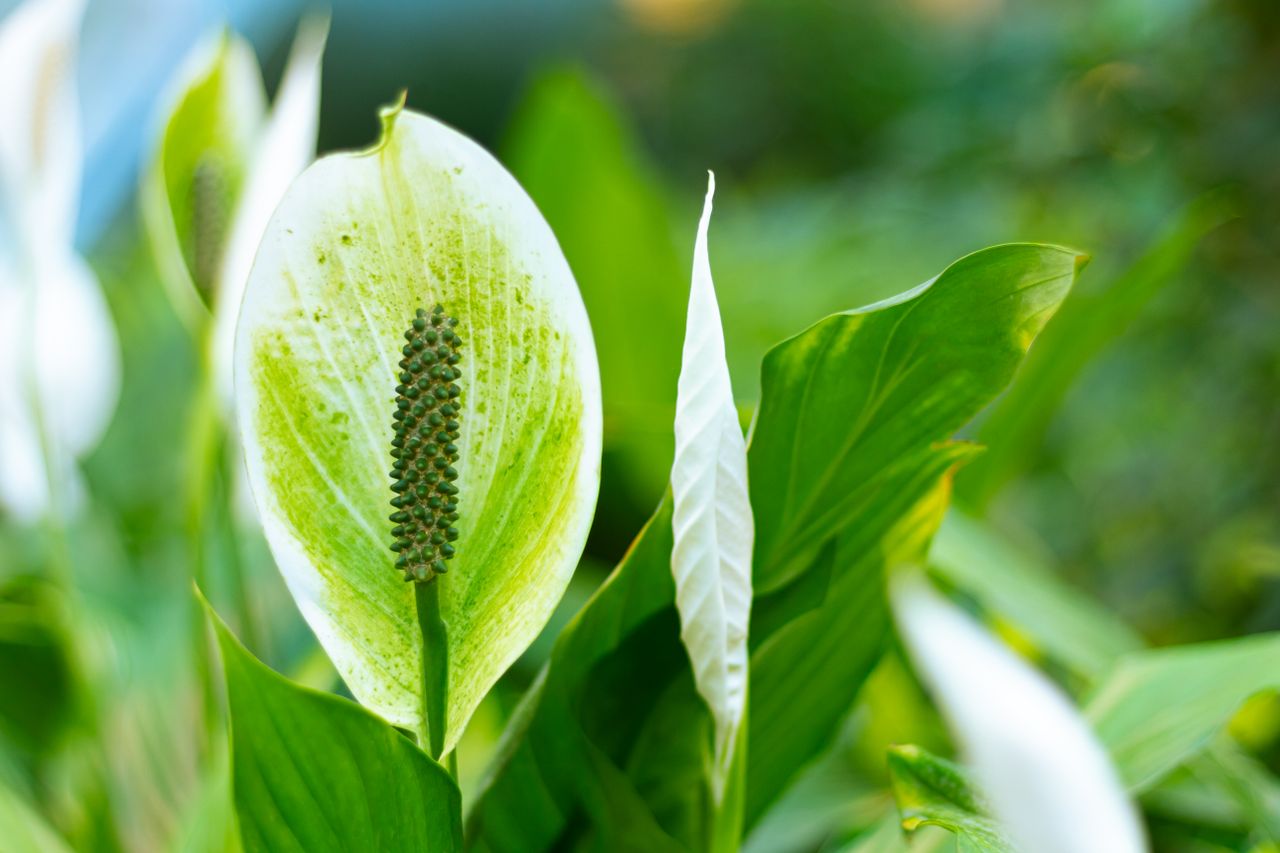
| Low Light Tolerant | 65–80°F / 18–27°C Ideal temp | Weekly Watering | 2–3x/yr Flowering | Air Purifier NASA listed |
The peace lily (Spathiphyllum) is one of the most popular houseplants in the USA and UK — and arguably the most misunderstood. It communicates distress dramatically: leaves drooping, brown-tipped, refusing to flower. Once you understand what each signal means, peace lily care becomes straightforward.
This guide covers complete peace lily care and a comprehensive troubleshooting section so you can diagnose and fix every common problem.
Peace Lily Care at a Glance
| Light | Low to medium indirect light. No direct sun. North-facing rooms work. One of the best low-light houseplants. |
| Watering | Every 5–7 days in summer; every 7–10 days in winter. Water when top 2–3cm feels dry. |
| Soil | Moist, well-draining mix. 60% potting compost, 20% perlite, 20% coir. |
| Temperature | 18–27°C (65–80°F). Keep away from cold draughts, air conditioning, and radiators. |
| Humidity | Prefers higher humidity — bathrooms and kitchens are ideal positions. |
| Fertiliser | Balanced liquid feed every 6 weeks in spring and summer. Do not feed in winter. |
| Repotting | Every 1–2 years in spring when roots emerge from drainage holes. |
| Toxicity | Toxic to cats, dogs, and humans if ingested. Keep out of reach of pets and children. |
Watering Peace Lilies Correctly
Peace lilies are famous for one dramatic behaviour: they droop noticeably when they need water — and perk back up within hours of being watered. This is useful communication. However, consistently waiting for the droop before watering stresses the plant over time.
The better approach: check soil moisture every 3–4 days and water when the top 2–3cm feels dry. Anticipate the droop rather than responding to it.
Peace lilies are sensitive to fluoride in tap water, which causes brown leaf tips over time. If you notice persistent browning at the leaf tips despite good care, switch to filtered water or rainwater. For full guidance on water quality and its effects on houseplants, see our article on how often to water indoor plants.
| 💧 Water Sensitivity Note Peace lilies are among the most fluoride-sensitive houseplants available. In the UK, many areas have fluoridated water. In the USA, most municipal water contains fluoride. If brown tips appear despite appropriate watering, switch to filtered water, bottled water, or rainwater collected from outdoors. |
Getting Your Peace Lily to Flower
A healthy peace lily flowers 2–3 times per year when conditions are right. The white hood-like spathe and central spadix are the flowers; they last 3–4 weeks before fading to green and eventually brown.
How to encourage flowering:
- Provide bright indirect light — more light = more flowers, but no direct sun
- Feed with a balanced fertiliser every 4–6 weeks during spring and summer
- Keep at consistent warm temperature — cold or fluctuating temperatures suppress flowering
- Remove spent flowers promptly — cut the stem to the base when the flower turns fully green/brown
- Ensure the plant is slightly pot-bound — peace lilies often flower more reliably when slightly root-bound
If your peace lily hasn’t flowered in over a year with good care: try moving it to a slightly brighter position and increasing feeding frequency. A period of slightly cooler nights (15°C / 60°F) for 2–3 weeks in autumn can also trigger flowering — mimicking the natural season change.
Complete Peace Lily Troubleshooting Guide
| Symptom | Cause | Fix |
| Drooping leaves | Underwatering (soil dry) | Water immediately; soil should feel like wrung sponge |
| Drooping + wet soil | Root rot / overwatering | Check roots; remove rotted roots; repot in fresh compost; reduce watering |
| Brown leaf tips | Fluoride in water / low humidity | Switch to filtered water; mist leaves; place on pebble tray |
| Yellow lower leaves | Overwatering or natural ageing | Let soil dry out; check roots; lower leaves yellowing = normal |
| Pale/yellow all leaves | Too much direct sun | Move away from direct light source; bright indirect only |
| No flowers | Insufficient light or feeding | Move to brighter spot; feed every 4–6 weeks spring–summer |
| Brown flower spathe | Natural ageing | Normal — cut stem to base when fully brown |
| Wilting despite repotting | Transplant shock | Normal for 1–2 weeks; keep moist; avoid direct sun temporarily |
| Black leaf edges | Cold damage / draught | Move away from cold windows, AC vents, or external doors |
FAQ
Q: How often does a peace lily need repotting?
A: Every 1–2 years, or when roots are visibly growing from drainage holes or circling the base of the root ball. Peace lilies actually flower better when slightly root-bound, so don’t be in a rush to upsize. When you do repot, choose a pot only 3–5cm larger than the current one.
Q: Why does my peace lily have green flowers instead of white?
A: New peace lily flowers are pure white. As they age over 2–4 weeks, the spathe gradually turns green. This is completely normal. Once the spathe is fully green and the spadix (the central spike) starts to droop, cut the whole flower stem at the base to keep the plant’s energy focused on new growth.
Q: My peace lily was fine and suddenly drooped completely — why?
A: Sudden dramatic drooping with moist soil points to root rot — the plant looks like it needs water because damaged roots can’t deliver moisture even when soil is wet. Remove from pot, inspect roots (healthy = white/tan and firm; rotted = brown, mushy, smells bad), trim all rotted roots, dust cuts with cinnamon (natural antifungal), repot in fresh compost. For a full guide to diagnosing this exact problem, see our article on why plant leaves turn yellow.
| 🌿 More from plantcarehacks.com → Why are my plant leaves turning yellow? → Best indoor plants that grow without sunlight |